

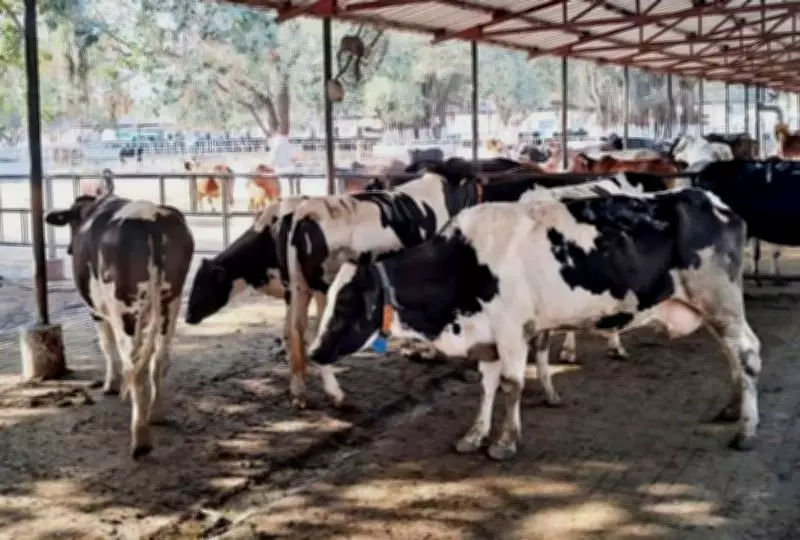
The ICAR-National Dairy Research Institute (NDRI) has achieved a breakthrough in addressing a key challenge faced by Haryana's dairy farmers: maintaining comfortable temperatures for livestock throughout the year. By harnessing geothermal energy, scientists have developed a system that keeps animals cool in summer and warm in winter, significantly enhancing productivity and reducing energy costs.
Pilot Project Demonstrates Success
Under a pilot project at NDRI's Livestock Research Centre, researchers tested a geothermal ventilation system that taps into the earth's stable underground temperatures. The system draws fresh air through buried pipes, where it is naturally moderated by the earth's thermal mass before being circulated into animal sheds. This process reduces the temperature in summer by nearly 11°C and raises it by about 3°C in winter, without consuming any fuel.
The technology cuts heating and cooling energy costs by approximately 50%, offering a low-cost, sustainable solution for livestock housing.

Scientific Approach
Dr. Dheer Singh, Director of ICAR-NDRI, explained that livestock productivity peaks within a narrow temperature range of 30–35°C. When animals are exposed to extreme heat or cold, their bodies divert energy from milk production and reproduction to maintain body temperature, leading to reduced output.
To develop the system, scientists drilled a 12-metre bore-well and monitored underground temperatures at multiple depths throughout the year. They found that diurnal temperature swings become negligible beyond 4 metres. The temperature difference between open air and the 4-metre depth reached 9.5°C in June and 14.4°C in January.
Based on these findings, a full-scale trial was conducted with cast iron pipes buried at 3 metres beneath a livestock shed. Airflow was regulated by a variable frequency drive blower. The results were highly encouraging: the system reduced shed temperatures by nearly 11°C during summer and raised it by about 3°C in winter without burning any fuel.
Additional Benefits
Better air circulation also reduced concentrations of harmful gases such as ammonia and hydrogen sulphide, improving the overall health of the animals. Dr. Singh highlighted that geothermal ventilation offers a practical, low-cost path to healthier and more productive animal housing.
This innovation is expected to benefit dairy farmers across Haryana and beyond, providing a sustainable method to enhance livestock welfare and productivity while reducing energy expenses.






