

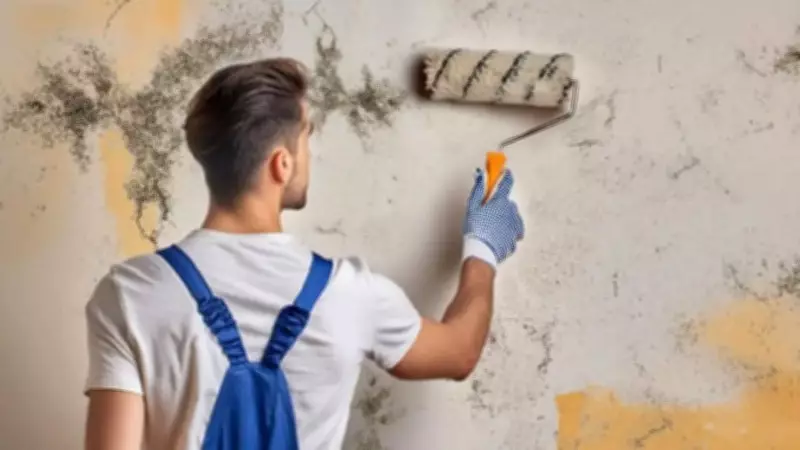
The Hidden Danger of Painting Over Mold: Why Your Quick Fix Creates a Toxic 'Paint-Film Petri Dish'
Have you noticed an unsightly damp patch or mold growth on your interior walls? The immediate solution that comes to mind for many homeowners is to grab a tin of white emulsion paint and simply cover it up. This approach seems quick, inexpensive, and effective—within an hour, that ugly stain appears to vanish. However, home wellness experts are issuing a critical warning: this common "quick fix" is actually one of the most dangerous mistakes you can make regarding your home environment and health.
Far from solving the underlying issue, painting over active mold creates what specialists describe as a "paint-film petri dish." This environment allows harmful mold spores to flourish invisibly behind your walls while you and your family continue breathing in toxic air. The deceptive cleanliness of a freshly painted wall masks a growing health hazard that can have serious consequences.
The Science Behind the Paint-Film Petri Dish Phenomenon
Lateral Spore Migration: When you apply paint over visible mold, you are not stopping its biological growth—you are merely blocking your view of it. Standard emulsion paints are water-based and sufficiently breathable to allow mold to continue feeding on moisture trapped within the wall structure. Yet they are thick enough to conceal the spreading fungal growth from sight.

In an exclusive interview, Dr. Eleni Nicolaou, a home wellness expert at Davincified, explained the hidden danger: "The mold doesn't simply sit there dormant after being painted over. It travels laterally behind the plaster, infecting a much larger surface area than the original visible patch. You might paint over what appears to be a dinner-plate-sized stain, only to discover months later that the mold has spread across an entire wall section behind your nice clean paint."
A recent 2026 study published in the journal Indoor Air provides scientific validation for this concern. Researchers concluded that "covering visible mold with paint or surface coatings does not eliminate fungal activity and may facilitate concealed growth behind treated surfaces." This research directly supports the concept that painting over mold doesn't stop it—it hides the problem while potentially worsening it through what experts call "lateral spread" behind walls.
The Moisture Trap Effect: Paint acts as a seal that prevents walls from breathing properly. This traps the original dampness that caused the mold in the first place, creating precisely the high-humidity environment that allows spores to thrive and multiply. A 2026 study in Building and Environment established that "trapped moisture within wall assemblies creates optimal conditions for fungal growth, particularly when evaporation is restricted by surface treatments."
Dr. Nicolaou offered a vivid analogy: "Think of it like putting cling film over a wet sponge. The moisture has nowhere to go, so it just sits there, continuously feeding the problem. Meanwhile, the wall cannot dry out naturally through evaporation, which makes the situation progressively worse over time."
The False Sense of Security: Perhaps the most dangerous aspect of painting over mold is the health risk created by this deceptive practice. Just because you cannot see black spots or discoloration does not mean you are not breathing in mycotoxins being released behind that "clean" white wall.
"Families often tell me they feel persistently unwell, experiencing symptoms like chronic headaches, respiratory issues, and unexplained fatigue, but cannot determine the cause," Dr. Nicolaou revealed. "Frequently, it turns out they've painted over visible mold, so they believe the problem is solved. In reality, the air quality in their home is becoming increasingly toxic without their awareness."

This health concern is backed by substantial research. A 2025 report in The Lancet Planetary Health, widely cited in 2026 public health studies, found that "exposure to indoor mold, even when not visibly apparent, is associated with increased risk of respiratory symptoms, headaches and fatigue." The study validates warnings about the "false sense of security" homeowners experience after painting over mold, while hidden fungal growth continues to impact their health.
The Correct Protocol for Safely Addressing Mold and Damp Walls
So what should homeowners do instead of reaching for the paint can? Experts outline a proper, multi-step protocol for tackling damp and mold safely and effectively:
- Identify the Moisture Source: Before any treatment begins, determine whether the dampness results from a plumbing leak, structural issue, or condensation problem. "You can paint over mold a hundred times, but if you don't fix what's causing the dampness, you're wasting both time and money," Dr. Nicolaou emphasized.
- Use a Biocidal Wash: Kill existing mold spores before any decorating occurs. "This step is absolutely non-negotiable," Dr. Nicolaou stated. "You need to treat the affected area thoroughly with a proper fungicidal solution and allow it to dry completely before proceeding further."
- Choose Anti-Mold Breathable Paint: When repainting is appropriate, select specialized products designed for the purpose. "There's a huge difference between standard 'covering' paint and anti-mold breathable coatings," Dr. Nicolaou asserted. "Breathable paints allow moisture to escape while containing additives that actively prevent mold growth."
The quality of our home environment has a direct and measurable impact on both physical and mental health. Yet many people unknowingly live with toxic air because they've masked problems rather than solving them at their source. The 2026 World Health Organization Indoor Air Quality Guidelines explicitly state that dampness and mold should be eliminated at the source rather than covered, due to proven health risks associated with fungal exposure.
Dr. Nicolaou shared compelling case experiences: "I've worked with families who couldn't understand why they felt constantly unwell—experiencing headaches, breathing difficulties, and low energy. The common thread was always poor indoor air quality caused by hidden mold growth. Once they properly addressed the damp issues rather than covering them up with paint, their health improved dramatically."
Don't fall into the trap of believing a fresh coat of paint represents a genuine solution to mold problems. It is merely a temporary disguise that often makes the underlying issue worse while putting your family's health at significant risk. Proper identification, treatment, and prevention provide the only safe path to a healthy home environment.





