

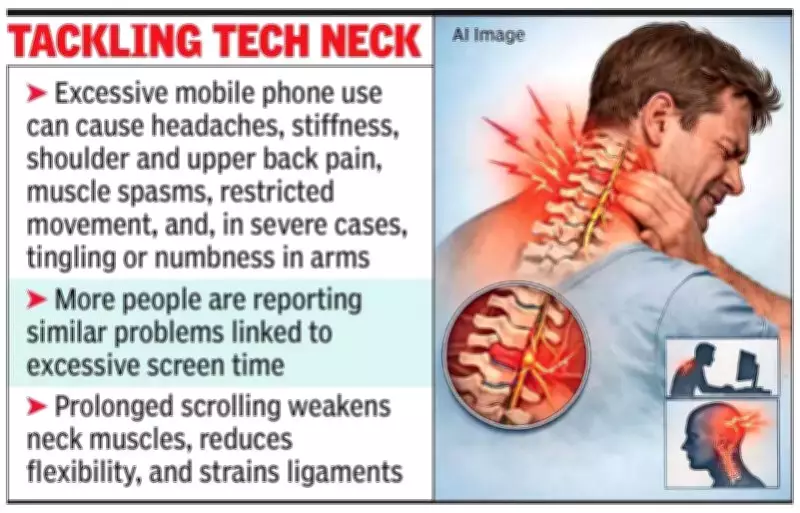
Lucknow Youth's Phone Habit Triggers Severe 'Text Neck' Condition
For two weeks, 23-year-old Fahim Rizvi from Chowk in Lucknow endured persistent headaches, a stiff neck, and shoulder pain. When over-the-counter painkillers provided no relief, he sought medical attention. An X-ray examination revealed a significant misalignment in his cervical spine, specifically in the neck region. This finding prompted his referral to the orthopaedics department at King George's Medical University (KGMU).
Excessive Screen Time Identified as Primary Cause
During consultation, doctors discovered that Rizvi spent an alarming 7 to 8 hours daily watching reels and short videos on his smartphone. This prolonged activity forced his neck into a constant forward tilt, placing immense strain on his cervical spine. The diagnosis was a posture-related condition widely known as "text neck".
This condition manifests through various symptoms including headaches, stiffness in the neck and shoulders, upper back pain, muscle spasms, and restricted movement. In more severe instances, patients may experience tingling or numbness radiating into the arms.

Alarming Surge in Cases Among Young Population
Medical professionals are observing a dramatic increase in similar complaints among young adults, teenagers, and even schoolchildren, directly linked to excessive screen time. Prolonged scrolling weakens neck muscles, reduces flexibility, and strains ligaments, which can subsequently disturb sleep patterns and impair concentration.
Officials at KGMU now report treating 150 to 200 such cases every month, a staggering rise from just 10 to 20 cases monthly five years ago. This trend is mirrored at other institutions. The Ram Manohar Lohia Institute of Medical Sciences has noted a comparable increase. Private hospitals, including Max Super Speciality Hospital and Apollomedics Hospitals, also confirm seeing 15 to 20 similar cases each month in their orthopaedics and ophthalmology outpatient departments.
Biomechanical Strain and Long-Term Risks
Professor Shailendra Singh, an orthopaedic surgeon at KGMU, explained the biomechanics involved. "The human head weighs approximately 4 to 5 kilograms in a neutral position. However, when bent forward at a 60-degree angle—common during phone use—the load on the cervical spine can escalate to nearly 25 to 27 kilograms," he stated. Ignoring this strain can reduce blood flow to the brain and cause lasting damage to neck muscles, perpetuating headaches and stiffness.
Dr. Divyanshu Dutt Dwivedi from Max Hospital highlighted more severe potential consequences. "Untreated, this condition can lead to disc damage, nerve compression, flattening of the natural cervical curve, and early degenerative changes in the spine," he warned.
Medical Advice for Prevention and Management
To mitigate risks, Dr. Dwivedi advises limiting recreational screen time to a maximum of two hours for adults and less than one hour for children. He recommends holding devices at eye level to maintain a neutral neck position and incorporating regular neck-strengthening exercises into daily routines.
Dr. Chhitij Srivastava, a neurosurgeon at Apollomedics, noted the surge in cases among teenagers and young professionals. "Excessive scrolling adversely affects not only the spine but also sleep quality, concentration levels, and overall mental well-being," he emphasized, advising taking breaks every 15 to 20 minutes during prolonged device use.
Dr. Swagat Mahapatra, an orthopaedic surgeon at RMLIMS, issued a stark warning. "Growing dependence on smartphones could establish 'text neck' as one of the most prevalent lifestyle disorders among urban youth unless proactive preventive measures are adopted early," he concluded.






