

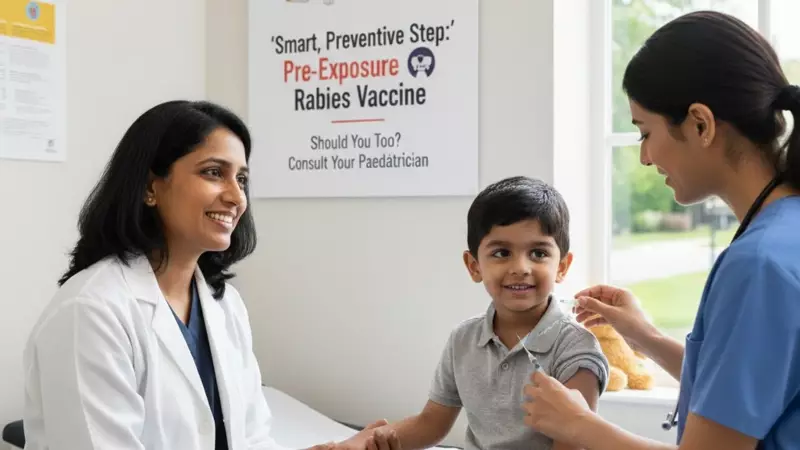
Paediatrician Chooses Pre-Exposure Rabies Vaccine for Her Child
Dr Deepa Aggarwal, a child specialist, recently administered a pre-exposure anti-rabies shot to her own child. She explained her decision in a detailed Instagram post. The paediatrician emphasized that this proactive step helps families avoid panic during emergency situations.
Simplifying Emergency Care After Animal Bites
Dr Aggarwal highlighted a critical point about post-bite treatment. When a dog bite causes bleeding, standard protocol requires both the anti-rabies vaccine and the rabies immunoglobulin vaccine. The immunoglobulin injection is particularly painful because doctors administer it directly at the wound site.
"If a child receives pre-exposure vaccination, they skip the painful immunoglobulin shot later," Dr Aggarwal noted. This approach not only reduces trauma but also cuts costs significantly. The immunoglobulin vaccine typically costs between Rs 5,000 and Rs 10,000. It is often difficult to find in pharmacies.

Without immunoglobulin, the risk of rabies infection increases dramatically. However, with pre-exposure vaccination, a child only needs two booster shots of the rabies vaccine after exposure. "In an emergency, you don't have to panic," Dr Aggarwal reassured parents.
Doctors Emphasize the Deadly Nature of Rabies
Dr Amar Bhise, a consultant at Motherhood Hospitals in Pune, agreed with this preventive approach. He stated that rabies ranks among the deadliest infections known to medicine. Once symptoms appear, the disease proves almost always fatal.
"Many doctors now choose pre-exposure vaccination for their children," Dr Bhise said. "This decision stems from prevention, not fear."
Dr Jaykishan Tripathi from KIMS Hospitals in Thane stressed the urgency of the matter. "Rabies offers no second chance. Survival becomes almost impossible after symptoms develop," he warned. In India, where children frequently interact with stray animals during play, waiting for exposure can mean waiting too long.
Dr Tripathi pointed out that many animal bites go unreported. Rabies transmission does not require serious bites alone. The virus can enter through small wounds or even licks on broken skin. This reality makes children especially vulnerable.
A Three-Pronged Strategy Against Rabies
Dr Vijay Shekhar Janapareddy, a senior consultant paediatrician at Ankura Hospitals in Hyderabad, outlined a comprehensive strategy to combat rabies.
- Vaccination of animals to control the source.
- Post-exposure prophylaxis, which remains expensive and painful.
- Pre-exposure prophylaxis (PrEP), a safe and well-studied vaccine schedule that builds early immunity.
Pre-exposure vaccination simplifies treatment dramatically if a bite occurs. It does not replace post-bite care but makes it faster and more effective.
Real-Life Benefits in Emergency Situations
How does pre-exposure vaccination help during actual emergencies? Dr Tripathi explained that it streamlines the entire process. A vaccinated child requires fewer injections after exposure. They completely avoid the rabies immunoglobulin shot, which is costly and often unavailable.
This advantage becomes crucial during late-night emergencies, while traveling, or in remote locations where medical resources are limited. The time saved can make a life-or-death difference.
Addressing Parental Concerns About Over-Vaccination
Some parents worry about giving their children too many vaccines. Dr Tripathi acknowledged this concern but urged parents to distinguish between necessary prevention and unnecessary fear.
"Today's rabies vaccines are safe, well-researched, and widely administered globally," he stated. "This isn't about adding another routine vaccine. It's about preparing for an unpredictable risk that can be fatal if overlooked."
Vaccination Schedules and Recommendations
The Indian Academy of Pediatrics (IAP) recommends a three-dose schedule for pre-exposure vaccination. The doses are administered on day 0, day 7, and day 21 or 28. The World Health Organization suggests a two-dose schedule.

Dr Janapareddy mentioned a recommendation for a one-year booster shot. This changes for individuals at high risk of exposure to unvaccinated animals.
Who Should Consider Pre-Exposure Vaccination?
Pre-exposure rabies vaccination is not mandatory for all children. However, doctors strongly recommend it for specific groups.
- Children living in areas with many stray animals.
- Kids who frequently play outdoors.
- Families that travel often.
Dr Tripathi advised parents to discuss their child's environment and lifestyle with a paediatrician before making a decision. Many paediatricians now view this vaccine as a smart preventive step, similar to other routine immunizations.
Dr Bhise concluded with a powerful message. "If your child has frequent animal exposure or you want extra safety against a 100 percent fatal disease, talk to your paediatrician about pre-exposure vaccination. Prevention can truly save lives."





