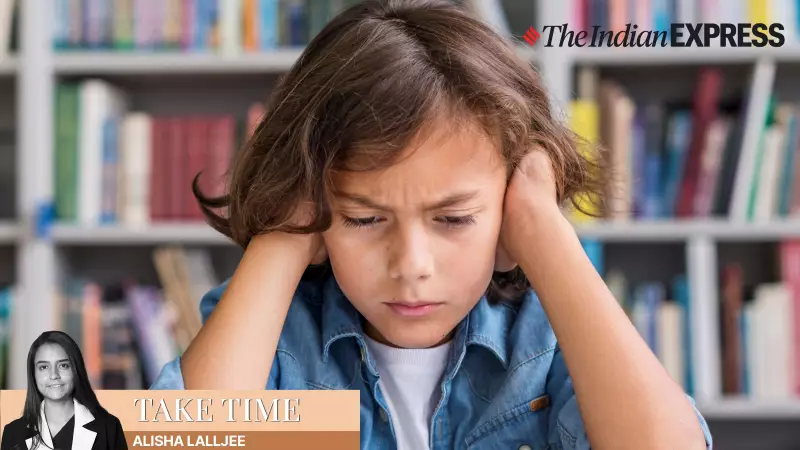
In contemporary Indian households, a profound and quiet revolution is taking place. A growing number of parents are striving towards a defining goal: raising emotionally literate children. Yet, for many, this journey begins with a poignant irony. They are attempting to teach their sons and daughters a language of feelings that they themselves were never taught.
The Legacy of Silent Love and Unspoken Feelings
Dr. Alisha Lalljee, writing from Delhi on December 8, 2025, highlights this widespread generational shift. Many of today's parents were raised in homes filled with love, but almost entirely devoid of an emotional vocabulary. Safety, food, education, and structure were provided in full measure. What was often missing, because the previous generation had also never received it, was a dedicated space for feelings.
These parents grew up hearing familiar refrains: 'Don't cry,' 'You're overreacting,' 'Don't talk back,' or the final 'Bas, forget it.' These phrases were seldom born of cruelty. Instead, they emerged from a cultural fabric where emotional endurance was synonymous with strength, silence signified respect, and vulnerability had little room. Children quickly learned that expressing discomfort might be labeled as complaining, and sadness could attract irritation rather than comfort. The lesson was clear: move on, quickly and quietly.
Breaking Decades-Old Patterns with Self-Compassion
Now, as adults nurturing a new generation, these parents long to offer something gentler and more open—an emotional ease they never experienced. This creates a unique challenge: How does one break a pattern lived inside for decades? The foundational answer lies in self-compassion. Parents must first acknowledge the gap in their own emotional education without shame. The truth is simple: nobody taught them, and what is not taught cannot be magically embodied.
The work begins by letting go of the pursuit of perfection. Children do not need flawless parents; they need visible ones. When a parent says, 'I am feeling overwhelmed, give me a moment to breathe,' they perform a revolutionary act. They demonstrate that emotions are not dangerous but are simply signals. This modeling is powerful because children absorb emotional behavior primarily by observing the adults around them.
From Tantrums to Tears: Building Emotional Vocabulary
For a child, emotions reside in the body long before they find words. A tantrum is often unprocessed frustration; withdrawal can be unspoken fear. When parents gently notice these physical cues and offer words for them—'You look upset,' 'This feels like a hard day'—they provide crucial emotional clarity. This teaches children that their inner world can be articulated, not just felt.
Nowhere is this generational divide clearer than with tears. Many adults recall being told not to cry, as it was seen as weakness. But for children, crying is a primary language, a response to a flooded nervous system when words fail. Meeting tears with patience—sitting beside a child and saying, 'I am here. I see you'—teaches a vital lesson: their sadness is not too much, and their emotions are safe to bring into the room.
Equally transformative is the act of repair. In many past households, conflicts ended with silent pretence that nothing happened. Today, when a parent apologizes—'I lost my temper. I am sorry. That was not okay. Let us try again'—they show that love encompasses imperfection and that emotional honesty builds more safety than emotional control ever could.
Emotional Literacy as a Daily Practice for Resilience
This transformation does not require grand gestures. It thrives in quiet, daily moments: asking about a child's day, noticing quietness and checking in softly, listening without interruption. It is about creating a home where feelings exist without needing justification—where both joy and tears belong.
As children grow, emotional literacy must evolve beyond naming emotions to managing them. This is where it becomes true resilience. A child who learns to take a breath when angry, go for a walk when overwhelmed, or draw when words are hard is not just emotionally aware but emotionally capable.
The most hopeful aspect is that parents and children can learn together. Admitting to a child, 'I did not grow up talking about emotions, but I am learning now,' is a profound gift. It shows that growth never stops, that families can evolve, and that cycles can be broken. Every time a parent chooses to sit with a crying child, name their own frustration calmly, or simply say 'I understand,' they are actively rewriting the story for the next generation.