

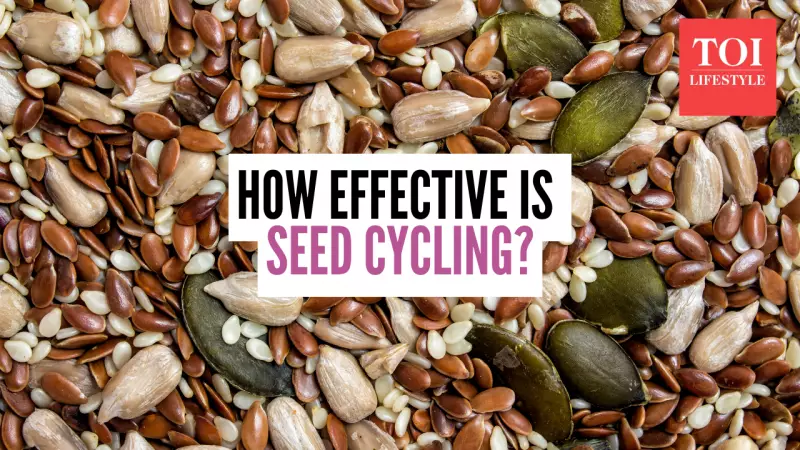
A new wellness trend is taking social media by storm, promising a natural solution for women's hormonal balance. Known as 'seed cycling', this dietary practice involves strategically eating specific seeds during different phases of the menstrual cycle. Advocates claim it can support reproductive health, regulate periods, and improve fertility, leading many women across India to adapt it into their routines.
What Exactly Is Seed Cycling?
Seed cycling is a naturopathic approach designed to support the body's hormonal fluctuations. The core idea is to consume different seeds to help regulate key hormones—estrogen in the first half of the cycle and progesterone in the second half. The most commonly followed method has a clear two-phase plan.
During the follicular phase (the first 13-14 days from the start of your period), the practice involves consuming one tablespoon each of freshly ground flax seeds and pumpkin seeds daily. When ovulation occurs and the luteal phase begins, the seeds switch to one tablespoon each of ground sunflower and sesame seeds daily. This continues until the first day of the next period, when the cycle repeats.

For women who are menopausal or postmenopausal and do not have a regular cycle, practitioners often suggest using the lunar cycle as a guide. In this adaptation, day one of the seed cycle aligns with the new moon.
The Science Behind the Seeds: Is It Effective?
The theory behind seed cycling is rooted in the nutritional profiles of these four seeds. Flax and pumpkin seeds are rich in lignans and zinc, which may support estrogen metabolism. Sunflower and sesame seeds provide selenium and vitamin E, nutrients thought to aid progesterone production.
Scientific evidence on seed cycling as a standalone treatment is still emerging. However, a study published in the Journal of Pharmacy and BioAllied Sciences indicated that it could play a supportive role. The research suggested that for women with Polycystic Ovary Syndrome (PCOS), combining seed cycling with medical treatment and lifestyle modifications may help improve hormonal balance and fertility outcomes. It is crucial to note that experts view it as a complementary strategy, not a cure.
Overall, while these seeds are undeniably nutritious and the practice is generally well-tolerated with minimal side effects, more robust clinical research is needed to fully validate its specific benefits. Individual responses can vary significantly.
Key Considerations Before You Try
Before jumping on this viral trend, healthcare professionals emphasize several important points. First, seed cycling should not replace conventional medical diagnosis or treatment for hormonal disorders. Second, because individual tolerance differs—especially for those with digestive sensitivities or seed allergies—consulting a doctor or a registered dietitian is of utmost importance.
This natural approach highlights a growing interest in using food as medicine for women's health. While incorporating nutrient-dense seeds into your diet is rarely a bad idea, managing expectations and seeking professional guidance ensures a safe and informed wellness journey.






