

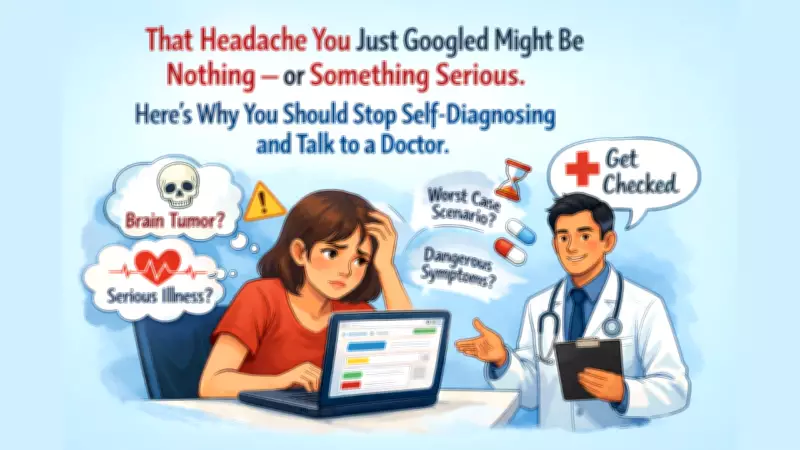
The Dangers of Digital Self-Diagnosis: Why Your Google Search Isn't a Doctor
That headache you just searched online might be completely harmless or potentially serious. In today's digital age, many people turn to search engines before considering a medical professional, but this habit carries significant risks. Medical experts are now issuing strong warnings against this practice, emphasizing that self-diagnosis through internet searches often leads to unnecessary anxiety and potentially dangerous delays in proper treatment.
When the Internet Becomes Your First Doctor
It typically begins with minor concerns—a persistent headache that feels unusual, a random pain appearing without explanation. Before even contemplating a doctor's appointment, many individuals instinctively type their symptoms into Google. This approach seems quick, convenient, and initially reassuring, providing instant answers. However, it also delivers an overwhelming flood of information that can quickly become confusing and alarming.
A simple search can escalate from "mild acidity" to severe conditions within just a few clicks. The problem isn't necessarily inaccurate information but rather that online content isn't personalized. Your unique medical history, specific context, and individual risk factors aren't considered in search results, yet it's easy to overlook this crucial limitation in the moment.

The Rise of Cyberchondria: When Information Fuels Anxiety
Have you encountered the term "cyberchondria"? This phenomenon describes how a simple symptom search can transform into a full-scale panic episode. Starting with something minor like a headache, within minutes you might convince yourself it indicates something serious. The more you read, the worse you feel, shifting focus from the actual symptom to mounting anxiety.
The deceptive aspect is that it feels like you're becoming informed, but you're actually spiraling into worry. While curiosity is natural, when every search leaves you more anxious than before, it ceases to be helpful and begins negatively impacting mental well-being.
TOI Health consulted with Dr. H Guru Prasad, Clinical Director and Head of Department for General Medicine/Internal Medicine at CARE Hospitals in Banjara Hills, Hyderabad, and Dr. Sandeep Reddy Koppula, Head of Department for Internal Medicine at Arete Hospitals. They discussed why people prefer Googling symptoms over consulting doctors, the dangers of internet health searches, and how to break this pattern.
Why People Choose Google Over Doctors
Dr. H Guru Prasad explains that embarrassment and time constraints are primary factors. Many individuals fear judgment, particularly regarding sensitive topics like bowel habits, sexual health, or mental health concerns. Additionally, pulling out a phone at midnight feels easier than booking appointments, taking time off work, and visiting clinics. The internet offers perceived privacy—you can ask anything without verbalizing it aloud.
Commonly Googled Symptoms That Need Medical Attention
Dr. H Guru Prasad identifies several symptoms people frequently search online but should discuss with doctors earlier. These include changes in bowel habits like ongoing constipation, diarrhea, or blood in stool; unexplained weight loss; persistent fatigue; chest discomfort dismissed as gas; and unusual lumps.
Sexual health concerns, irregular menstrual cycles, and mental health symptoms like anxiety or low mood also receive extensive online searches but often lack open discussion. The critical issue is that many conditions become significantly easier to manage when detected early through professional evaluation.
The Risks of Relying on Internet Searches
Dr. H Guru Prasad highlights that risks exist in both directions. Some people encounter worst-case scenarios online and panic over minor issues, while others reassure themselves that symptoms are insignificant and delay necessary medical attention for serious conditions.
Online information lacks personalization—it doesn't account for your medical history, specific risk factors, or overall health context, which are essential in medical diagnosis. While searching can serve as an initial step, it should never replace professional medical consultation, especially if symptoms persist, worsen, or simply feel abnormal.

Symptoms Often Ignored Due to Embarrassment
Dr. Sandeep Reddy Koppula notes several symptoms people commonly avoid discussing out of embarrassment, often with detrimental consequences. These include bleeding from the rectum, in urine, or after intercourse; changes in bowel habits; persistent itching or discharge; and concerns related to sexual function.
Urinary symptoms like frequency, urgency, or leakage also frequently go unreported, with many patients attributing them to aging or assuming they must be endured. From a medical perspective, these symptoms are routine and may indicate anything from minor treatable conditions to early signs of serious diseases. Early evaluation typically leads to more straightforward management.
Advice for Those Delaying Doctor Visits
Dr. Sandeep Reddy Koppula offers clear guidance: if a symptom has persisted long enough to cause concern, it already warrants medical evaluation. Waiting rarely provides clarity and often reduces treatment options if intervention becomes necessary.
Most conditions in internal medicine become far more manageable when detected early. Even when symptoms turn out to be benign, proper medical assessment provides peace of mind through accurate ruling-out rather than speculation.
Practically speaking, doctors have heard virtually everything—patients don't need to filter or minimize symptoms. Simply describing what's occurring enables medical professionals to perform their jobs effectively.
This article incorporates expert insights shared with TOI Health by Dr. H Guru Prasad, Clinical Director and HOD of General Medicine/Internal Medicine at CARE Hospitals, Banjara Hills, Hyderabad, and Dr. Sandeep Reddy Koppula, HOD of Internal Medicine at Arete Hospitals. Inputs were utilized to explain why individuals should avoid Googling symptoms and instead seek professional medical consultation for accurate health assessments.





