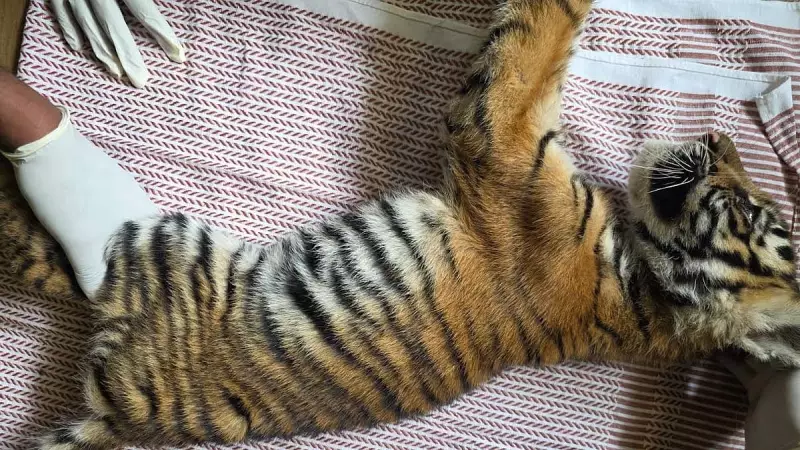
In a heartening display of swift action, forest officials in Karnataka successfully rescued a young tiger cub found in a distressed state near the world-renowned Nagarahole Tiger Reserve. The incident unfolded on Tuesday, May 27, within the limits of the Metikuppe range, bringing forest staff and veterinarians into a coordinated effort to save the vulnerable animal.
The Dramatic Rescue Operation
Alerted to the presence of the cub, a team from the Metikuppe forest range immediately sprang into action. The cub was discovered in a weakened condition, prompting concerns for its immediate survival. Recognizing the urgency, the officials did not hesitate to intervene. The cub was carefully captured and transported to the nearby Range Forest Office for preliminary assessment and stabilization. This critical first step ensured the animal was safe from further harm and could receive initial aid.
Understanding the need for specialized medical attention, the forest department quickly arranged for the cub to be moved to a higher facility. The young tiger was subsequently taken to the College of Forestry in Ponnampet, which falls under the University of Agricultural and Horticultural Sciences, Shivamogga. Here, the cub was placed under the expert care of veterinary professionals who are now conducting a thorough health evaluation to determine the exact cause of its distress and chart a course for recovery.
Location and Significance of Nagarahole
The rescue site holds significant ecological importance. The Nagarahole Tiger Reserve, also known as Rajiv Gandhi National Park, is a critical habitat for Bengal tigers and forms part of the larger Nilgiri Biosphere Reserve. Spanning across the districts of Mysuru and Kodagu, it is a biodiversity hotspot and a flagship site for Project Tiger in India. Incidents like this highlight the constant vigilance required to protect even the youngest members of this apex predator's population, especially in areas where human-wildlife boundaries can sometimes blur.
Ongoing Care and Future Steps
As of now, the tiger cub remains under close observation at the veterinary facility. The primary focus of the authorities is on its medical rehabilitation. Forest department officials have indicated that a decision regarding the cub's future will be made based entirely on the recommendations of the veterinary team. The ultimate goal is to ensure the animal regains full health and strength, with the hope of a potential return to its natural habitat if deemed fit and sustainable. This incident underscores the dedicated efforts of Karnataka's forest personnel in wildlife conservation and their readiness to respond to emergencies, contributing to the state's record in tiger protection.
Such rescues are complex operations that balance immediate animal welfare with long-term conservation objectives. The successful retrieval of this cub from the Nagarahole limits adds another chapter to the ongoing efforts to safeguard India's national animal for future generations.