

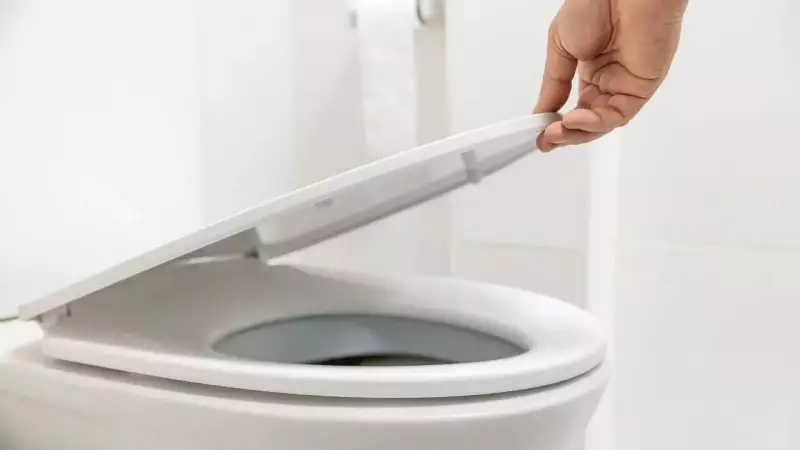
The age-old household debate of whether to keep the toilet seat lid up or down is more than just a matter of etiquette or convenience. In shared bathrooms across Indian homes, this simple act is often seen as a frontline defence against germs. However, recent scientific research suggests our common belief might need a serious rethink.
What Science Says About The Flushing Plume
A pivotal study published in the American Journal of Infection Control has delivered a surprising verdict. The research found that closing the toilet lid before flushing did not significantly reduce the spread of aerosolised viral particles onto bathroom surfaces. This challenges the widespread assumption that a lowered lid acts as an effective containment shield.
The mechanics are fascinating. Flushing creates intense turbulence inside the bowl, generating a cloud of microscopic droplets and particles known as a flushing plume. These aerosols can travel upward and outward, settling on floors, sinks, countertops, and even personal items like toothbrushes kept nearby. The study indicates that these tiny, aerosol-sized particles manage to escape through the small gaps around a closed lid, making complete containment nearly impossible.

Practical Reasons To Keep The Lid Down
Despite the scientific findings, the habit of closing the lid is not without merit. While it may not block every microscopic invader, it serves several practical purposes crucial for Indian households.
Firstly, it acts as a barrier against visible splashes and larger droplets, preventing them from landing on surrounding surfaces. In busy family homes, a closed lid also prevents accidents like toothbrushes, soap bars, or children's toys from falling into the bowl. Furthermore, it helps contain unpleasant odours and contributes to a tidier, more aesthetically pleasing bathroom environment, which many find psychologically calming.
The Real Path To Bathroom Hygiene
If stopping germ spread is the priority, experts suggest that focusing solely on the lid's position is insufficient. A robust, multi-pronged approach is far more effective.
Regular and thorough cleaning is paramount. Disinfecting high-touch areas like the toilet seat, flush handle, door knobs, and taps drastically reduces microbial load. Proper ventilation is another key factor; good airflow helps disperse airborne particles quickly. Storing personal hygiene items like toothbrushes and razors inside a closed cabinet, away from the toilet, minimises their exposure to contaminants.
Most importantly, consistent handwashing with soap and water after every bathroom visit remains the single most powerful habit to prevent infection. Encouraging every member of the household, especially children, to follow this practice is non-negotiable for maintaining health.
Tailoring Habits To Your Household Type
The ideal approach can vary depending on your living situation. In a single-person bathroom, lid-down flushing still aids in general cleanliness. In shared family homes or with roommates, it becomes a considerate collective habit. For homes with young children or pets, keeping the lid down is a critical safety measure to prevent falls. In guest bathrooms, a closed lid simply presents a cleaner, more welcoming space.
Ultimately, the debate need not be contentious. Understanding the science and the practical benefits allows families to adopt a balanced routine. Close the lid to reduce splashes and odours, but rely on a consistent cleaning schedule, smart storage, and impeccable hand hygiene as your primary defence. This combined strategy ensures a cleaner, fresher, and safer bathroom environment for everyone.






