

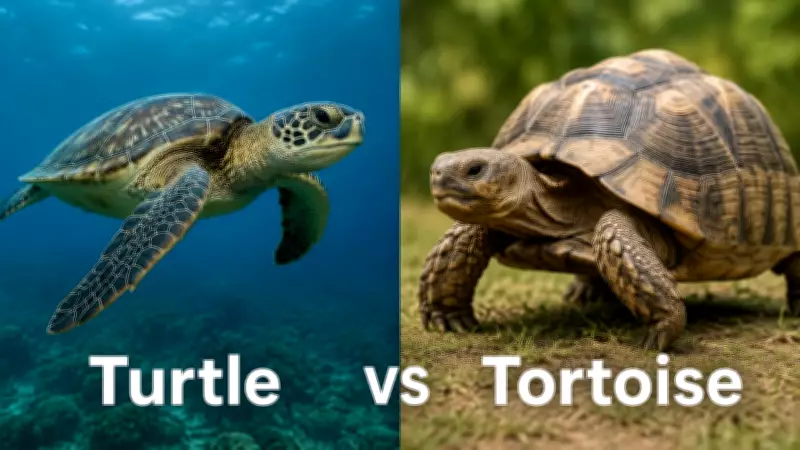
Turtles and tortoises may appear similar at first glance, but a closer look reveals distinct differences in habitat, diet, shell shape, and lifestyle. Both belong to the reptile order Testudines, yet they have adapted to vastly different environments over millions of years.
Turtle vs Tortoise: Key Facts
The table below highlights the main differences between turtles and tortoises across several parameters.
- Main habitat: Turtles primarily inhabit freshwater, wetlands, rivers, lakes, and oceans. Tortoises are entirely land-based.
- Relationship with water: Turtles spend much of their lives in water; tortoises use water mainly for drinking or bathing.
- Feet and limbs: Turtles have webbed feet or flipper-like limbs for swimming. Tortoises have sturdy legs for walking.
- Movement style: Turtles are efficient swimmers with streamlined movement; tortoises are slow but steady walkers on land.
- Diet: Turtles are usually omnivorous; tortoises are mostly herbivorous.
- Shell shape: Turtles have flatter, lighter shells for water movement; tortoises have higher, domed shells for protection on land.
- Body design: Turtles are built to reduce drag in water; tortoises are built to support weight on land.
- Typical habitats: Turtles live in lakes, rivers, marshes, and seas; tortoises inhabit deserts, grasslands, scrublands, and forests.
What Really Sets Turtles and Tortoises Apart
Main Habitat
The simplest distinction is where these reptiles spend most of their lives. Turtles are linked to water—ponds, rivers, wetlands, or oceans—and often leave only for basking or nesting. Tortoises are creatures of the land and do not rely on aquatic environments.

Relationship with Water
Water forms a major part of a turtle's daily life for swimming, feeding, and resting. Tortoises do not have this dependence; they drink and occasionally soak but are not adapted for extended periods in water.
Feet and Limbs
A glance at the limbs often reveals whether an animal is a turtle or tortoise. Turtles typically have webbed feet or long flippers for swimming. Tortoises have thick, column-like legs that support their weight on rough terrain.
Movement Style
Turtles move with ease in water, where their body shape and limbs create efficient movement. On land, they may appear less agile. Tortoises are not fast, but their strong legs enable steady travel across rocky ground, grasslands, and deserts.
Diet
Many turtles eat a varied diet including aquatic plants, algae, insects, small fish, and crustaceans. Tortoises generally favor vegetation like grasses, leaves, flowers, and fruits, though some may occasionally consume small invertebrates.
Shell Shape
Both have protective shells, but the shape differs. Turtle shells are flatter and streamlined for water movement. Tortoise shells are taller and more rounded, offering protection for their terrestrial lifestyle.
Body Design
The overall build reflects each animal's environment. Turtles are shaped for aquatic settings with features that assist swimming. Tortoises have heavier bodies with robust limbs, geared for carrying weight and navigating land.
Typical Habitats
Turtles occupy freshwater ponds, streams, or oceans. Tortoises are found in dry land environments such as deserts, scrublands, grasslands, or forests.
Turtle vs Tortoise: What These Ancient Reptiles Have in Common
Despite their differences, turtles and tortoises are closely related. Both belong to the order Testudines and share characteristics: they lay eggs, have scales, rely on external temperatures to regulate body heat, and carry shells permanently attached to their skeletons. Neither can leave its shell behind. Both are among the oldest surviving reptile groups, representing a lineage that predates many modern animal families.






