

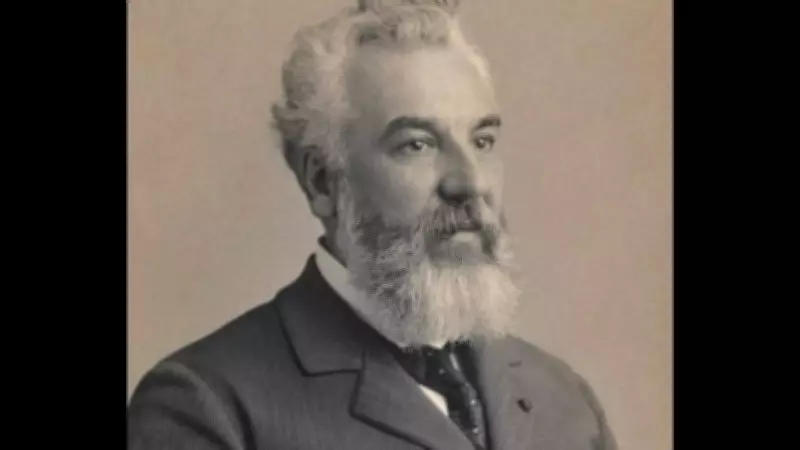
Alexander Graham Bell's Enduring Legacy Beyond the Telephone
While Alexander Graham Bell is universally celebrated as the inventor of the telephone, his intellectual contributions extend far beyond that single revolutionary device. Born in Scotland in 1847, Bell dedicated his life to advancing communication technology, conducting scientific experiments, and educating future generations. His work fundamentally transformed human interaction, but perhaps equally significant are his philosophical reflections on work, success, and the human mind.
The Power of Concentrated Thought
Among Bell's most enduring ideas is his emphasis on concentration—the ability to direct all mental energy toward a single task without distraction. More than a century after he first articulated this concept, it remains remarkably relevant. Bell encapsulated this principle in a powerful analogy: “Concentrate all your thoughts upon the work at hand. The sun's rays do not burn until brought to a focus.”
This simple yet profound statement compares human attention to sunlight. Just as scattered sunlight provides gentle warmth but cannot ignite fire, a scattered mind achieves limited progress. However, when sunlight is concentrated through a magnifying glass, it gains the intensity to start flames. Similarly, when individuals focus their mental resources on a single objective, they unlock their highest potential for achievement and innovation.

Why Bell's Wisdom Resonates in the Digital Age
Bell's perspective on concentration has gained renewed importance in our contemporary world of constant digital interruptions. Modern workers and students face unprecedented challenges from emails, social media notifications, smartphone alerts, and multitasking demands. Bell's words serve as a crucial reminder that divided attention typically yields inferior results compared to sustained, single-minded focus.
Bell viewed concentration not as a luxury but as a disciplined practice essential for productivity and clarity. His message transcends specific professions, offering valuable guidance for students preparing for exams, professionals managing complex projects, artists pursuing creative endeavors, and anyone striving to accomplish meaningful work.
Practical Applications of Bell's Focus Philosophy
Implementing Bell's concentration principles can significantly enhance daily effectiveness across various life domains:
- Single-Tasking Priority: Complete one task thoroughly before transitioning to another, rather than attempting simultaneous multitasking.
- Distraction-Free Environment: Create workspaces by disabling non-essential notifications, closing irrelevant applications, and establishing dedicated time blocks for focused work.
- Clear Goal Setting: Define specific objectives before beginning any task to channel mental energy purposefully.
- Focused Time Techniques: Employ methods like the Pomodoro Technique, which structures work into timed intervals with scheduled breaks to maintain concentration.
- Minimize Task Switching: Avoid frequent shifts between different activities, as this disrupts cognitive flow and reduces efficiency.
Additional Insights from Bell's Philosophical Repertoire
Bell's wisdom extended beyond concentration to other aspects of achievement and perspective:
- “Before anything else, preparation is the key to success.”
- “Great discoveries and improvements invariably involve the cooperation of many minds.”
- “When one door closes, another opens; but we often look so long and regretfully upon the closed door that we do not see the one which has opened for us.”
These quotations collectively emphasize preparation, collaboration, and adaptability—complementing his focus philosophy to provide a holistic approach to personal and professional development.

The Lasting Relevance of Historical Wisdom
Despite the vast technological advancements since Bell's era, the human challenge of maintaining concentration persists. His analogy of focused sunlight continues to illuminate the path toward greater productivity, deeper understanding, and enhanced creative problem-solving. By applying Bell's principles, individuals can navigate modern distractions more effectively, transforming scattered efforts into concentrated achievements that truly make an impact.





