

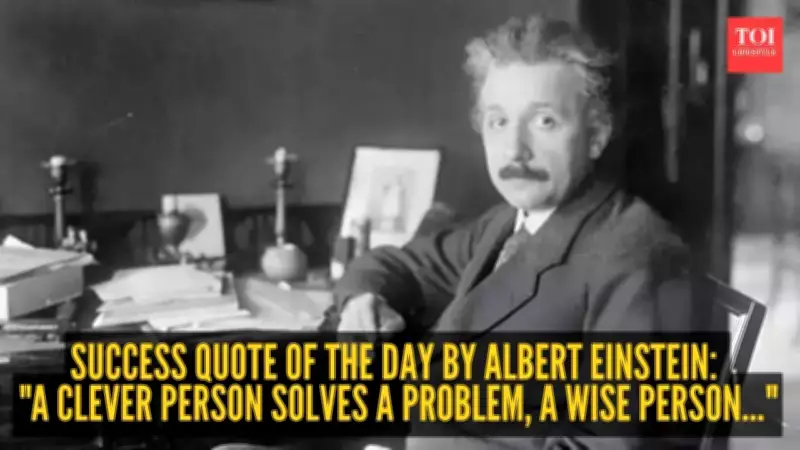
Albert Einstein's Philosophy of Problem Avoidance
Most people recognize Albert Einstein as the brilliant physicist with unruly hair who revolutionized our understanding of the universe through his mass-energy equivalence principle. However, he was equally profound as a philosopher of everyday life, offering timeless insights that extend far beyond theoretical physics.
The Core Principle: Cleverness vs. Wisdom
One of Einstein's most underrated yet powerful pieces of wisdom states: "A clever person solves a problem. A wise person avoids it." At first glance, this might appear simplistic or even encouraging laziness. Yet, upon deeper examination, it represents a fundamental shift in how we approach achievement and success.
In today's hustle culture that glorifies constant grinding and firefighting, Einstein suggests that true success doesn't come from being the best problem-solver but from preventing problems from occurring in the first place. This philosophy challenges our conventional celebration of reactive heroics.

The Invisible Nature of Wisdom
Consider a workplace scenario where a major project encounters difficulties. The clever individual works late into the night, devises solutions, and saves the situation. This person receives immediate recognition, dopamine rewards, and praise for their heroic efforts.
Meanwhile, the wise person identified potential flaws weeks earlier, adjusted timelines, and established clear boundaries. This individual likely enjoys a peaceful dinner at home while the crisis unfolds elsewhere. The challenge with wisdom is its invisibility—successful prevention often goes unnoticed because nothing dramatic happens.
As Daniel Kahneman explores in 'Thinking, Fast and Slow', human brains are wired to reward reactive solutions because they provide excitement and visible accomplishment. Solving problems feels like victory, while avoiding them feels like ordinary routine. Yet while cleverness provides temporary relief, wisdom preserves long-term sanity and stability.
Practical Applications Across Life Domains
This principle extends beyond corporate theory into every aspect of human experience:
Career Development- Clever Approach: Working 80-hour weeks to manage a toxic supervisor
- Wise Alternative: Recognizing red flags during interviews and declining problematic job offers to prevent burnout before it begins
- Clever Approach: Mastering elaborate apologies and grand gestures to repair major conflicts
- Wise Alternative: Conducting regular, honest check-ins to address concerns early and prevent resentment from escalating
The Harvard Grant Study, which tracked participants for over eight decades, reveals that the happiest individuals weren't those who survived the most drama but those who prioritized preventive measures in their relationships.
Health and Wellness- Clever Approach: Undergoing extreme three-week juice fasts to address weight gain
- Wise Alternative: Incorporating daily 20-minute walks and eliminating junk food from home environments to prevent health issues from developing
The Cultural Addiction to Chaos
If problem prevention is superior, why do people gravitate toward reactive solutions? Modern society has developed what might be called a "hustle addiction," where social media and grind culture have convinced many that struggle equals legitimacy. Stress has become an unfortunate status symbol in certain circles.
Einstein understood that cleverness has finite limits—individuals possess only so much reactive energy before experiencing burnout. Wisdom, conversely, scales effectively. The physicist himself avoided petty academic debates to concentrate on his relativity work, recognizing that every minute spent resolving preventable issues was time stolen from meaningful contributions.

Five Strategies to Transition from Clever to Wise
- Conduct Regular Audits: Examine recurring problems in your life. If chronic lateness plagues you, stop attempting to drive faster (clever) and begin leaving ten minutes earlier (wise).
- Embrace Strategic Refusal: Many problems originate from unnecessary commitments. Protect your time by learning to decline requests that don't align with your priorities.
- Implement Weekly Planning: Dedicate fifteen minutes each Sunday to anticipate potential conflicts in the coming week and adjust your approach proactively.
- Seek Mentorship: While wise people learn from their mistakes, exceptionally wise individuals learn from others' experiences. Find mentors who can identify potential pitfalls in your path.
- Practice Intentional Minimalism: Reduce unnecessary commitments, possessions, and complexities. Fewer moving parts mean fewer potential breakdowns requiring attention.
The Strategic Payoff of Wisdom
Choosing wisdom over cleverness doesn't indicate passivity but rather strategic thinking. By avoiding unnecessary drama and self-created crises, individuals free substantial mental energy for meaningful pursuits. True success isn't measured by how many fires you extinguish but by how effectively you design a life that remains fire-resistant.
Examine your upcoming week with fresh perspective. What recurring problem will you stop solving—and start preventing instead? Einstein's wisdom reminds us that the most effective solutions often involve ensuring problems never require solutions at all.
