

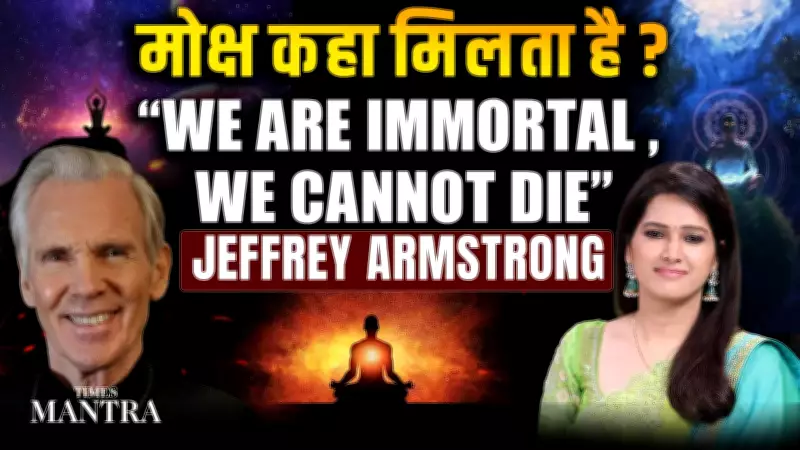
In a thought-provoking exploration, Jeffrey Armstrong challenges conventional beliefs about moksha and human mortality, drawing deeply from ancient Indian philosophical traditions. He presents a compelling argument that reinterprets death not as an end but as a mere transition, urging a shift in perspective toward our true nature as immortal beings.
Rethinking Moksha: Not an Afterlife Achievement
Armstrong firmly disputes the popular notion that moksha is something to be attained only after physical death. Instead, he posits that it is a state of awareness accessible in this very lifetime. By delving into Vedantic principles, he emphasizes that moksha is not a distant heaven or a future reward but a present reality that can be realized through self-understanding and spiritual practice.
The Illusion of Mortality
Central to his explanation is the idea that humans are not mortal bodies but immortal consciousness. Armstrong elaborates that since our essence is consciousness, which is eternal and unchanging, we can never truly die. Death, therefore, is perceived only as a transition—a shedding of the physical form—rather than a cessation of existence. This perspective aligns with core teachings from Indian philosophy that highlight the soul's permanence.

Dissolving the Fear of Death
When one comprehends the self beyond the limitations of body and mind, the fear of death naturally dissolves. Armstrong describes how this realization brings about a life lived with greater clarity, freedom, and purpose. By embracing this understanding, individuals can navigate their earthly experiences with a sense of peace and detachment, knowing that their true identity transcends physical boundaries.
Implications for Modern Life
Armstrong's insights have profound implications for contemporary spiritual seekers. He bridges ancient wisdom with modern contexts, suggesting that the pursuit of moksha is not about escaping life but enriching it. This approach encourages a holistic view where spiritual growth and daily living are intertwined, fostering a more meaningful and conscious existence.
In summary, Jeffrey Armstrong's explanation offers a refreshing take on moksha and immortality, rooted in timeless Indian thought. By redefining death as an illusion and moksha as an attainable state of awareness, he provides a framework for living fearlessly and purposefully, grounded in the realization of our eternal consciousness.






