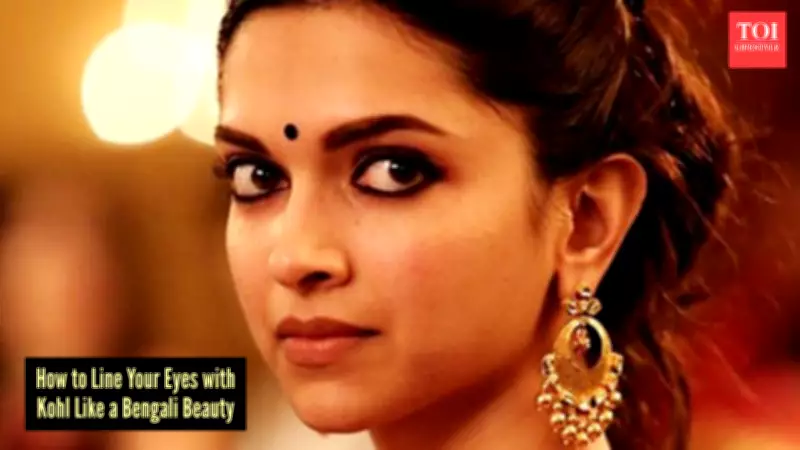
Kohl-lined big eyes are not just a makeup step for Bengali girls; they embody emotion, heritage, and the essence of quiet drama. With a single stroke, one can achieve a statement-making look. From Durga Puja celebrations to everyday elegance, this signature Bengali kohl style is soft yet intense, featuring slightly smudged edges that add definition.
This look is not a modern trend but is rooted in centuries of tradition. Bengalis wear kohl for protection from the evil eye, as a cultural identity marker, and for its cooling properties. What sets Bengali kohl eyes apart is the detailing that embraces depth, subtle expression, and a fierce softness, allowing the eyes to convey everything.
Step-by-Step Guide to Bengali Kohl Eyes
Step 1: Prep the Face
Hydrate the under-eye area with ice and a soft cream. This ensures the kohl lasts longer, as a good base is crucial.

Step 2: Tight-Lining Technique
Apply kohl on the upper waterline. This makes the eyelashes appear fuller and adds intensity without an overly made-up look. This is the secret to naturally deep Bengali eyes.
Step 3: Outline the Lower Waterline
For bold drama, use a creamy kohl to outline the lower waterline and extend it slightly outward with a subtle elongation. This makes the eyes look bigger and more defined.
Step 4: Smudge the Lines
Using a cotton bud or fingertip, gently blur the edges, especially the lower line. The goal is a soft haze, not a crisp finish.
Step 5: Create the Soft Stroke
Instead of a sharp edge, drag the kohl slightly outward and keep it diffused with a subtle hint. This gives the elongated Bengali eye shape.
Step 6: Define the Upper Line
Lightly run kohl along the upper eyelash line and then smudge it. This creates subtle depth with a soft, cohesive touch.
Step 7: Finish with Lashes and Brows
Apply mascara for a subtle lift and keep eyebrows natural but defined. Keep the look minimal to make the eyes the focal point.
This traditional technique, passed down through generations, offers a timeless beauty that speaks volumes without words.