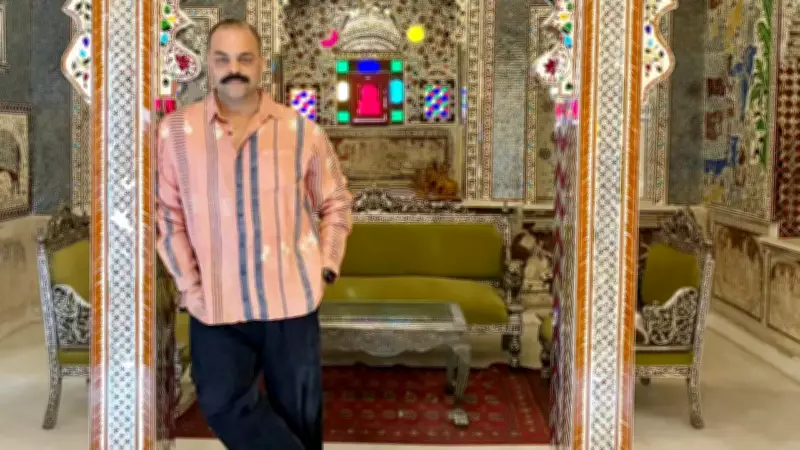
Ganesh Emporium: A Timeless Legacy in Udaipur's Historic Haveli
In the serene lanes of Udaipur, where ancient architecture whispers tales of bygone eras, stands a majestic 17th-century haveli. This grand structure, now home to Ganesh Emporium, serves as a living testament to India's rich textile heritage. Within its walls, history is not merely preserved but dynamically reinterpreted by Vipul Shah, a visionary who weaves stories through vintage fabrics, art, and artifacts.
A Family Heritage Rooted in Ahmedabad
The origins of Ganesh Emporium trace back to Ahmedabad in the 1950s and 1960s, where Shah's grandfather, an accountant by profession, nurtured a passion for sourcing exquisite textiles for affluent families. What began as a side interest evolved into a dedicated pursuit of collecting rare indigenous weaves, from the intricate patterns of Kutch to influences from Central Asia. Despite migrating from the Mewar region for economic reasons, the family maintained strong cultural ties, expanding their collection organically over decades.
"We never relied on advertising or PR agencies," Shah emphasizes. "Our growth stemmed purely from word of mouth and a profound understanding of textiles." By the mid-1980s, they established a modest 100-square-foot store, which has since blossomed into a significant legacy, both in scale and cultural impact.

Transforming a Ruinous Haveli into a Living Archive
The relocation to Udaipur marked a pivotal shift, not just in location but in philosophy. Acquired over 25 years ago in a dilapidated state, the haveli required meticulous restoration. "The building was literally shaking when we bought it," Shah recalls. Employing traditional lime and mortar techniques, skilled artisans painstakingly revived every detail, ensuring architectural integrity.
Today, the haveli spans 100 rooms and 30 galleries, featuring arched doorways, frescoed walls, and sunlit courtyards. It functions as a living archive, where textiles and art engage in a silent dialogue with history, offering visitors an immersive experience beyond mere commerce.
Bridging Heritage with Modern Design
Upon joining the family business in 2009 after studying international business, Shah faced an identity crisis. "I wanted to create something uniquely my own," he admits. This led to innovative experiments with discarded vintage textiles from his grandfather's collection, using patchwork techniques to breathe new life into damaged fabrics.
Initial forays into home décor items paved the way for his first successful collection of bags in 2012. Leveraging the emerging platform of Instagram, Shah showcased his work organically, gaining traction through visual storytelling. Among his creations, the Banjara Clutch stands out as an iconic piece, inspired by vintage Afghan textiles and adorned with coins, beadwork, and embroidery, reimagined with contemporary hardware finishes.
Sustaining Artisan Communities and Craft Traditions
Beyond aesthetics, Shah's work supports a vast network of artisans from regions like Barmer and Jaisalmer. Engaging with nearly 15–20 village clusters, the brand promotes techniques such as adda embroidery, preserving traditional crafts. "It's not just about making products; it's about sustaining a way of life," Shah asserts, highlighting the ethical foundation of his enterprise.
Global Recognition and Measured Growth
While Ganesh Emporium built its reputation quietly, a boost came when celebrity Malaika Arora wore one of Shah's designs, sparking widespread attention. This exposure led to collaborations in Bollywood films and Netflix series. However, Shah remains focused on authenticity, preferring custom orders over mass production.
In a fast-paced world driven by seasonal trends, Shah advocates for a slow, organic approach. "We don't follow collections or seasons," he explains, emphasizing experiential marketing over traditional advertising. This philosophy aligns with the haveli's ethos, reframing value through the beauty of imperfection in vintage textiles.

Looking Forward: A Global Narrative with Indian Roots
Today, Ganesh Emporium stands at the crossroads of past and present, local and global. Shah takes pride in seeing Indian heritage embraced worldwide, noting the rewarding nature of cultural exchange. In the quiet corridors of the ancient haveli, every thread narrates a story, ensuring that history not only endures but thrives in contemporary forms.