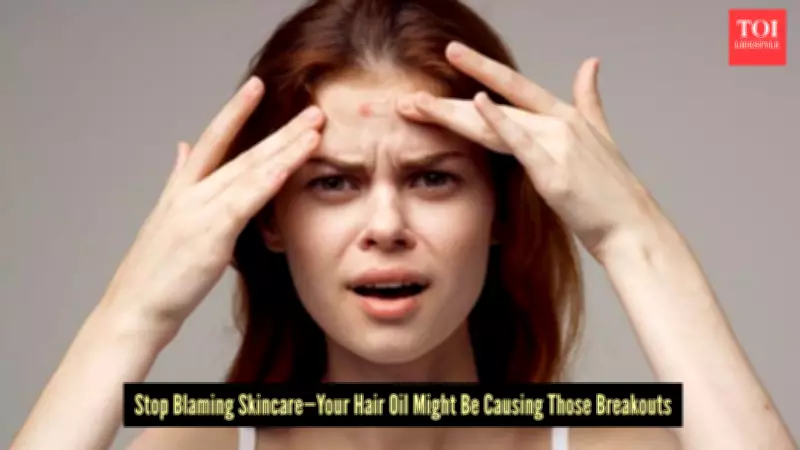
If you’re suffering from those tiny bumps across your forehead after your hair-oiling session, don’t blame your skincare routine—blame your hair oil, which might be the real culprit. These blemishes never fully develop into pimples, nor do they truly disappear. They are called 'pomade acne' or 'acne cosmetica', which are breakouts triggered by hair products, especially oil-based ones.
How does hair oil cause acne?
Acne forms when pores get clogged with dead skin cells, bacteria, and oil. Hair oil simply accelerates this process as it travels from the scalp to the skin, mixing with sweat and natural sebum. It blocks the pores and traps bacteria, creating an environment for breakouts and inflammation. Even traditional or high-formula hair oil can form a thick layer on the skin, which triggers acne and traps debris.
Signs your hair oil is causing acne
Not all acne is the same, but you can identify the signs. If you see breakouts concentrated along the hairline and forehead with tiny, uniform bumps resembling comedones, your hair oil is likely the cause. Also, if your acne worsens after oiling your forehead while your cheeks and chin remain clear, your oil is the problem.

But why is the forehead the first victim?
Your forehead is part of your T-zone, which produces more oil than other facial areas, making it prone to acne. It has high sebaceous gland activity and constantly touches your hair, easily collecting oil residues from the strands. This faster clogging activity leads to frequent breakout issues.
How to prevent this?
Don’t worry—you don’t need to give up on hair oil completely, as it will make your hair frizzy and dry, but you just need to be more strategic. Avoid applying oil close to the hairline or letting it drip onto your forehead. Keep oiled hair away from your face, especially when you’re sleeping. Refrain from leaving oil for long periods, which increases the breakout risk, and choose lighter oils that don’t clog your pores and are also effective on your locks.