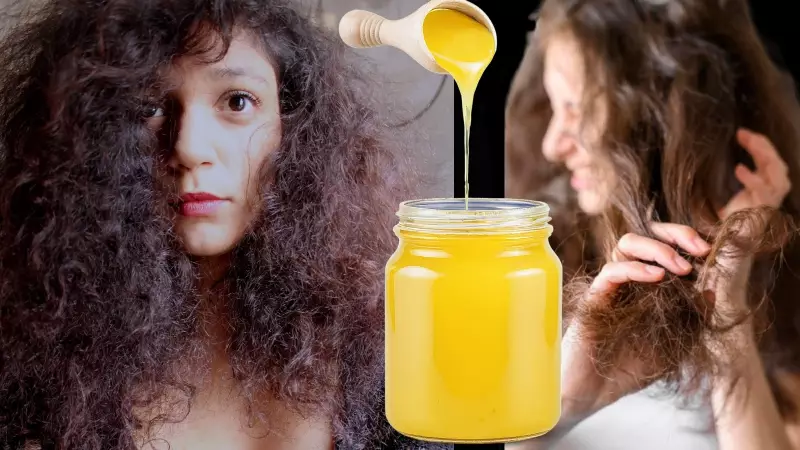
Frizzy hair often ruins perfect selfies and clashes with stylish outfits. Those dry, unruly strands typically signal that hair struggles to hold moisture. Many people turn to ghee, a traditional remedy, hoping to restore smoothness. But does applying ghee twice a week for a month truly work? Let's explore what experts say.
What Causes Frizzy Hair?
Dr Rupika Singh, Chief Dermatologist and Founder of Akiya Aesthetics, explains that frizz happens when hair becomes dry, rough, or stressed, losing its natural smoothness. "Frizzy hair usually indicates that the hair is not retaining moisture the way it should," says Dr Singh. In this state, hair reacts strongly to external factors like weather, sun exposure, and daily handling.
Dr Sherin Bhan, Co-Founder of Studio 1915 Luxury Aesthetic Clinic, adds that when the outer layer of the hair shaft lifts or gets disturbed, moisture from the air enters the hair. This causes swelling and a frizzy appearance.

Common Culprits Behind Frizz
Experts identify several factors that contribute to frizzy hair:
- Excessive washing
- High humidity
- Frequent styling with heat tools
- Chemical treatments like coloring or perming
- Harsh shampoos
- Hard water
- Rough towel drying
- Skipping conditioner
- Underlying dryness of the scalp and hair shaft
Habits such as excessive washing, frequent styling, rough towel drying, or neglecting conditioning can make hair more prone to frizz and flyaways over time.
Can Ghee Help Reduce Frizz?
Both Dr Singh and Dr Bhan agree that ghee can temporarily improve the appearance of frizzy hair. It coats the hair, making it feel softer and more manageable. Ghee contains high levels of fatty acids and Vitamin A, which help soften dry hair and reduce surface-level frizz.
"When applied twice a week for a month, it may benefit people with very dry or coarse hair textures who do not have dandruff or an active scalp condition," notes Dr Singh.
How to Apply Ghee Correctly
Experts recommend applying ghee for only 30 to 60 minutes. Leaving it on longer, especially overnight, can clog pores, attract dirt, and make cleaning difficult. Use a mild shampoo to completely remove the ghee after application.
Dr Singh states that most people without dandruff may notice some improvement in softness and frizz control within two to three weeks of regular use. If no benefit appears, or if the scalp feels heavy or itchy, stop using ghee immediately.
Enhancing the Remedy
For better results, you can mix ghee with aloe vera gel and coconut oil when applying sparingly to dry hair lengths. "For dry hair lengths, this combination might be more effective," says Dr Bhan. However, these mixtures can feel heavy and clog scalp pores. People with oily or acne-prone scalps should exercise caution and perform a patch test before adding ghee to their regular hair care routine.
Important Precautions
This technique is not suitable for everyone. Those with dandruff should avoid ghee on hair entirely, as it can worsen scalp issues. Applying ghee on dandruff-ridden hair may lead to heaviness, buildup, itching, and increased flaking.
"Ghee should be seen as a nourishing add-on rather than a solution, as it improves appearance but doesn't address the root cause of frizz," emphasizes Dr Singh.
Disclaimer: This article is based on information from public sources and expert opinions. Always consult your healthcare practitioner before starting any new health or beauty routine.