Jallikattu Festival Kicks Off in Tamil Nadu Amid Cultural and Legal Spotlight
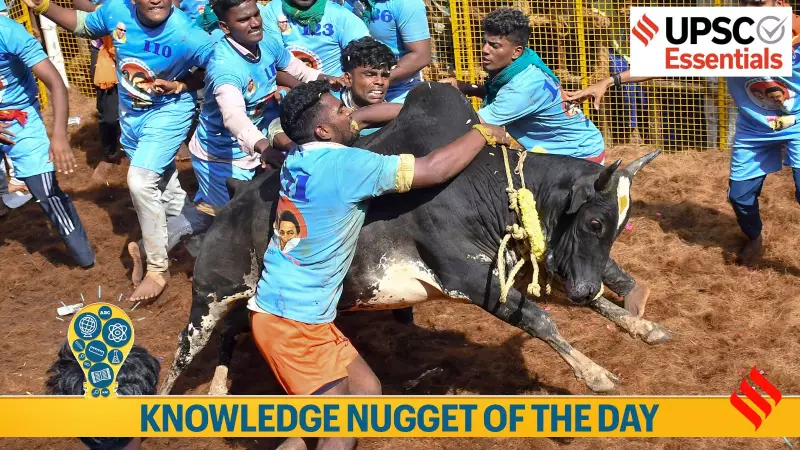
The traditional bull-taming sport of Jallikattu has officially begun in Tamil Nadu. This event marks the start of the Pongal harvest festival season. People across the state are celebrating this ancient tradition with great enthusiasm.
What is Jallikattu?
Jallikattu, also known as eruthazhuvuthal, is a bull-taming sport deeply rooted in Tamil culture. It forms an integral part of the Pongal harvest festival. The festival serves as a thanksgiving celebration for a bountiful harvest. Cattle worship represents a key component of these festivities.
According to historical records, this bullfight dates back to 400-100 BCE. The Ayars, an ethnic group in India, originally played it. The name Jallikattu comes from two Tamil words: Jalli meaning silver and gold coins, and Kattu meaning tied.

During the festival, organizers release a bull into a crowd of participants. Competitors attempt to tame the animal and grab coins tied to its horns. Participants typically try to hold onto the bull's hump to stop it. Some runners even sprint alongside the charging animal.
Breeders use specific native bull breeds like Pulikulam or Kangayam for the sport. Jallikattu has become an important cultural tourism attraction in Tamil Nadu. Several variants exist including Vadi manjuviraṭṭu, Vēli viraṭṭu, and Vaṭam manjuviraṭṭu.
Many agricultural communities view Jallikattu as a traditional method to preserve pure-breed native bulls. Conservationists and farmers argue that the sport protects these male animals. Without such traditions, these bulls might only serve meat production or ploughing purposes.
Other Animal-Based Festivals in India
India hosts several traditional festivals involving animals beyond Jallikattu. These celebrations reflect diverse cultural practices across different regions.
Kambala Festival
Kambala represents a folk sport practiced in coastal Karnataka districts. Tulu-speaking communities, particularly the Bunt community, consider it a matter of prestige. Families groom pairs of buffaloes throughout the year hoping to win Kambala events.
Some believe the festival commemorates Lord Kadri Manjunatha, a manifestation of Lord Shiva, for abundant crops. Others attribute its origin to Karnataka farmers. Historical accounts suggest Hoysala Kings started the racing custom to test buffalo training for warfare.
Kambala events typically fall into four categories:
- Negilu (plough): Light ploughs tie buffaloes for racing, suitable for entry-level animals.
- Hagga (rope): Jockeys race buffaloes using only a connecting rope.
- Adda Halage: Buffaloes drag jockeys standing on horizontal planks.
- Kane Halage: Wooden planks with water holes create splashing effects during racing.
Maramadi Bull Race
Maramadi, also called Kalappoottu or Pothottam, is a bull race conducted in Kerala villages after harvest season. Freshly ploughed paddy fields serve as racing tracks. The most famous Maramadi race occurs at Anandhapalli village in Pathanamthitta district during Onam festival.
Bailgada Sharyat
This Maharashtrian tradition involves bullock cart racing with 450 years of history. Farmers from Konkan, western Maharashtra and Marathwada practice it. Four fast bulls pull carts across 350-450 feet tracks. The team achieving highest speed wins the competition.
Legal Framework: Prevention of Cruelty to Animals Act
The Prevention of Cruelty to Animals (PCA) Act, 1960, establishes legal provisions regarding animal treatment in India.
The Act defines animal cruelty comprehensively. It includes acts like overburdening animals, denying food/water/shelter, mutilating or killing animals unnecessarily. The legislation specifies punishments for violations.
For first offences, fines range from ten to fifty rupees. Second offences within three years attract fines from twenty-five to one hundred rupees. Courts may impose imprisonment up to three months for repeat violations.

Animal rights groups have long contested festivals like Jallikattu and Kambala. They express concerns about potential cruelty and dangerous aspects. These sports sometimes cause injuries or fatalities to both animals and human participants.
In 2023, a significant legal development occurred. A five-judge Supreme Court bench upheld amendments to the PCA Act. State legislatures of Tamil Nadu, Maharashtra, and Karnataka had introduced these changes. The amendments specifically allow traditional sports including jallikattu, kambala, and bullock-cart races.
The Madras High Court recently emphasized the state government's role in organizing Jallikattu. The court denied permission to a private village committee seeking to conduct the festival at Avaniyapuram. Justices observed that only the state government should organize this internationally renowned event.
This year's Jallikattu celebrations at Avaniyapuram in Madurai district mark the first major event of Pongal 2026. The festival continues to generate discussions about cultural preservation, animal welfare, and legal boundaries in contemporary India.