The Seven Gates to Vaikuntha: A Spiritual Journey Beyond Rituals
In Hindu Vaishnavite philosophy, the celestial abode of Lord Vishnu, known as Vaikuntha, is believed to be guarded by seven sacred gates or doors. These gates serve as a profound spiritual pathway, guiding the soul toward moksha, the ultimate liberation from the cycle of birth and death. This concept is deeply intertwined with the observances and ceremonies of Vaikuntha Ekadashi, a significant festival dedicated to Lord Vishnu.
Understanding the Vaikuntha Dwaram
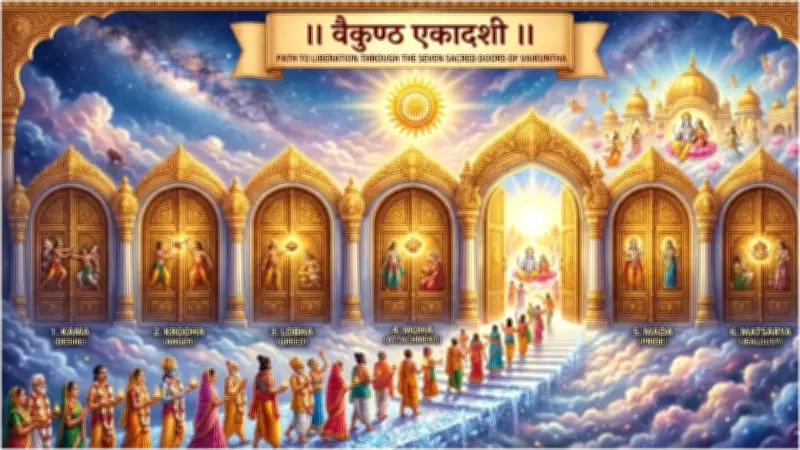
Devotees hold that on Vaikuntha Ekadashi, the "Vaikuntha Dwaram," or the gate to heaven, opens for those earnestly seeking spiritual freedom. This belief is not merely symbolic but is enacted in temple traditions, where pilgrims walk through designated gates, symbolizing their journey toward divine union. According to religious texts and temple customs, these seven gates act as barriers separating the material world from the spiritual realm, each representing a virtue to be mastered.
The Seven Gates and Their Spiritual Significance
Kama (Desire): The first gate emphasizes the control and transcendence of worldly desires. Followers must learn to let go of material cravings to progress spiritually.

Krodha (Anger): Anger is viewed as a major obstacle on the spiritual path. Overcoming this gate requires cultivating patience and emotional restraint.
Lobha (Greed): The third gate involves renouncing greed and excessive attachment to wealth, focusing instead on spiritual abundance.
Moha (Attachment): This step challenges individuals to release false beliefs and emotional ties to earthly relationships, fostering detachment.
Mada (Pride): Pride and ego are seen as barriers between the soul and the divine. Passing through this gate involves humility and selflessness.
Matsarya (Jealousy): The sixth gate requires abandoning jealousy and comparisons with others, promoting inner peace and contentment.
Ahamkara (Ego): The final gateway signifies the dissolution of the ego, allowing the soul to merge with Lord Vishnu's divine presence, achieving ultimate liberation.
Temple Traditions and Practices
On Vaikuntha Ekadashi, numerous temples dedicated to Lord Vishnu, such as the renowned Tirumala Venkateswara Temple, facilitate pilgrim walks through the Vaikuntha Dwaram. Devotees believe that traversing this holy door leads them symbolically to Vaikuntha, where they can seek spiritual emancipation from the Lord. These rituals are not just physical acts but are imbued with deep spiritual meaning, reinforcing the connection between faith and practice.
A Journey Beyond Mere Rituals
Spiritual experts and scholars emphasize that the seven gates transcend physical doors, representing inner transformations within the heart and mind. This journey is akin to a gradual purification of human nature, culminating in complete surrender to Lord Vishnu. For believers, these symbols serve as a powerful reminder that true freedom cannot be attained through rituals alone; it necessitates breaking down the mental and emotional barriers that tether the soul to the material world. Thus, the path to Vaikuntha is both an external observance and an internal evolution, guiding souls toward eternal bliss.