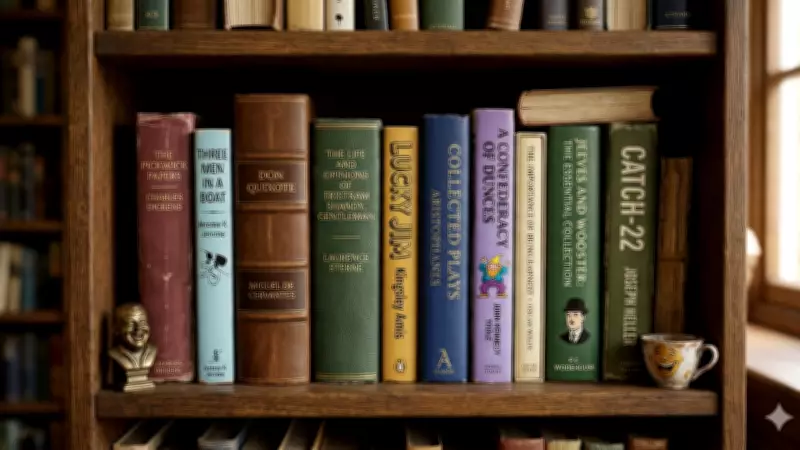
10 Classic Books by Authors Known for Their Exceptional Humour: From Oscar Wilde to Kingsley Amis
Humour has long been an integral and vital component of literature, serving as a powerful tool to reflect, critique, and comment on societal norms and human experiences. It transforms mundane situations into literary masterpieces, bringing smiles to readers while offering profound insights. Classic authors have masterfully employed humour, whether through absurd character adventures, witty social commentary, or sharp satire, making their works timelessly appealing. These ten classic books are renowned for their exceptional sense of humour, each showcasing unique comedic styles that continue to resonate with audiences today.
Lucky Jim: Kingsley Amis
Lucky Jim stands as a quintessential British campus novel, renowned for its use of sarcasm and awkward situations to generate humour. Literary research highlights that Kingsley Amis portrays the frustrations of academic life with remarkable wit and honesty. The protagonist's internal thoughts and misadventures further amplify the comedic effect, making it a beloved classic in humorous literature.
A Confederacy of Dunces: John Kennedy Toole
According to EBSCO, this novel features the eccentric character Ignatius J. Reilly, whose absurd beliefs and actions provide a rich source of humour. Widely celebrated upon its publication, the book's comedic brilliance lies in its character-based satire and exaggerated scenarios, offering a hilarious yet insightful look at human folly.

Cold Comfort Farm: Stella Gibbons
This novel is a clever parody of rural melodrama, infused with modern humour and wit. Stella Gibbons uses humour to mock exaggerated emotions and dramatic tropes, with the character Flora Poste serving as a voice of reason in a chaotic rural setting. As noted by Penguin Books UK, this contrast creates effective comedic moments that delight readers.
Catch-22: Joseph Heller
As recognized by the National Book Critics Circle, Catch-22 is a dark comedy set against the backdrop of war, employing absurd logic to expose contradictions in bureaucratic systems. The term Catch-22 has since entered everyday language, reflecting Heller's crisp and unsettling humour that challenges conventional thinking.
The Pickwick Papers: Charles Dickens
Charles Dickens' first novel is brimming with comic moments and memorable characters. Mr. Pickwick's adventures are both ridiculous and touching, with humour derived from exaggeration and keen observations of human social traits. This work remains a testament to Dickens' ability to blend humour with heartfelt storytelling.
Gulliver’s Travels: Jonathan Swift
Gulliver’s Travels is not only humorous but also deeply satirical, using absurd places and characters to comment on politics and humanity. Jonathan Swift defined satire as a sort of glass, wherein beholders do generally discover everybody’s face but their own, showcasing his skill in blending comedy with critical reflection.
Don Quixote: Miguel de Cervantes
Often regarded as one of the first modern novels, Don Quixote combines humour with adventure through the protagonist's misguided chivalry. These humorous moments carry significant meaning, with Cervantes' use of irony vividly portraying the clash between reality and illusion, making it a timeless comedic masterpiece.
Three Men in a Boat: Jerome K. Jerome
This comic travelogue recounts the boating journey of three friends, filled with mishaps and comical insights. Jerome K. Jerome's humour is based on exaggeration and observations of day-to-day life. Literary critics note that while intended to be funny, the book transcends mere comedy, offering enduring entertainment.
The Importance of Being Earnest: Oscar Wilde
Oscar Wilde crafted a masterpiece of satire and wordplay in this play, using absurd situations and witty dialogue to mock Victorian society. Known for quotes like The truth is rarely pure and never simple, as stated on the Gutenberg Org website, Wilde's humour remains sharp and relevant.

Pride and Prejudice: Jane Austen
Jane Austen's wit shines through her depiction of manners, marriage, and miscommunication. According to the Malaya Journal of Matematik, the humour in Mr. Bennet's wit and Elizabeth's observations makes the book a delightful read. Austen herself described her work as light and bright and sparkling in a letter, capturing its enduring charm.