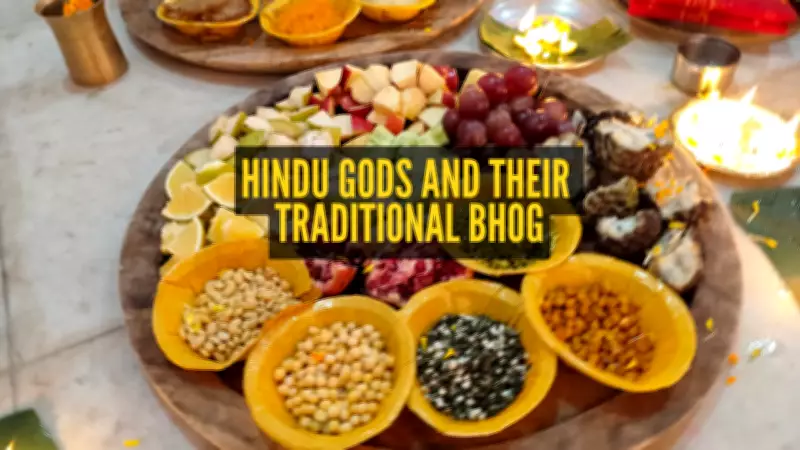
Sacred Sustenance: The Traditional Bhog Offerings to 10 Hindu Deities
In the rich tapestry of Indian culture, every festival is intricately woven with specific cultural norms, rituals, and culinary traditions that revolve around the deities being honored. Central to these celebrations is the concept of bhog, the lovingly prepared food offerings presented to gods and goddesses, believed to be their favorite delicacies. These offerings are not merely symbolic but deeply rooted in mythology and regional practices, forming an essential part of worship and festivity.
Lord Ganesha: The Remover of Obstacles
Lord Ganesha, the elephant-headed god of wisdom and beginnings, is particularly fond of sweets. His traditional bhog includes modak, a steamed dumpling crafted from rice flour and filled with a sweet mixture of coconut and jaggery. Additionally, devotees often offer Motichoor Laddoo, spherical sweets made from fine gram flour pearls, to seek his blessings for success and prosperity.
Lord Krishna: The Divine Cowherd
Known for his playful childhood antics, Lord Krishna has a profound love for dairy products. His preferred offering is fresh white butter mixed with rock sugar, a classic preparation during Janmashtami celebrations. This simple yet divine combination reflects his association with pastoral life and is cherished in rituals across India.

Lord Vishnu: The Preserver
Lord Vishnu, the protector of the universe, favors yellow-hued foods. Traditional bhog for him includes munakka (dried grapes), honey, chana dal with jaggery, and bananas. A critical element in these offerings is the inclusion of Tulsi leaves and panchamrit, a sacred mixture of five ingredients: milk, curd, honey, ghee, and sugar, symbolizing purity and devotion.
Lord Shiva: The Ascetic God
The formidable Lord Shiva is offered a unique array of items that reflect his ascetic nature. These include bhaang (a cannabis preparation), dhatura, milk, thandai, ber (Indian plum), and white-colored sweets. On auspicious occasions like Maha Shivratri, devotees present Panchamrit, emphasizing his connection to simplicity and spiritual transcendence.
Goddess Saraswati: The Embodiment of Knowledge
As the goddess of wisdom, music, and arts, Goddess Saraswati appreciates simplicity in offerings. She is traditionally given fresh fruits, especially mishrikand and ber. During Saraswati Puja, additional items like carrot, khichdi, and boondi are offered, symbolizing clarity, nourishment, and the pursuit of learning.
Goddess Lakshmi: The Bestower of Wealth
Goddess Lakshmi, associated with prosperity and abundance, is often offered creamy rice kheer topped with nuts. This rich dessert is a staple during Diwali and Lakshmi Puja, representing the sweetness and opulence she brings into devotees' lives, encouraging gratitude and generosity.
Goddess Durga: The Warrior Goddess
While Goddess Durga accepts a variety of offerings, including vegetarian, sattvik, and even non-vegetarian foods in some traditions, the most renowned bhog is the Navratri special of poori, kala chana, and halwa. This combination is typically offered during Ashtami and Navami as part of kanya pujan, honoring her strength and protective energy.
Lord Hanuman: The Devotee's Devotee
Lord Hanuman, revered for his unwavering devotion, is commonly offered sweets such as sweet boondi, motichoor laddoo, or besan laddoos. These are presented on Tuesdays and Saturdays, days considered especially auspicious for worshiping him, to seek courage and loyalty.
Lord Jagannath: The Lord of the Universe
In the famous Jagannath Temple of Puri, Lord Jagannath is offered Sattvik Khichdi, also known as Mahaprasad. This simple yet sacred dish is primarily made with rice and moong dal, embodying purity and equality, as it is distributed to devotees regardless of caste or creed.

Surya Dev: The Sun God
Surya Dev, the solar deity, is honored with offerings that combine jaggery and wheat, often in forms like lapsi, laddoo, or gur ke parathe. During Chhath Puja, a significant festival dedicated to him, the popular thekua, a deep-fried cookie made from wheat flour and jaggery, is offered, symbolizing energy and vitality from the sun.
These traditional bhog offerings highlight the deep spiritual connection between food and faith in Hinduism. Each item is carefully chosen based on mythological stories, regional customs, and the symbolic attributes of the deities, making every festival a unique culinary and cultural experience. By understanding these practices, one gains insight into the devotional heart of Indian traditions, where every meal offered is an act of love and reverence.