As the familiar carols fill the air and festive lights illuminate streets, Christmas arrives with a sense of timeless tradition. For many, especially students, it appears as a fixed set of customs—a date, a figure, and familiar rituals. However, the holiday celebrated worldwide on December 25th is far from a static story. Its evolution is a complex tapestry woven from belief, historical power dynamics, and continuous change, much of which remains outside standard classroom teachings.
The Historical Roots Behind The Festive Season
The cornerstone of the celebration, the birth of Jesus Christ, is shrouded in historical mystery. The Bible does not specify a date for the birth, and the now-universal date of December 25th was formally chosen much later by the Roman Catholic Church. Furthermore, the celebration is not globally synchronized. Countries with large Orthodox Christian populations, like Russia, celebrate Christmas on January 7th, following older church calendars.
Even the holiday's name holds historical layers. The term 'Christmas' originates from the Old English 'Cristes maesse', meaning Christ's mass. The common abbreviation 'Xmas' is not a modern invention but dates back to the 16th century, where the 'X' represents the Greek letter Chi, the first letter of 'Christos' (Christ).

Evolution of Modern Christmas Customs
Many elements that define a quintessential Christmas today are surprisingly recent additions. Traditions like exchanging Christmas cards, pulling crackers, festive gift-giving, and feasts centred around roast turkey and mince pies became widespread during the Victorian era in Britain. Queen Victoria and Prince Albert played a significant role in popularising these customs, transforming Christmas into a major domestic and social event.
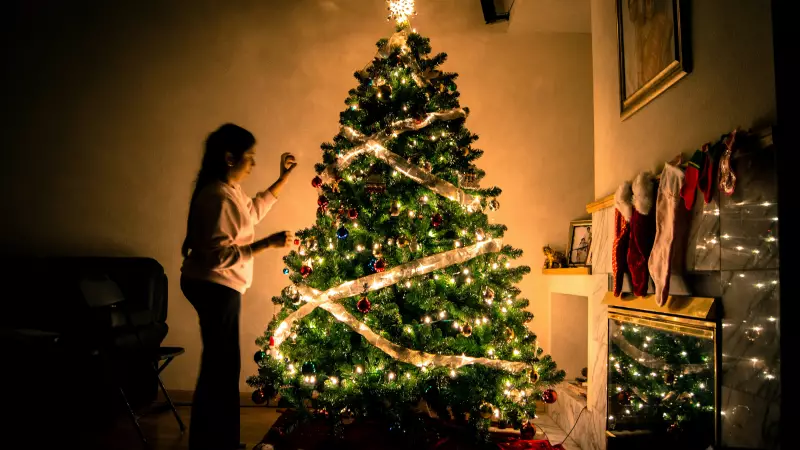
The iconic Christmas tree, while popularised in Britain in the 1800s, has roots in Germany. The practice of decorating fir trees with candles, fruits, and nuts is traced to German tradition, with some historians linking the use of evergreens to ancient Roman and Egyptian customs symbolising life in winter. This tradition carries diplomatic weight too; Norway sends a large Christmas tree to London's Trafalgar Square every year as a token of gratitude for Britain's WWII support.
Global Faces of Festive Folklore
The jolly, red-suited Santa Claus is a familiar figure, but his origin lies with a real 4th-century Christian bishop, Saint Nicholas, known for his generosity. The modern Santa evolved from the Dutch 'Sinterklaas'. However, not every culture has Santa. Global Christmas folklore is wonderfully diverse:
- In Italy, a witch-like figure called La Befana delivers gifts to children.
- In Iceland, children await the Yule Lads, a group of mischievous characters who leave rewards or punishments.
Even the soundtrack of Christmas has unexpected origins. The ubiquitous song 'Jingle Bells' was originally composed for Thanksgiving in 1850 and only later became a Christmas staple. Perhaps most surprising is that Christmas hasn't always been celebrated openly. In 1644, celebrations were banned in England and parts of colonial America by authorities who believed the holiday had lost its religious meaning, a prohibition that lasted nearly two decades.
These facts reveal that Christmas, often presented as an unchanging tradition, is actually a dynamic record of cultural exchange, political history, and social evolution. For students and celebrants alike, understanding this context enriches the appreciation of the holiday, showing how beliefs, historical moments, and societal shifts collectively shape the festivals we hold dear.