Major Archaeological Discovery: Roman Shipwreck Yields Over 1,000 Artefacts in Swiss Lake
In a groundbreaking archaeological find, more than 1,000 Roman artefacts have been unearthed from the depths of Lake Neuchâtel in Switzerland. This remarkable discovery provides an unprecedented window into life during the Roman Empire, preserved underwater for nearly two millennia. The artefacts are believed to be part of the cargo of a Roman ship that sank around 20 to 50 AD, offering a rare glimpse into ancient trade and military operations.
Discovery and Excavation of the Eagle’s Wreck
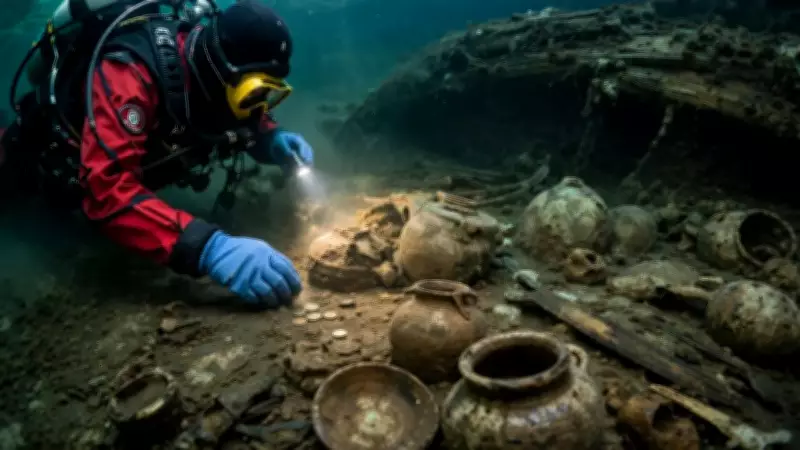
The finding emerged when underwater archaeologists from the Octopus Foundation were exploring Lake Neuchâtel, one of Switzerland's largest lakes. Initially, researchers spotted a dark spot on the lakebed, suspecting it might be a shipwreck. Upon diving for closer inspection, they identified round objects that turned out to be pottery pieces. This led to the revelation of the Eagle’s Wreck, a Roman ship whose cargo has remained remarkably intact for centuries.
Artefacts Recovered: A Diverse Collection
The excavation has yielded an extensive array of Roman artefacts, showcasing the diversity of the ship's cargo. Key items include:

- Ceramics and plates: Many found in excellent condition, some with remnants of food still present, which are currently under scientific analysis.
- Weaponry: Gladiator swords, a dagger, and military equipment, suggesting a possible connection to Roman soldiers.
- Coins and tools: Indicative of everyday life and trade practices.
The variety of items hints at intentional packing, possibly for a Roman military base. Archaeologists estimate the cargo could have supplied a force of about 6,000 soldiers, highlighting the scale of Roman logistical operations.
Exceptional Preservation in Lake Neuchâtel
One of the most astounding aspects of this find is the exceptional state of preservation of the artefacts. Despite being submerged for hundreds of years, many items have survived in near-perfect condition. This is attributed to the unique environment of Lake Neuchâtel, which has protected delicate objects like ceramics and wicker baskets. For instance, an entire wicker basket containing ceramic objects was recovered—a rare phenomenon in archaeology that allows for detailed study of manufacturing and packaging techniques.
Historical Significance: Insights into Roman Life
This discovery is highly significant for understanding Roman history, as it simultaneously sheds light on trade, military affairs, and daily life. The presence of both military and civilian artefacts suggests that commerce and military operations were closely intertwined. The find also illustrates how the Romans utilized water transport for moving goods, emphasizing their sophisticated organizational skills. Moreover, the wreck site remains largely unexplored, promising further revelations that could reshape historical knowledge.
Next Steps: Analysis and Exhibition
Following recovery, all 1,000+ artefacts are undergoing cleaning and restoration processes. Scholars will conduct thorough analyses, examining marks, materials, and food traces on the items. These studies aim to uncover more about Roman craftsmanship and daily practices. Eventually, the artefacts will be displayed at Switzerland's largest archaeological museum, allowing the public to engage with this fascinating piece of history.
Conclusion: A Key to the Past
The discovery of over 1,000 Roman relics in Lake Neuchâtel transcends a mere treasure hunt; it serves as a vital key to unlocking the past. It underscores the advanced nature of Roman trade and military systems thousands of years ago. Above all, this excavation reminds us that hidden stories, capable of transforming our understanding of history, await discovery beneath the waves.