Thailand Construction Crew Unearths 1,300-Year-Old Gold Treasures Beneath Buddha Statue
In a remarkable twist of fate, what began as a routine drainage dig at a Thai temple has transformed into a historic archaeological discovery. Construction crews in Thailand, expecting to perform standard maintenance, instead struck a literal and figurative jackpot when they uncovered a 1,300-year-old time capsule of glittering artifacts hidden beneath a massive reclining Buddha statue.
Unexpected Discovery During Drainage Work
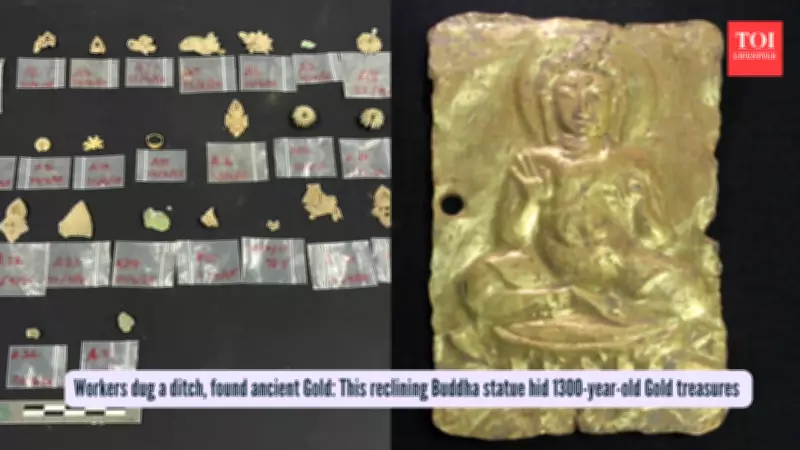
While working on a drainage system at the Wat Thammachak Sema Ram temple in Phimai, Thailand, laborers made an astonishing find. Digging approximately four feet below the famous sandstone reclining Buddha statue, known as Phra Non, they discovered a ceramic pot containing 33 ancient ornaments crafted from gold, silver, and bronze. According to Thailand's Fine Arts Department, this discovery has turned the site into an archaeological hotspot overnight.
The treasure trove included exquisite gold rings, delicate silver earrings, and rare bronze hoop earrings that match artistic styles from the Dvaravati period, dating back to around 657 A.D. This makes the reclining Buddha statue, measuring an impressive 43 feet in length, both Thailand's longest and oldest such statue, adding significant historical context to the find.

Further Excavations Reveal Additional Artifacts
Subsequent excavations at the site uncovered more precious items, including hammered metal sheets created using the ancient repoussé technique. This metalworking method involves hammering designs from the reverse side to create raised patterns on the front, showcasing advanced craftsmanship from over a millennium ago.
Among these artifacts, one particularly important piece is a gold sheet measuring 3x5 inches that depicts a seated Buddha in the role of a teacher. The detailed artwork features spiral curls, a large halo, elongated earlobes, and a robe draped over one shoulder. A hole in the top corner suggests it was likely used as jewelry or decorative hanging ornament.
Phanombutr Chantrachot, director-general of Thailand's Fine Arts Department, commented on the significance of these finds, noting that such artifacts "could have either been worn or used as decoration" in their original context.
Historical Significance of the Dvaravati Period Artifacts
These remarkable artifacts originate from the Dvaravati period, which spanned from the 6th to 11th centuries CE. During this era, the Mon kingdom successfully fused Indian artistic traditions with distinctive Thai styles, creating unique cultural expressions that have endured through the centuries.
The reclining Buddha statue, which represents the ultimate state of enlightenment in Buddhist tradition, likely served as a protective vessel for these devotional offerings. Experts believe the treasures were buried as sacred tributes during the statue's original construction or consecration ceremonies, intended as acts of religious devotion that would remain hidden for generations.
Another significant artifact discovered is a lead-tin alloy sheet measuring 4.5x6 inches that depicts a standing Buddha within an arched frame, accompanied by two attendants. While damage has obscured one figure, archaeologists believe the other may represent Brahma in traditional Thai style, providing valuable insights into the religious iconography of the period.
This extraordinary discovery serves as a powerful reminder that beneath our modern world lies layers of history waiting to be revealed. In an age dominated by technological advancement, these ancient treasures connect us to the artistic mastery, spiritual devotion, and cultural richness of civilizations that flourished centuries ago, offering tangible links to Thailand's profound historical heritage.