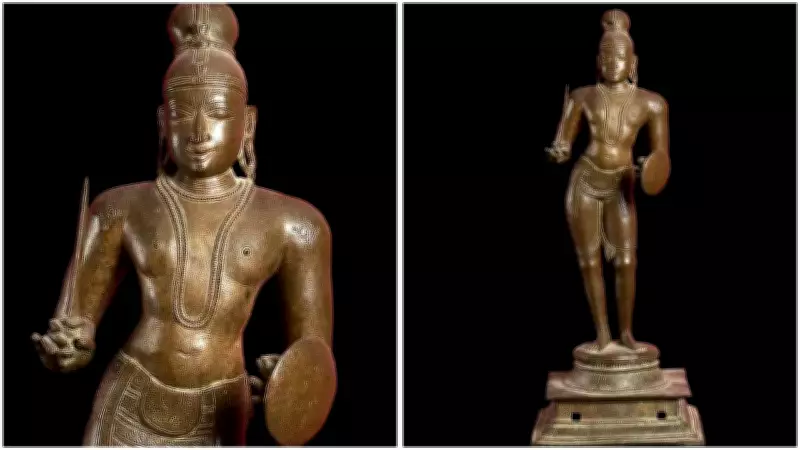
16th-Century Saint Statue Returns to India from UK Museum After Provenance Investigation
A significant 16th-century bronze statue depicting Saint Tirumankai Alvar, which was originally taken from a temple in Tamil Nadu, is among several Indian heritage items currently being returned to India from the United Kingdom. This repatriation follows a thorough investigation into the artifact's provenance and a formal claim by Indian authorities.
Museum Acquisition and Display History
The Ashmolean Museum in Oxford, which operates under the University of Oxford, acquired the 57.5-centimeter-tall statue of the South Indian Hindu saint in 1967. The museum acted in good faith at the time of purchase, obtaining it from the private collector Dr. J. R. Belmont, who lived from 1886 to 1981. For decades, the statue was publicly displayed, with no available information on how it initially entered Dr. Belmont's personal collection.
Discovery of Unclear Provenance
In November 2019, a pivotal development occurred when a French scholar alerted the Ashmolean Museum to research findings. This research included a photograph from 1957 showing the bronze statue within the Soundarrajaperumal temple located in Thadikombu, a village in Tamil Nadu. This revelation made the museum acutely aware that the artifact's provenance was unclear, prompting an immediate decision to launch a comprehensive investigation.

Formal Claim and Investigation Process
Although no formal claim had been submitted initially, the Ashmolean Museum proactively wrote to the Indian High Commission on December 16, 2019. In this communication, the museum requested further information and expressed its willingness to engage in discussions regarding the possible return of the statue. Subsequently, on February 11, 2020, a temple executive officer filed a police report noting that a modern replica had replaced the original bronze in the temple.
Following this, the Indian High Commissioner made a formal claim for the return of the bronze on March 3, 2020. At the request of the Archaeological Survey of India (ASI), the Ashmolean Museum commissioned a detailed metal analysis of the bronze statue. The results of this analysis were submitted to inform a comprehensive report on the artifact's provenance, further solidifying the case for repatriation.
Museum's Commitment to Ethical Practices
Dr. Xa Sturgis, the Director of the Ashmolean Museum, commented on the repatriation, stating, "The Ashmolean is pleased to see this important object returned to India and we are grateful to the Indian authorities and scholars who have helped establish its provenance. The museum and University of Oxford are committed to ethical collections practices and continued research into our collections, their origins and history." This statement underscores the institution's dedication to responsible stewardship and transparency in handling cultural artifacts.
The return of this 16th-century bronze statue marks a significant step in the ongoing efforts to repatriate Indian heritage items from international collections, highlighting the importance of provenance research and ethical museum practices in preserving cultural heritage.