Why the 2016 Trend Is Less About the Past and More About Present Anxieties
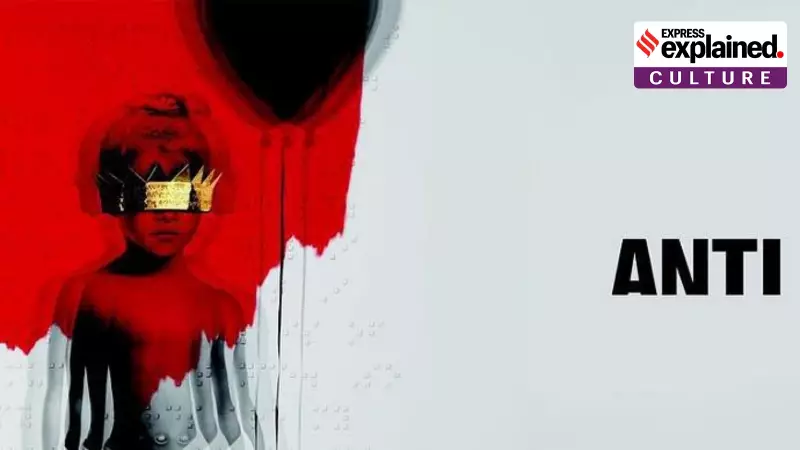
In January 2026, something peculiar has captured social media feeds: 2016 is trending once more. At first glance, this might seem like a simple algorithm-driven impulse to romanticize a simpler time, such as when the biggest worry for many was debating whether Rihanna's 'Anti' album truly represented a genre-shifting masterpiece. However, beneath these personal flashbacks lies a deeper, more compelling narrative—a collective grappling with how we arrived at our current moment and the anxieties that define it.
2016 as an Inflection Point in Modern History
Historically, nostalgia often emerges after periods of significant rupture. For instance, the 1920s saw discussions about the "lost world" of pre-World War I liberalism before the Great Depression and fascism took over. Similarly, 1989 marked a watershed with the collapse of communism in Eastern Europe and the end of the Cold War, briefly offering hope for a break from 20th-century violence.
German historian Reinhart Koselleck provides a useful framework for understanding such moments. He argued that modernity begins when the gap between the "space of experience"—our accumulated past—and the "horizon of expectation"—our imagined futures—starts to widen. In premodern times, these two elements were closely aligned, with history serving as a teacher for life. In contrast, modernity is characterized by acceleration and rupture, where experience loses its authority, and the future appears open, uncertain, and qualitatively different.

This widening gap, according to Koselleck, generates both momentum and anxiety. History becomes a record of obsolete worlds rather than a repository of lessons, leading to nostalgia as a response to this dislocation. It becomes a way to stabilize the present by reaching for a past that still feels comprehensible.
The Unique Position of 2016 in Our Collective Memory
Seen through this lens, 2016 stands out as a critical inflection point. Events like Brexit and Donald Trump's first election as president of the United States shattered the liberal assumption that history inevitably bends toward progress. Yet, despite these upsets, the year retained a sense of optimism. The idea that democratic institutions might restrain overreach still felt plausible, and the language of "guardrails" had not yet become a euphemism for their failure.
Fast forward to 2026, and the contrast is stark. In his second term, Trump has suggested pursuing Greenland after being denied a Nobel Peace Prize—a scenario that would have been inconceivable a decade ago but now fits within contemporary geopolitics. This shift highlights how 2016 was not a golden age or an idyll but rather a threshold, richly textured and belonging to the pre-Covid era.
How Technology and Societal Shifts Amplify 2016 Nostalgia
The Covid-19 pandemic warped our sense of time, creating what sociologists describe as "present shock"—a state where crisis becomes permanent and chronology loses meaning. Against this backdrop of entropy, 2016 emerges as a marker of stability, offering a nostalgic anchor in turbulent times.
Technology further sharpens this contrast. In 2016, social media occupied the discursive space that artificial intelligence does today: it was emergent, powerful, and faintly menacing, with critics worrying about attention spans and political manipulation. Yet, these platforms were recognizably human in scale and capable of producing shared reference points. Today, culture arrives personalized through optimization, and the thrill of serendipity has largely vanished.
The Deeper Meaning Behind the 2016 Trend
This is why the nostalgia for 2016 is more than just sentimental. There is a growing recognition that 2016 incubated many of the forces that now dominate public life, such as polarization, platform monopolies, and renewed great-power rivalry. Revisiting this year challenges the present's claim to inevitability and resists the idea that the erosion of common ground is simply the price of progress.

Instead, 2016 stands as a poignant reminder that things could have unfolded differently and that, even now, alternative paths might still be possible. It serves as a collective reflection on our anxieties, offering a lens through which to understand the complexities of modern society and the search for stability in an uncertain world.