Archaeologists Unearth Hidden Chamber with 22 Ancient Coffins in Luxor
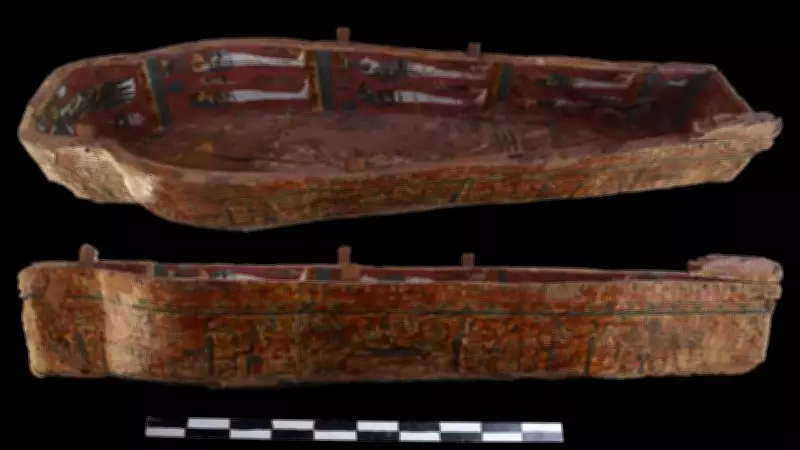
Archaeologists in Egypt have reportedly made an extraordinary discovery that is reshaping our understanding of ancient Egyptian society. In the sands of Luxor, a previously hidden chamber was recently opened to reveal twenty-two coffins that had remained undisturbed for thousands of years. The coffins were found to be remarkably well-preserved, featuring intricate paintings on their surfaces, with some containing intact mummies inside.
Carefully Organized Burial Site in Qurna Area
The secret chamber is located in the Qurna area, which forms part of the sprawling Theban Necropolis on Luxor's west bank. Carved directly into the bedrock, the space appears to have been used as a storage area for coffins that were moved from older tombs. Experts suggest these were not random burials but a carefully organized repository.
The coffins were stacked meticulously in layers, with lids separated to fit neatly into ten horizontal rows. This detailed arrangement indicates that whoever organized this space had thought through every logistical aspect. The preservation of some mummies in intact condition is particularly unusual, as reburials from this historical period typically left remains disturbed or damaged.

Women's Spiritual Roles Revealed Through 'Singer of Amun' Title
Many of the coffins reportedly belong to women bearing the prestigious title "Singer of Amun." This designation was not merely decorative but indicated active participation in temple ceremonies and potential influence within their communities. Experts say this discovery presents a more nuanced picture of women's spiritual and social standing in ancient Egypt than previously understood.
Dr. Zawi Hawass, who is overseeing the excavation, notes that this find could fundamentally change our understanding of female roles in Egyptian society. While personal names on the coffins are rare, many bear professional titles that provide valuable clues about the identities and social status of those interred within.
Rare Papyrus Scrolls and Delicate Artefacts Discovered
Alongside the coffins, archaeologists made another significant discovery: rare papyrus scrolls sealed in ceramic vessels with their original clay seals still intact. These scrolls are reportedly in good condition and will undergo restoration and translation in the coming months, potentially revealing new historical insights.
Wooden artefacts were also found at the site, though they are delicate and fragile. Experts describe the restoration process as painstaking, with some timber weakened and paint flaking off. Careful cleaning is currently underway to preserve the original colours and patterns. Even small details, such as the way a lid was stacked or a piece of wood was carved, offer glimpses into ancient life and craftsmanship.
Historical Significance and Future Research
Sharif Fathi, Egypt's Minister of Tourism and Antiquities, has called the discovery "a new addition to the record of outstanding archaeological finds." The discovery reinforces that Egypt still holds countless secrets tucked away beneath its desert sands, waiting to be uncovered by patient archaeological work.
For now, the coffins and scrolls will remain under careful study by experts. However, they have already provided a rare window into the rituals, social roles, and daily lives that vanished millennia ago. This discovery not only adds to Egypt's rich archaeological record but also promises to deepen our understanding of how women participated in and shaped the spiritual landscape of ancient Egyptian civilization.