Potential Archaeological Breakthrough in Madhya Pradesh's Sidhi District
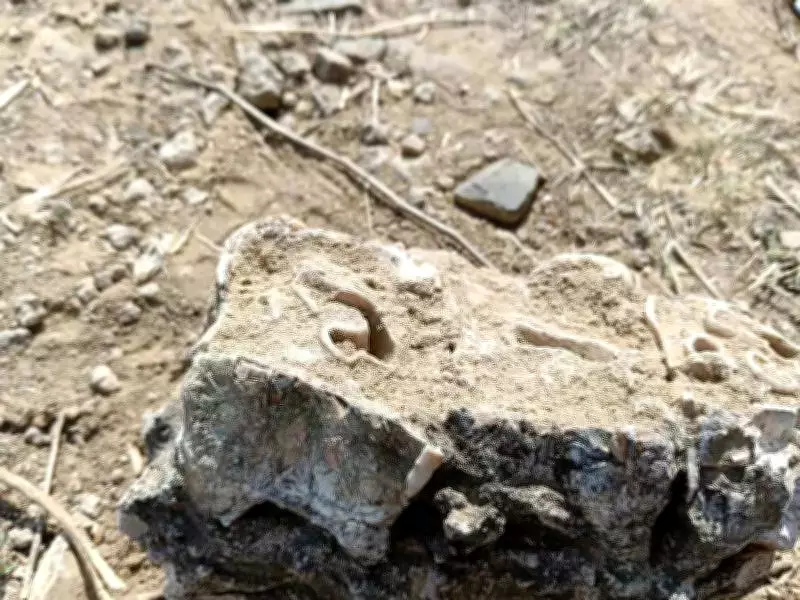
In a development that could significantly enhance our understanding of prehistoric India, archaeologists have uncovered suspected Proboscidean fossils in the hills of Sidhi, Madhya Pradesh. Preliminary estimates suggest these remains could be anywhere from 25,000 to a staggering 250,000 years old, though definitive scientific dating is still required to confirm their exact age.
Discovery Site and Initial Findings
The remarkable find was made at Atrela hill near Korauli Kala village in the Sihawal block of Sidhi district. A team from PM Shri College of Excellence in Satna conducted an initial exploration after receiving local reports about unusual skeletal remains. During their survey, the team recovered fragments of teeth and bones belonging to what appear to be large herbivorous mammals, potentially linking them to ancient elephant ancestors from the Proboscidean era.
Dr. SC Rai, principal of PM Shri College of Excellence, Satna, explained the discovery process: "We learned about this possibility through local sources and immediately organized an exploratory initiative. Our experts collected several fossil samples, and while dating confirmation is pending, initial observations strongly indicate they belong to the Proboscidean period. Our team has concluded that this area is exceptionally rich in fossils, likely due to historical meteoritic activity. These are preliminary findings, and we are currently collaborating with other institutions for more comprehensive exploration."

Geological Context and Expert Analysis
The discovery site falls within the Son river valley, an area renowned for its ancient sedimentary deposits that often preserve prehistoric evidence. Dr. Harshit Soni, a member of the exploration team, provided detailed insights into the findings: "This region is part of the Son river valley ecosystem. We initially received reports of a complete skeleton measuring approximately 12 meters in length. After obtaining necessary permissions from college authorities and local officials, we conducted our exploration."
"However," Dr. Soni continued, "we discovered primarily a tooth and several bone fragments rather than a complete skeleton. The dental pattern clearly indicates a herbivorous animal, and the enamel structure suggests these remains could date back to the Pleistocene era, approximately 25,000 to 250,000 years ago. Precise dating will require more advanced scientific methods. Currently, we are carefully conserving these remains and planning reconstruction efforts. The entire area appears to have experienced significant meteoritic activity in the distant past, creating ideal conditions for fossil preservation."
Scientific Methods and Future Implications
Researchers emphasize that establishing the exact age and classification of these fossils will require sophisticated techniques such as uranium dating and comprehensive geological studies. The potential significance of this discovery cannot be overstated—if confirmed, it could represent one of the rarest prehistoric finds in the Vindhya region, suggesting the area may contain additional buried evidence of ancient life forms.
This discovery opens new avenues for understanding India's prehistoric biodiversity and environmental conditions. The Sidhi hills, with their unique geological history marked by meteoritic events, may prove to be a treasure trove for paleontologists and archaeologists seeking to reconstruct ancient ecosystems and evolutionary pathways of megafauna that once roamed the Indian subcontinent.