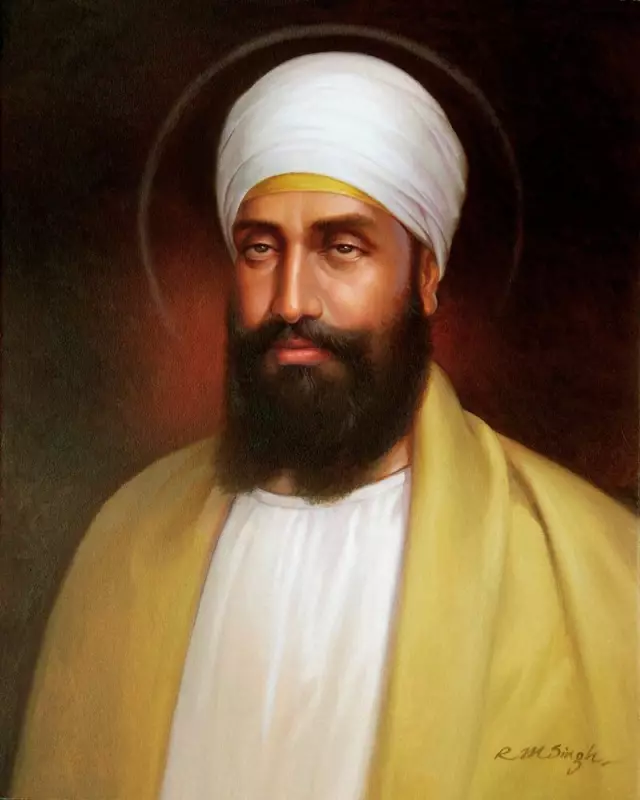
India solemnly commemorates the 350th anniversary of one of the most significant sacrifices in its spiritual history - the martyrdom of Guru Tegh Bahadur, the ninth Sikh Guru. This monumental event continues to resonate through centuries as a powerful testament to religious freedom and human rights.
The Historical Context of Guru Tegh Bahadur's Sacrifice
The year was 1675 when Guru Tegh Bahadur made the ultimate sacrifice in defense of religious freedom. During the reign of Mughal Emperor Aurangzeb, the Guru stood firmly against forced religious conversions. His martyrdom occurred on November 11, 1675, at Chandni Chowk in Delhi, where he was publicly executed for refusing to convert to Islam.
The circumstances leading to his execution reveal the depth of his commitment to protecting religious rights. A delegation of Kashmiri Pandits approached the Guru, seeking protection from religious persecution. They reported that Aurangzeb's forces were pressuring them to abandon their faith and convert to Islam. Guru Tegh Bahadur took up their cause, declaring that if the Emperor could convert him, all would follow.

The Journey to Martyrdom and Its Aftermath
Before his execution, Guru Tegh Bahadur endured immense suffering and torture. The Mughal authorities imprisoned him along with three devoted followers - Bhai Mati Das, Bhai Sati Das, and Bhai Dayala. Each companion suffered brutal executions while refusing to abandon their faith or their Guru.
Bhai Mati Das was sawn alive, Bhai Sati Das was burned alive wrapped in cotton, and Bhai Dayala was boiled alive in a cauldron of water. Despite witnessing these horrific tortures, Guru Tegh Bahadur remained steadfast in his principles. His final words, "Sir diya par sirar na diya" (I gave my head but not my faith), have become immortal in Sikh tradition.
The execution site at Chandni Chowk later became the foundation of Sis Ganj Sahib Gurudwara, one of the most important historical gurudwaras in Delhi. Following his father's martyrdom, Guru Gobind Singh, the tenth Sikh Guru, institutionalized the Khalsa Panth, creating a community committed to defending righteousness and religious freedom.
Enduring Legacy and Contemporary Relevance
Guru Tegh Bahadur's sacrifice established him as Hind Di Chadar (Protector of India's Faith), a title that acknowledges his defense of not just Sikhism but the religious freedom of all Indians. His martyrdom represents one of the earliest documented stands for universal human rights in Indian history.
The 350th anniversary celebrations include special prayers, religious processions, and educational programs across gurudwaras worldwide. The Indian government has issued commemorative coins and stamps to honor this historic occasion. Historical seminars and interfaith dialogues are being organized to spread the Guru's message of religious tolerance and peaceful coexistence.
Guru Tegh Bahadur's compositions, included in the Guru Granth Sahib, continue to guide millions of followers. His teachings emphasize the importance of truth, humility, and devotion to God while maintaining respect for all religious paths. This anniversary serves as a powerful reminder that the defense of religious freedom remains as relevant today as it was 350 years ago.