Archaeologists Unearth Oldest Wooden Tools in Southern Greece
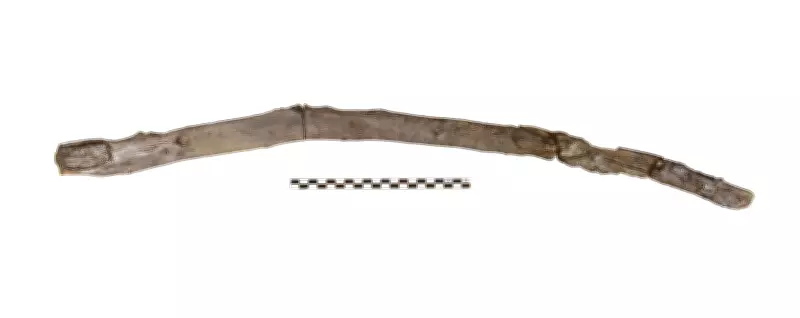
Archaeologists working in southern Greece have made a groundbreaking discovery that challenges long-held assumptions about early human technology. At the Marathousa 1 site in the Megalopolis Basin, researchers have identified wooden tools dating back approximately 430,000 years, making them the oldest wooden artifacts ever found.
Preservation Through Unique Environmental Conditions
The remarkable preservation of these ancient wooden objects can be attributed to the specific environmental conditions at the Marathousa 1 site. Located near what was once a lake edge, the ground remained consistently wet for extended periods, significantly slowing the natural decay process that typically destroys organic materials. This preservation is particularly significant because, at most archaeological sites of similar age, wood completely disappears, leaving researchers with only stone artifacts to study.
According to the study published in Proceedings of the National Academy of Sciences titled "Evidence for the earliest hominin use of wooden handheld tools found at Marathousa 1 (Greece)," the site has already demonstrated repeated human presence through previous discoveries of stone flakes, worked bone, and butchered elephant remains. The newly discovered wooden pieces were found within this same spread of human activity, not isolated from it.

Detailed Analysis of the Wooden Artifacts
The archaeological team identified two particularly significant wooden finds showing clear signs of human modification:
- Alder Trunk Tool: This larger piece shows shaping along its length and surface wear indicating repeated use. Based on its size and form, researchers believe it was likely used for digging or levering in soft ground.
- Small Willow/Poplar Tool: This much smaller artifact appears deliberately shaped, though its exact function remains more difficult to determine. The mere existence of such a small tool from this early period is noteworthy, as tools of this scale are rarely preserved from such ancient times.
Expanding Our Understanding of Early Human Technology
For decades, early human technology has been judged almost entirely through stone artifacts because stone survives while wood typically does not. This imbalance has fundamentally shaped how archaeologists describe early human behavior and technological development.
The Marathousa finds suggest a broader toolkit than stone alone would indicate. The selection of different wood types—alder for larger tools and willow or poplar for smaller ones—implies some awareness of material properties among these early humans. This choice doesn't necessarily indicate advanced thinking but rather practical, localized knowledge grounded in what materials were available nearby.
Shared Landscape with Carnivores
A third wooden fragment discovered at the site revealed deep markings that were not human-made. These were identified as claw marks from a large carnivore, suggesting that humans and predators shared the same landscape, possibly at different times or even simultaneously. This evidence doesn't settle questions about human-predator interactions but leaves them open for further investigation.
Significance Beyond Technological Breakthroughs
The discovery doesn't rewrite everything we know about early human history, but it adds substantial weight to ideas that have long been difficult to prove. The tools don't point to sudden technological breakthroughs but rather fit comfortably within the slow, uneven story of human adaptation.
What makes this discovery particularly significant is the mere existence of these wooden tools at all. They demonstrate that wooden tools were being made and used much earlier than the archaeological record typically allows us to see. Their survival at Marathousa is unusual, but their use elsewhere was probably not. The unique ground conditions at this Greek site preserved these artifacts long enough to provide a small but important adjustment to how we understand early human life and technological development.

This discovery quietly reinforces the idea that early human technology was more diverse and sophisticated than what survives in the archaeological record, reminding researchers that absence of evidence is not necessarily evidence of absence when it comes to understanding our ancient ancestors' capabilities and daily lives.