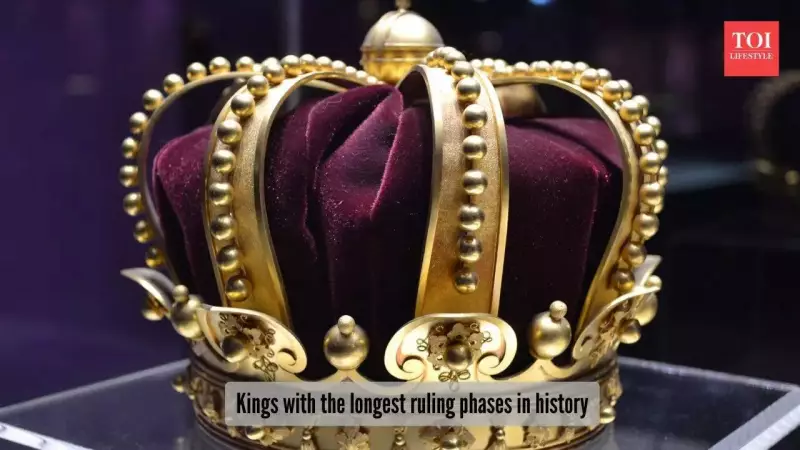
Throughout human history, monarchs have played pivotal roles in shaping cultures, societies, and entire civilizations. While many kings ruled for relatively brief periods, a select few enjoyed extraordinarily long reigns that allowed them to guide their nations through transformative eras and leave indelible marks on history.
The Power of Longevity in Leadership
These exceptional rulers, often ascending to power in their youth or even childhood, utilized their extended time on the throne to implement lasting changes, strengthen national identities, and navigate their kingdoms through periods of significant transition. Their lengthy reigns provided unprecedented stability and influence that few leaders in history have matched.
The Five Longest Reigns in Recorded History
Sobhuza II – 82 Years of Unparalleled Leadership

King Sobhuza II holds the remarkable distinction of being the longest-reigning monarch in recorded history. Ascending to the throne of Eswatini as an infant in 1899, he governed for an incredible 82 years until his passing in 1982. His reign witnessed dramatic transformations, spanning colonial rule, the struggle for independence, and the modernization of his nation.
Sobhuza II demonstrated exceptional diplomatic skills while serving as a cultural icon who preserved traditional Swazi customs while embracing necessary political evolution. His eight-decade rule provided Eswatini with cultural continuity and a strong sense of national identity that endures to this day.
Louis XIV – The 72-Year Reign of the Sun King
Louis XIV of France, famously known as the Sun King, ruled for 72 years from 1643 until his death in 1715. Taking the throne at just four years old, his reign became synonymous with absolute monarchy and the golden age of French culture and power.
During his extensive rule, Louis XIV transformed France into a dominant European power, established the magnificent Palace of Versailles, and centralized governmental authority. His famous declaration "L'état, c'est moi" (I am the state) perfectly captured his approach to governance and the unprecedented control he wielded over his kingdom.
Johann II – 70 Years of Progressive Leadership
Prince Johann II governed Liechtenstein from 1858 to 1929, a notable 70-year period marked by significant modernization. Throughout his reign, he implemented crucial legal reforms, enhanced educational systems, and spearheaded economic development initiatives.
Johann II's forward-thinking governance transformed Liechtenstein from a predominantly rural territory into a more bureaucratically advanced principality. His legacy remains one of steady cultural and political progress that fundamentally shaped the modern European state we recognize today.
Bhumibol Adulyadej – Thailand's Beloved 70-Year Monarch
King Bhumibol Adulyadej, revered as Rama IX, reigned over Thailand for 70 years until his death in 2016. Widely respected as a stabilizing force in Thai society, he guided the nation through numerous political upheavals and social transformations.
Bhumibol dedicated substantial efforts to rural development, agricultural improvement, and fostering national unity. His lengthy reign successfully blended tradition with modernization, earning him profound respect both within Thailand and internationally as a unifying symbol of continuity and progress.
K'inich Janaab' Pakal I – 68 Years of Maya Brilliance
Pakal the Great became ruler of the ancient Maya city of Palenque at age 12 and governed for nearly seven decades during the 7th century. His reign is celebrated for extraordinary architectural achievements, most notably the Temple of the Inscriptions, which preserved his tomb and legacy for future generations.
Pakal's influence extended far beyond his lifetime, playing a crucial role in the cultural and political flourishing of Maya civilization during its classic period. His leadership stands as a powerful testament to how extended reigns can profoundly shape historical narratives and cultural development.

Enduring Legacies of Extended Leadership
These five monarchs demonstrate how lengthy reigns can provide the stability and continuity necessary for profound national development. Their extended periods of leadership allowed them to implement long-term visions, navigate complex transitions, and establish cultural traditions that outlived their rule.
The extraordinary durations of their reigns—ranging from 68 to 82 years—provided unique opportunities to shape their nations' destinies in ways that shorter-term leaders simply couldn't match. Their stories continue to inspire and inform our understanding of leadership, legacy, and the enduring impact of sustained governance.