Nature's Masters of Disguise: 6 Animals That Perfectly Mimic Plants
In the intricate tapestry of nature, survival often hinges on the art of deception. Among the most fascinating evolutionary strategies is mimicry, where animals develop appearances so similar to plants that they blur the line between flora and fauna. This remarkable adaptation serves as both a shield against predators and a tool for hunting, showcasing the ingenuity of natural selection. Here, we explore six incredible creatures that have mastered the art of looking just like plants, from forests to coral reefs.
1. Leafy Sea Dragon: The Ocean's Floating Seaweed
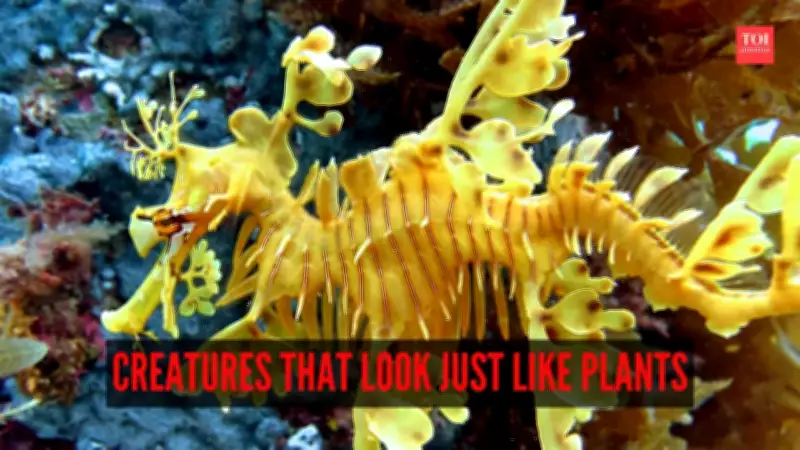
Native to the coastal waters of southern Australia, the Leafy Sea Dragon is a true marvel of marine camouflage. Its body is adorned with leaf-like appendages that mimic floating seaweed or kelp, making it nearly invisible in its underwater habitat. These appendages, while not used for swimming, provide excellent concealment in kelp forests. The creature moves slowly with ocean currents, resembling uprooted vegetation, which helps it evade predators such as larger fish. This adaptation highlights how evolution can shape animals to blend seamlessly into their environments.
2. Orchid Mantis: The Flower That Hunts
Found in the lush rainforests of Southeast Asia, the Orchid Mantis is a stunning example of aggressive mimicry. With petal-shaped legs and delicate pink or white coloring, it closely resembles an orchid flower. This disguise attracts pollinating insects, which the mantis then captures for food. Unlike simple camouflage, this is a predatory tactic where the animal imitates a plant to lure prey. Its beauty and effectiveness make it one of the most visually striking insects in the world, demonstrating how mimicry can be both artistic and lethal.

3. Leaf-Tailed Gecko: The Master of Bark and Leaves
Hailing from Madagascar, the Leaf-Tailed Gecko excels at blending into tree bark and dead leaves. Its flattened body, ragged tail edges, and mottled brown coloration render it almost invisible in forest habitats. During the day, it remains motionless, mimicking a dry leaf attached to a branch. This camouflage is crucial for avoiding birds and other predators in dense rainforests. The gecko's ability to stay perfectly still enhances its disguise, underscoring the importance of behavior in survival strategies.
4. Stick Insect: The Twig That Walks
Stick Insects, also known as walking sticks, are found worldwide in forests and grasslands. Their long, slender bodies and slow, swaying movements make them look like twigs or small branches swaying in the breeze. This camouflage helps them avoid detection by predators. Some species even possess the ability to regrow lost limbs, further improving their chances of survival in the wild. Their plant-like appearance is a testament to how evolution can create near-perfect imitations of inanimate objects.
5. Malayan Leaf Frog: The Forest Floor's Fallen Leaf
Native to Southeast Asia, the Malayan Leaf Frog has evolved to resemble a fallen leaf on the forest floor. Its pointed snout mimics the shape of a leaf, while its brownish-green skin is patterned with veins and markings similar to those on leaves. Hiding in leaf litter, it becomes nearly impossible for predators to spot during daytime hunts. This adaptation provides a critical advantage in avoiding threats, illustrating how animals can exploit their surroundings for protection.
6. Pygmy Seahorse: The Coral's Hidden Gem
In the coral reefs of the Indo-Pacific region, the Pygmy Seahorse uses its small size and skin patterns to blend into gorgonian corals. Its body matches the color and texture of the coral, making it difficult for both predators and divers to detect. This plant-like camouflage helps it survive in crowded reef environments where visibility is key to avoiding danger. The seahorse's adaptation emphasizes how mimicry can be tailored to specific habitats, from terrestrial forests to underwater worlds.

The Wonders of Evolutionary Adaptation
These six creatures exemplify the incredible ways in which evolution has shaped animals to mimic plants. By resembling leaves, flowers, branches, or coral, they gain protective mechanisms and hunting advantages that enhance their survival. This phenomenon not only highlights the balance of nature but also serves as a reminder of the cleverness inherent in natural selection. Studying these plant-like animals offers insights into the diversity of life and the endless wonders of the natural world, inspiring awe and appreciation for the intricacies of adaptation.