Nature's Living Rainbows: Seven Lizards That Dazzle With Color
Nature paints its canvas with incredible colors, and lizards stand out as some of its most vivid masterpieces. These reptiles display electric blues, emerald greens, fiery reds, and neon stripes across forests, deserts, and islands worldwide. Their brilliant colors are not just for show. They serve crucial functions like camouflage, communication, and attracting mates. Here are seven of the most vibrantly colored lizards found around the world.
1. Panther Chameleon: Madagascar's Color-Changing Marvel
The panther chameleon calls Madagascar home. This remarkable creature is famous for its ability to change colors. Males showcase stunning shades of blue, red, green, and yellow in stripes or spots. While you might think it's for hiding, the real purpose is different. These color shifts express emotions, scare off rivals, and attract females during breeding seasons.
2. Green Iguana: Central and South America's Tree Dweller
You can find the large green iguana climbing trees in Central and South America. Most of these lizards have bright green skin, but they often feature turquoise or orange markings. Some even develop yellow or orange stripes, especially during breeding times. Their size and color make them a striking presence in tropical forests.

3. Tokay Gecko: Asia's Nocturnal Showstopper
The tokay gecko lives in Southern Asia and comes out at night. It sports blue-grey skin dotted with bright orange or reddish spots. This gecko is known for its loud calls and strong bite, but its vibrant appearance truly sets it apart. The contrasting colors help it stand out in its habitat.
4. Blue-Headed Agama: Africa's Colorful Performer
In parts of Africa, the male blue-headed agama puts on a dazzling display. During breeding, its head turns a vivid blue while its body shifts to orange or red. This transformation is a key part of courtship rituals, making the agama one of the continent's most colorful reptiles.
5. Electric Blue Gecko: Tanzania's Endangered Beauty
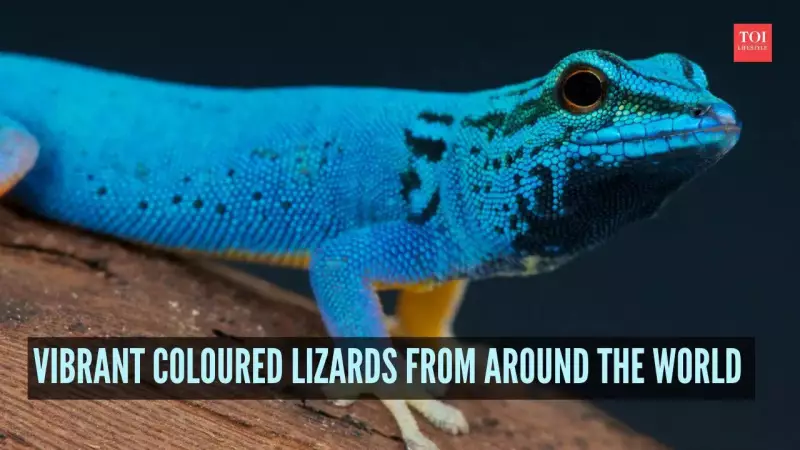
This small gecko from Tanzania shines with an electric blue hue. Males display a brighter blue than females, which tend to be greener. Sadly, habitat loss and overcollection for the pet trade have pushed this species to critically endangered status. Its stunning color makes it a target, highlighting conservation challenges.
6. Collared Lizard: North America's Desert Gem
The collared lizard thrives in the rocky deserts of North America. It flaunts brilliant greens, yellows, blues, and blacks, with colorful bands around its neck giving it its name. These colors play a vital role in territorial displays and courtship, making the lizard highly visible in its arid home.
7. Rainbow Whiptail: South America's Shimmering Speedster
Found in South America and the Caribbean, the rainbow whiptail lives up to its name. It shows shimmering stripes of blue, green, yellow, and orange, especially when moving in sunlight. Its iridescent colors can confuse predators and aid in species recognition and mating, creating a dazzling effect in motion.
Why Color Matters in the Lizard World
Colorful lizards exemplify nature's creativity and adaptability. Their hues are not merely aesthetic. They serve functional purposes in survival, communication, and reproduction. From chameleons in Madagascar to agamas in Africa and whiptails in the Americas, these reptiles remind us that nature is full of wonders. Protecting their habitats ensures these living artworks continue to thrive for generations to come.