Beyond Smell: 8 Animals with Remarkable Noses for Survival and Communication
Noses are often taken for granted in humans, primarily used for breathing and smelling. However, in the animal kingdom, noses can be multifunctional tools essential for hunting, communication, and navigation. Evolution has crafted some truly bizarre nasal structures that go far beyond basic olfactory functions. These adaptations not only aid in survival but also offer insights into animal behavior and evolutionary biology. Experts suggest that studying these unique features can deepen our understanding of how species thrive in diverse environments.
1. Elephant: The Ultimate Multi-Tool Nose
Elephants possess trunks that function as giant noses, capable of smelling, touching, tasting, drinking, grabbing, and even snorkeling. According to SeaWorld, they can detect water sources from up to 12 miles away. Watching an elephant use its trunk is a mesmerizing experience, as it performs a range of tasks with precision and grace.
2. Bear: A Super-Sensitive Sniffer
Bears may have ordinary-looking noses, but their olfactory abilities are extraordinary. Experts note that their sense of smell is seven times better than bloodhounds and over 2,000 times superior to humans. Before hibernation, every sniff is crucial for locating berries and prey, making their nose a vital survival tool in the wild.

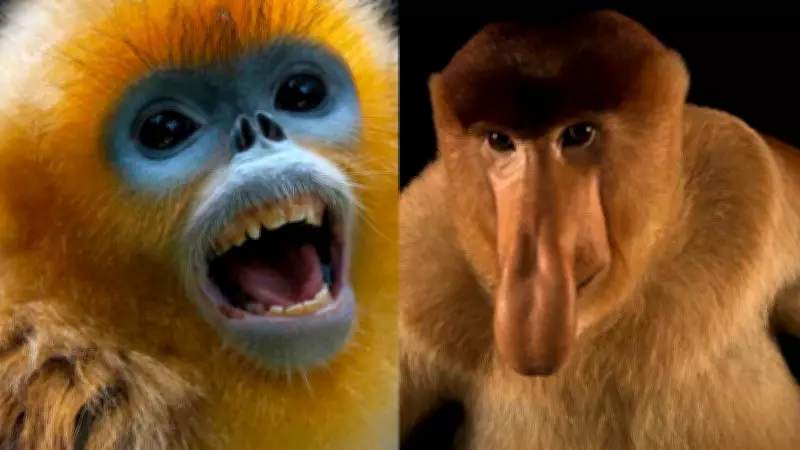
3. Proboscis Monkey: The Honking Nose
Proboscis monkeys are renowned for their elongated noses, with males sporting noses up to seven inches long. These noses serve as both mating signals and vocal amplifiers, producing loud honks to attract females. Inhabiting forests and swamps in Borneo, these monkeys face threats from habitat destruction, highlighting the importance of their unique adaptations.
4. Snub-Nosed Monkey: The Communicative Snout
Snub-nosed monkeys feature flat, forward-pointing noses that may appear comical but play a protective role. The golden snub-nosed monkey, found in China's snowy mountains, uses subtle nose movements for social communication. Unfortunately, human encroachment has endangered these social creatures, emphasizing the need for conservation efforts.
5. Hammerhead Shark: The Directional Detector
Hammerhead sharks have wide-set nostrils along their distinctive heads, which help them detect the direction of prey with greater accuracy. Scientists believe this evolutionary trait enhances hunting efficiency, allowing them to trap prey effectively before striking.
6. African Giant Pouched Rat: The Mine-Sniffing Nose
African giant pouched rats, measuring nine to 17 inches in length, possess noses as strong as dogs'. They are trained to sniff out landmines and explosives, navigating tight spaces where larger animals cannot go. These rats demonstrate remarkable intelligence and utility, often overlooked in the animal kingdom.
7. Homing Pigeon: The Natural GPS
Homing pigeons can find their way home from over 1,000 miles away, initially thought to rely on their beaks but now linked to magnetic fields and brainstem cells. While scientists continue to study this phenomenon, these birds glide home with calm precision, showcasing an innate navigational ability.
8. Elephantnose Fish: The Electrosensory Chin
The elephantnose fish has a bizarre nose-like chin equipped with electrosensory organs. It uses these to detect prey in murky waters, even in total darkness. Growing up to 14 inches, this fish depends entirely on its unique appendage for survival, illustrating nature's innovative solutions.
These eight animals exemplify how noses have evolved into specialized tools beyond mere smelling. From communication to navigation, these adaptations underscore the diversity and ingenuity of life on Earth, offering valuable lessons for scientific research and conservation.