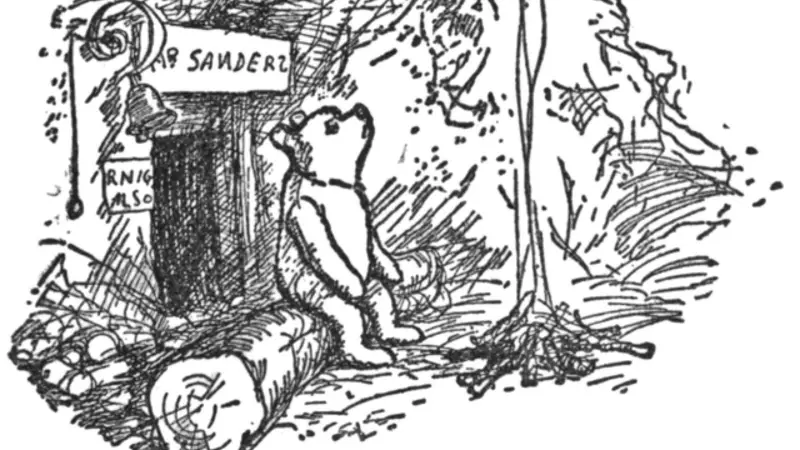
In the annals of children's literature, few names shine as brightly as that of A.A. Milne, the British author who brought to life the beloved character Winnie-the-Pooh. Born Alan Alexander Milne on January 18, 1882, in London, England, his journey from a playwright and novelist to a creator of one of the most iconic figures in storytelling is a tale of creativity and enduring appeal.
The Genesis of Winnie-the-Pooh
Milne's inspiration for Winnie-the-Pooh stemmed from his son, Christopher Robin Milne, and his collection of stuffed animals. The character first appeared in a poem titled "Teddy Bear" in 1924, but it was the publication of Winnie-the-Pooh in 1926 that catapulted the bear and his friends into the hearts of millions. This book, along with The House at Pooh Corner in 1928, introduced readers to the Hundred Acre Wood and its inhabitants, including Piglet, Eeyore, Tigger, and others.
Milne's Literary Career and Impact
Before his foray into children's books, A.A. Milne was already an established writer, having penned numerous plays, novels, and essays. However, it was the Winnie-the-Pooh series that defined his legacy. The stories, characterized by their gentle humor, philosophical undertones, and exploration of friendship, have been translated into dozens of languages and adapted into various media, from animated films to stage productions.

Milne's writing style, marked by simplicity and warmth, resonated with both children and adults, making Winnie-the-Pooh a timeless classic. His ability to capture the innocence of childhood while addressing deeper themes of loyalty and kindness has ensured that his work remains relevant across generations.
The Enduring Popularity of Winnie-the-Pooh
Decades after their initial publication, the Winnie-the-Pooh books continue to be bestsellers worldwide. The characters have become cultural icons, appearing in merchandise, theme parks, and even inspiring psychological concepts like the "Pooh Pathology." Milne's creation has also been the subject of scholarly analysis, highlighting its literary merit and influence on children's literature.
Milne's Personal Life and Legacy
A.A. Milne passed away on January 31, 1956, but his legacy lives on through his writings. He was a complex figure, who later expressed mixed feelings about being overshadowed by Winnie-the-Pooh, yet his contribution to literature is undeniable. Today, his works are celebrated in museums and literary events, and his characters are cherished by new readers every year.
In conclusion, A.A. Milne's creation of Winnie-the-Pooh has left an indelible mark on global culture. His stories remind us of the joy of imagination and the importance of simple pleasures, ensuring that the Hundred Acre Wood remains a beloved destination for readers of all ages.