Poetry as Protest: Alice Oswald on Arrest and Ancient Wisdom
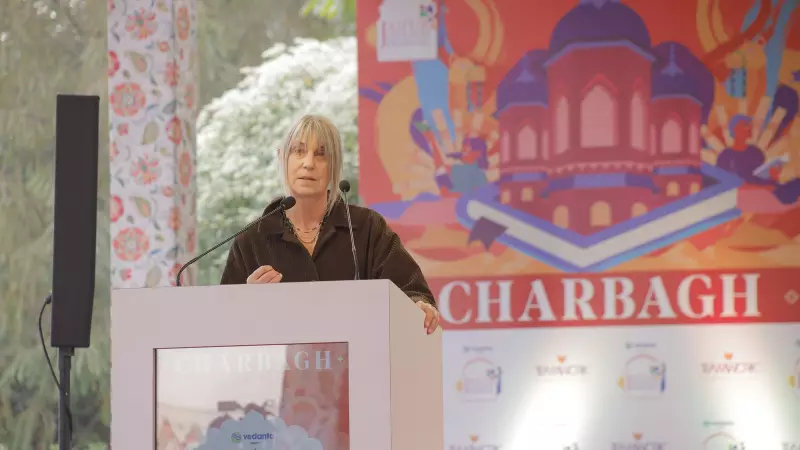
Alice Oswald stands as a unique voice in modern poetry. The acclaimed British poet recently faced arrest for demonstrating in support of Palestine Action. She shared her experiences during the Jaipur Literature Festival.
The Arrest That Could Mean 14 Years
Oswald expected her arrest when she joined protests supporting Palestine Action. The UK government had declared this direct-action group a terrorist organization.
"I felt I needed to do something different," Oswald explained. "When the government starts making laws that break down democracy, you really do have to respond."

She considered the consequences carefully. Prison for 14 years seemed possible. Travel restrictions to America would follow. Social backlash from friends who disagreed with her stance worried her too.
"I kept coming back to one fact," she said. "If I didn't do it, my children would inherit a democracy that had stopped working. I do not want that."
Her husband initially tried to persuade her against protesting. He later became supportive. Most people advised her against taking action. She stopped discussing her plans and simply acted.
Police Confusion During Arrest
Officers arrested Oswald under Section 12, which carries a 14-year sentence. The arresting officer kept questioning the charge. "Are you sure you mean Section 12?" she repeatedly asked.
They eventually wrote Section 13 on her documents. The confusion showed officers didn't fully understand their own actions. In the police van, they told her this was simply their job.
"We cannot question it," they said. Yet Oswald noticed it mattered to them personally.
During her second arrest, a more humane officer expressed doubts about the law's validity. He suggested the government might have made a mistake. He believed they would need to find a way out of this situation.
Why Poetry Demands Physical Action
Oswald connects her protest directly to her poetic principles. "At the heart of my poetry there is a metaphysical idea of democracy," she explained.
Her poems give voice to everything - humans, trees, insects. Listening to marginal characters forms her deepest creative principle. When political leaders overstep this fundamental value, she feels compelled to act.
"It seems to threaten poetry itself," she noted about government actions restricting protest.
Teaching Poetry Amid Devastation
Oswald taught poetry to children in Palestine during attacks. The experience proved deeply shocking. One thirteen-year-old girl showed extraordinary poetic talent.
Her poems contained so many images they seemed almost too good. Oswald pressed her to reveal what she truly wanted to express. The girl eventually shared she constantly wrote about hearing an explosion at night.
She described coming out of her room in darkness. A neighbor's child, about eight or nine years old, was involved. Oswald suggested creating a poem to carry this difficult image.
"No," the girl responded. "As Muslims, we can't really ask for help with what we're going through. We just have to suffer."
This determination to carry trauma without help - from God, poetry, or anything else - stayed with Oswald. The girl also cared for her family despite her youth.
Her mother had multiple sclerosis without access to medication. Her sister was ill too. At thirteen, she managed the entire household. Every student Oswald taught faced similar challenges.
Many were too hungry to attend lessons regularly. Despite claims about food reaching the area, starvation remained real. Exhaustion marked their daily existence.
Yet working with these children gave Oswald hope. Their capacity to recover and create astonishing poetry revealed extraordinary human resilience. She witnessed disturbing things she will never forget.
"I'm not going to be told by our Prime Minister what is happening there," she stated firmly. "Because I know."

Ancient Epics for Modern Conflicts
Oswald finds parallels between current conflicts and Homer's epics. The most beautiful scene in The Iliad shows Priam coming to Achilles. Though enemies, they see their own family in each other.
A sudden connection softens the entire poem. But Oswald highlights a rarely mentioned passage about the Lítai - spirits of prayer described as old, crippled, squinting women.
These figures remind people about forgiveness. Oswald believes they represent real women who historically worked for peace after conflicts. Homer warns that refusing apology and forgiveness makes things progressively worse.
"That is where we are now," Oswald observed. "In what they call ate, the spirit of madness. If you refuse to make terms, violence escalates."
She urges people to read this passage today. We must forgive and make peace.
Indian Epics and Cultural Revival
Oswald admires Indian epics tremendously. "Oh my God—you have the best epics," she exclaimed. "They are wonderful and very beautiful."
The scene with Arjuna and his entire speech holds incredible importance. She believes we have much to learn from these ancient texts.
Regarding the current revival of classics, Oswald compares these poems to huge old oak trees. They remain steadfast and reliable yet always fresh. Their oral nature allows continuous updating.
She cautions against becoming too instrumental about them. Poetry works mysteriously. Putting poems on school syllabuses with specific learning objectives can destroy their essence.
"A poem is like a living being," she explained. "It's mysterious. I hope these poems don't become boxed in or overused as tools."
Current Reading and Final Message
Oswald wants to read Rana Dasgupta's After Nations. The breakdown of nations reflects our current reality. Everything must change, and poetry can help imagine what comes next.
She has been reading Lal Ded, the Kashmiri poet. Pankaj Mishra's From the Ruins of Empire proved devastating and brilliant. It records deeply shameful aspects of British imperial behavior.
For younger generations inheriting war, climate crisis, and constant social media exposure, Oswald offers specific advice. "I think they are lucky that it is an emergency," she said surprisingly.
Emergencies force creation of new systems. She focuses particularly on gardens. Gardening teaches about growth systems and sustainability. It demands attention to detail and offers different intelligence from plants.
"Live life energetically," she advised. "You need to remake the world, and you must start now. Perhaps you could take some instruction from plants."
The poet who gives voice to the marginal found herself compelled to act when democracy itself seemed threatened. Her journey from page to protest reveals poetry's enduring power in fractured times.