Tribal Community in Alirajpur Debunks Elopement Myths at Bhagoriya Festival
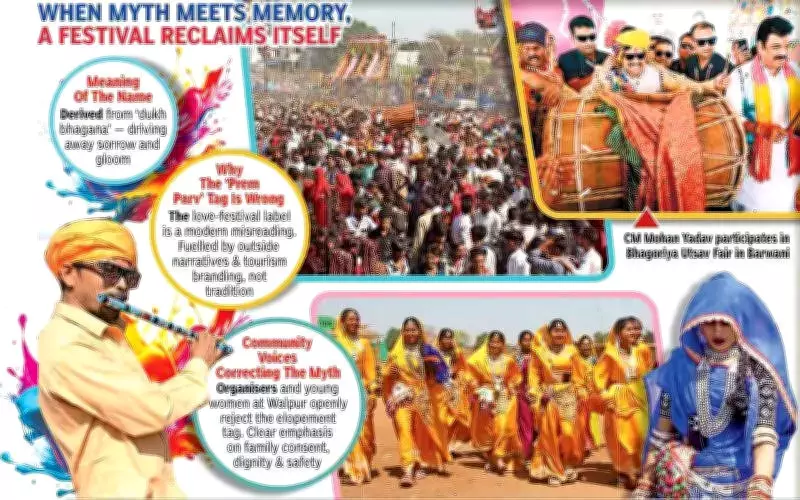
This week in Walpur, Alirajpur, the annual Bhagoriya haat ahead of Holi became a platform for the tribal community to assert its voice against persistent external rumors. As crowds gathered, community members openly challenged the long-standing claim that the event serves as a stage for elopement, instead highlighting its deep-rooted cultural and economic importance.
Organizers and Locals Speak Out
Padam Singh, an organizer with decades of experience, shared his perspective with TOI. "For 35 years, I have witnessed this fair. My forefathers participated long before me. It is a crucial festival for us, not a love fest or Valentine's Day. The rumors about girls running away with boys are entirely false," he stated firmly. Singh emphasized that the festival is a traditional gathering, not a venue for impulsive romantic decisions.
Attri Chouhan, a BSc second-year student from Indore, echoed this sentiment. "The narrative circulating outside our community is a myth. We come to the mela to purchase essentials and meet relatives. Marriage decisions involve our families and are not made hastily. If any boy tries to harass us, we will respond firmly," she explained, underscoring the community's commitment to preserving their customs with dignity.

Historical and Academic Insights
Professor Sakharam Mujalde, Head of the School of Tribal Studies at DAVV, provided academic context. "Historically, Bhagoriya served as moving marketplaces tied to ritual preparation and community exchange. Over time, changes in pronunciation and external interpretations altered its meaning," he noted. These markets were vital for trading forest produce, agricultural tools, sweets, and household goods, reflecting their economic role rather than romantic connotations.
A widely circulated claim suggests that tribal youths propose by applying gulal to a girl, with acceptance leading to elopement. However, community members describe this as a misinterpretation rather than an established custom. They stress that such actions do not align with their traditional practices, which prioritize family involvement in marital matters.
Cultural Significance and Modern Relevance
The Bhagoriya festival remains a key event for the tribal community, fostering social bonds and economic activities. It precedes Holi, serving as a preparatory gathering where essentials are bought and sold, and relatives reconnect. This aspect highlights its role in maintaining community cohesion and cultural continuity.
By addressing these myths, the community aims to reclaim the narrative surrounding Bhagoriya, ensuring it is understood as a celebration of heritage rather than sensationalized rumors. Their efforts underscore a broader movement to preserve indigenous traditions against misrepresentation.