The Divine Significance of Food in Indian Culture
In countless Indian households, food transcends its basic role as sustenance; it is regarded as a sacred gift from the divine. This profound reverence is often expressed through a brief prayer before meals, a practice that helps individuals remember the importance of nourishment and cultivate a deep sense of gratitude.
Goddess Annapoorneshwari: The Eternal Provider
Annapoorneshwari holds a revered position as the Hindu goddess of health, food, and abundance. Devotees believe she is an incarnation of Goddess Parvati, tasked with ensuring that all her followers have ample nourishment. The name "Annapoorna" derives from Sanskrit, where "Anna" means "food" or "grains," and "Poorna" signifies "full" or "complete." Thus, Annapoorneshwari translates to "the one who gives food to live," embodying the concept of wholeness and provision.
The Sacred Mantra: A Prayer for Sustenance and Wisdom
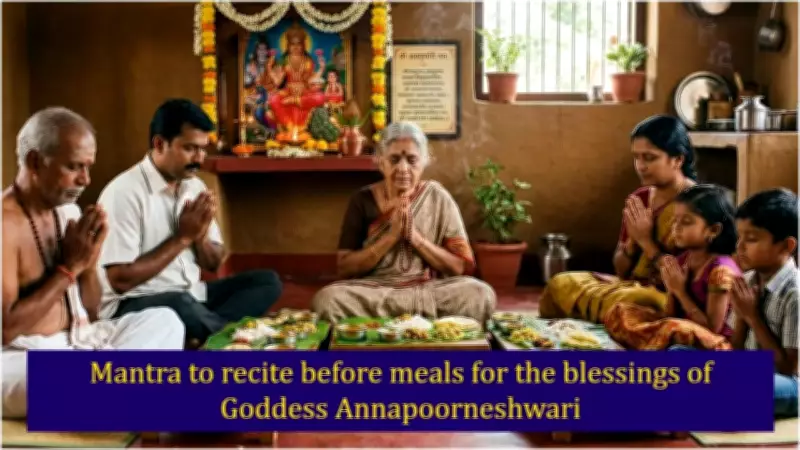
One of the most powerful prayers dedicated to Goddess Annapoorneshwari is the mantra: "Annapoorne Sadapoorne Shankara Prana Vallabhe Jnana Vairagya Siddhyartham Bhiksham Dehi Cha Parvati." This mantra is commonly recited before eating, serving as a heartfelt invocation to the goddess.

Interpretation of the Mantra: The mantra is a concise prayer that expresses gratitude to Goddess Annapoorneshwari for providing both physical food and spiritual enlightenment. It translates to a plea: "O Mother Annapoorna, who is always complete and beloved of Lord Shankara, please grant us food, knowledge, and detachment." This prayer underscores the belief that food is not merely for bodily survival but also essential for nurturing the mind and soul.
By chanting this mantra, devotees thank the divine for their sustenance and seek blessings for intellectual growth and spiritual advancement. It reinforces the idea that every meal is an opportunity for holistic nourishment.
Religious and Cultural Significance
Hindu scriptures emphasize that offering thanks before eating is a crucial aspect of spiritual life. This practice enhances mindfulness and serves as a reminder that food is a divine blessing. Followers of the Annapoorneshwari mantra believe that reciting it purifies the food, imbuing it with positive energy.
Key Temples and Traditions: The Kashi Annapurna Temple in Varanasi, along with other shrines dedicated to the goddess, venerates her as the eternal provider who feeds the world. Despite modern influences, many families continue to uphold the tradition of reciting this potent prayer before meals.
This enduring custom preserves the cultural belief that every morsel of food is sacred and should be consumed with reverence and thankfulness. It connects individuals to their heritage, fostering a sense of community and spiritual continuity.
The Broader Context of Gratitude in Daily Life
The practice of saying a prayer before eating extends beyond religious ritual; it is a mindful act that encourages appreciation for life's blessings. In a fast-paced world, this moment of reflection helps ground individuals, promoting mental well-being and a deeper connection to their faith.
By integrating such traditions into daily routines, people not only honor their cultural roots but also cultivate a lifestyle centered on gratitude and spiritual awareness. The Annapoorneshwari mantra, therefore, stands as a timeless testament to the intertwining of physical nourishment and spiritual fulfillment in Indian society.