Art Mumbai 2025 Puts Women Sculptors in the Spotlight
The third edition of Art Mumbai is set to begin on 13 November 2025, and this year, a powerful wave of women artists is redefining the landscape of sculpture in India. A key highlight of the event, which runs until 16 November at the Mahalaxmi Racecourse, is the specially curated Sculpture Park, a segment dedicated entirely to showcasing the innovative work of women sculptors.
Curated by Veerangana Solanki, the Sculpture Park was conceived to address a noticeable gender gap. "We didn't want to spotlight women artists just for the sake of it but to recognise their style of storytelling. They often get overlooked when it comes to thinking about scale," Solanki explains. The park seamlessly integrates into the fair's layout, acting as both an artistic showcase and a navigational guide for visitors.
A Monumental Showcase of Female Talent
The Sculpture Park features works placed in both indoor and outdoor settings, investigating the female gaze through a diverse range of materials. Artists are working with ceramics, steel, bronze, fibreglass, and found materials to address profound themes like identity, migration, labour, and collective memory.

One of the most significant pieces on display is Meera Mukherjee's monumental cast bronze sculpture, 'Balance'. This is the largest of Mukherjee's non-public sculptures and offers a window into her artistic philosophy. The work features panels depicting a man with a weighing scale juxtaposed with women balancing pots on their heads, exploring concepts of purusha and prakriti and gendered labour.
The roster of talented artists is impressive, including:
- Adeela Suleiman
- Chetnaa
- Madhvi Parekh
- Savia Mahajan
- Shambhavi Singh
- Sudipta Das
Expanding Horizons: The Fair's Growing Ecosystem
Art Mumbai continues to position itself as "a gateway to global conversations in art". This year's fair features a substantial 82 exhibitors from India and abroad, including 17 new entrants. According to Minal Vazirani, co-founder of Art Mumbai, the event has seen a 60% increase in exhibitors since its first year, and they are expecting visitor numbers to more than double compared to the inaugural edition.
Another major highlight is a special presentation dedicated to the late modernist Tyeb Mehta, organised by the Kiran Nadar Museum of Art (KNMA) and Saffronart Foundation. The retrospective, "Tyeb Mehta: Bearing Weight (with the lightness of being)", curated by Roobina Karode, marks the artist's centenary year and features early drawings and paintings alongside his iconic series.
The fair's programming also includes a robust speaker series with leading figures from the art world, such as Lydia Yee, Deepanjana Klein, Gayatri Sinha, and Zehra Jumabhoy. Discussions will focus on the growing global prominence of art from South Asia and the need for developing education and infrastructure related to the arts in the global South.
Tactile Stories and Intimate Encounters
The works at the Sculpture Park are notable for their engaging and tactile nature. "There is a certain tactility to the works. They beckon the visitors to come closer, making the viewing a remarkably intimate experience," says Solanki.
Notable installations include:
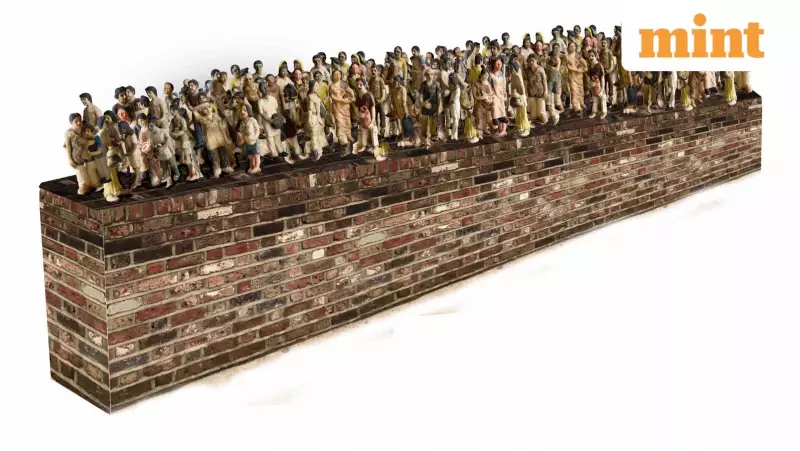
Sudipta Das's ceramic sculpture, 'The Crowd that Carries the Sea', which features intricate detailing on a remarkable scale.
Poojan Gupta's experimental piece uses discarded pharmaceutical blister packs, creating a commentary on consumption and waste.
Shiffali Wadhawan and Tapasya Gupta's collaborative work, 'Playing for Time', combines the nostalgia of the game Snakes and Ladders with the urgent theme of environmental degradation. Visitors can actually play the game, where snakes and ladders represent cause-and-effect scenarios related to sustainability.

For the outdoor section, Natasha Singh's new media project, 'Nadi Yogini', uses Artificial Intelligence, camera vision, and coding to explore yogic movement patterns, with the final sculpture rendered through 3D printing.
The Sculpture Park at Art Mumbai 2025 stands as a testament to the power, innovation, and unique narrative strength of women sculptors in India, finally giving them the large-scale platform their work deserves.