The Heartbreaking and Hopeful Saga of Baby Macaque Punch
For over a week, the collective emotional pulse of the global internet has been synchronized to the fragile heartbeat of one tiny creature: a baby Japanese macaque named Punch. Known affectionately as Panchi-kun in his native Japan, Punch resides at the Ichikawa City Zoo near Tokyo. His poignant narrative of maternal rejection, profound isolation, and tenuous hope has transcended geographical boundaries, resonating deeply with strangers worldwide who have organized visits, dispatched gifts, and united under the rallying cry of a single hashtag: #HangInTherePunch.
A Lonely Quest for Connection in Monkey Mountain
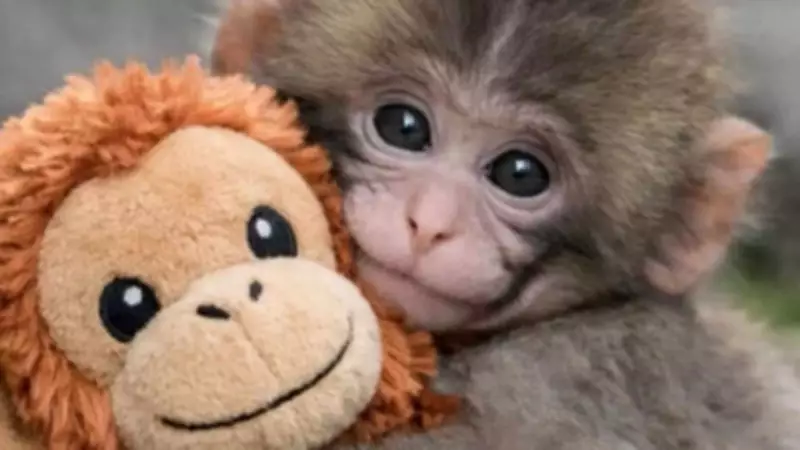
The young macaque is often observed wandering through his enclosure, a solitary figure in search of companionship. When his overtures to other monkeys are met with indifference or rejection, he retreats to the one constant in his life: a bright orange plush orangutan toy. He gently drags this soft companion into a secluded corner, curling his small body beside it for solace. His only living source of consistent comfort has been his dedicated zookeeper, to whom he clings desperately during feeding times, seeking the warmth of a caretaker's presence.
Who exactly is Punch, and why has his story ignited such a firestorm of empathy? Distressing videos surfaced showing Punch being dragged and bullied by adult monkeys within the zoo, scenes that moved countless viewers to tears. Witnessing his repeated rejections, the internet collectively embraced Punch as its own virtual foster child, his vulnerability striking a universal chord.

A Devastating Start and an Unlikely Comfort
Born in July 2025, Punch faced a catastrophic beginning when his mother rejected him. For Japanese macaques, whose early survival is critically dependent on maternal bonding and social learning, this was a life-threatening setback. Consequently, zookeepers stepped in to hand-raise the infant. During this period, he formed an inseparable bond with a plush Ikea orangutan, nicknamed "Ora-mama," which provided him with a crucial sense of security and comfort.
"This particular stuffed animal has relatively long hair and several easy places for a small monkey to grip," explained zookeeper Kosuke Shikano. "We believed its resemblance to a monkey might facilitate Punch's eventual reintegration into the troop, which is precisely why we selected it for him."
Navigating a World Without a Social Map
In the intricate society of Japanese macaques, social hierarchy dictates everything. Young monkeys learn complex social rules—who grooms whom, who defers to whom, and who belongs—by meticulously observing their mothers. When Punch was introduced to the zoo's 'Monkey Mountain' exhibit in January, he was essentially navigating this world without the essential social roadmap he should have acquired from infancy.
Videos soon proliferated online, capturing Punch's cautious attempts to approach other monkeys, only to be swatted away or completely ignored. These clips, often showing him clutching his plush toy or burying his face in its fabric, tapped into a deep well of shared human experience. Viewers worldwide projected onto him their own personal narratives of abandonment, resilience, and longing. The hashtag #HangInTherePunch began trending powerfully across major social media platforms, including X, Instagram, and Reddit.
The Rise of a Global Social Media Clan
Punch evolved into more than just a symbol of resilience; he became an emblem of persistence against the harsh emotional trials that life can impose on the smallest and most vulnerable creatures. "I would adopt Punch and love him forever," one emotional supporter wrote online. Another confessed, "This is the third day in a row I've cried over Punch." The phenomenon even captured the attention of public figures. While Tristan Tate, brother of controversial influencer Andrew Tate, reportedly offered to purchase Punch for $250,000, American activist Ryan Fournier made a separate offer of $50,000 to adopt him.

Outrage flared anew when footage circulated showing an adult monkey aggressively dragging Punch. In response, the zoo provided crucial context, clarifying that Punch had been attempting to interact with another infant macaque. The intervening adult, believed to be that infant's protective mother, was acting defensively.
"Even though Punch gets scolded, he also possesses remarkably strong mental resilience and recovers quickly," the zoo stated. "The fact that he repeatedly faces cold shoulders and exclusion from group members after trying to communicate is not merely a cause for pity. We hope you will view it as an opportunity to cheer for and support Punch's own persistence and continual efforts."
A Small Gesture of Acceptance and a Monumental Victory
Punch's tale achieved such cultural penetration that it was featured on American late-night television, with host Stephen Colbert humorously noting that Punch's comfort object, the Ikea Djungelskog plush toy (retailing for $19.99), might offer people all the ease they seek these days. Ikea itself capitalized on the surging demand for these soft toys in Japan, the United States, and South Korea, amplifying its marketing efforts with social media updates and targeted ad campaigns.
In a heartwarming gesture on February 17, the brand gifted Punch numerous stuffed animals, including additional versions of the orangutan figure he had bonded with. While some of these comforts were directed toward aiding Punch, others were placed in areas designated for young visitors at the zoo facility.
Then came the long-awaited breakthrough: Punch was finally accepted. A viral video depicted him being gently groomed by another monkey in the troop—an established and significant sign of inclusion and acceptance among macaques. This moment had countless supporters clutching their hearts in relief and joy. Another video showed a monkey following Punch closely, prompting the internet to jubilantly celebrate Punch acquiring a "bodyguard." Such protective behavior indicates growing reliability and social connection within the group, encouraging Punch to begin engaging in play with other juveniles of a similar age.
An Ongoing Journey Toward Belonging
In the matrilineal world of Japanese macaques, Punch's path to full integration remains a work in progress. He still frequently clings to his plush companion for reassurance. He is still diligently learning the subtle rhythms and complex hierarchies of troop life. However, the most crucial change has occurred: he is no longer entirely alone.
Punch's story has transcended its origins as a simple viral moment. It has become a powerful, global reminder of the universal, profound need for belonging—of the importance of maternal bonds, the virtue of patience, and the incredible strength of resilience. Above all, it has prompted millions to pause, appreciate the quiet comfort of home and connection, and perhaps, to hug their own loved ones just a little bit tighter.