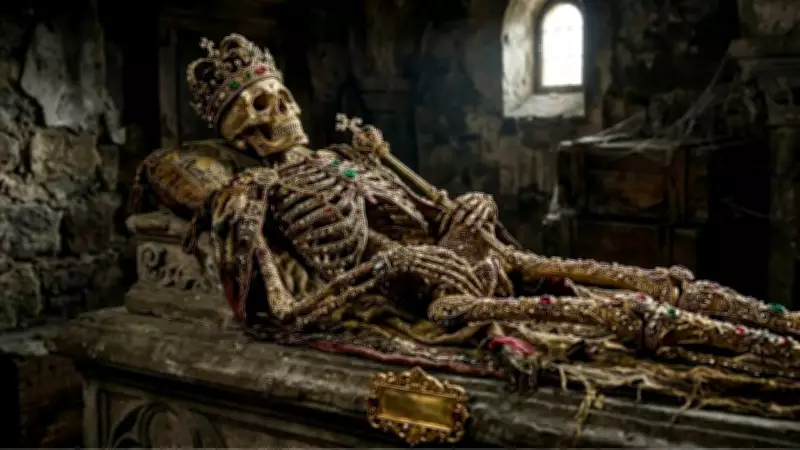
For hundreds of years, Bavarian churches kept a clandestine heritage within their quiet halls: the 'gilded dead.' These are the Catacomb Saints, thousands of skeletons exhumed from Roman catacombs and distributed across Germany to bolster the Catholic faith during the Counter-Reformation. Transformed by painstaking artistry, these remains were encased in intricate gold filigree, silk, and precious gemstones to represent the glorified bodies of Christian martyrs. Long hidden away during the Enlightenment due to their macabre aesthetic, these bejewelled guardians are now being rediscovered. They stand as a powerful blend of religious propaganda, baroque art style, and humanity's enduring fascination with eternal life and divinity.
Bavarian 'Gilded Dead' and the Secret Gold Skeleton Revealed
As noted in a report on Independent, the term 'gilded dead' describes the Heilige Leiber, or Holy Bodies, mainly sent to Germany, Austria, and Switzerland from the 16th to the 19th century. Upon their arrival, local artisans and nuns devoted years to decorating them. Articulating the skeletons with gold wire allowed for a surface of fine gauze that could hold jewels. This effort aimed to counteract the Protestant Reformation's rejection of relics by creating a glorious connection to the early Church.
Why Anonymous Roman Citizens Were Rebranded as Saints
After accidentally uncovering a lost city of catacombs in Rome in 1578, the Vatican started exporting these remains as a type of visual propaganda. The Church asserted these belonged to early Christian martyrs, although primarily anonymous Roman citizens. Studies show that these relics played a crucial role in restoring Catholic power in regions devastated by the Thirty Years' War, as noted in a report on the Independent.

Gold Wire and Gauze Kept Ancient Bones Intact
The process of preserving and decorating these skeletons required advanced knowledge of materials. Conservators discovered that the gold often consisted of top-quality gold leaf or silver-gilt wire. This approach not only kept the bones intact but also gave them an ethereal radiance. Moreover, as noted by the Bavarian State Ministry of Science and the Arts, nuns, who were experts in monastic work (Klosterarbeit), used gold thread and wax to craft realistic features on the skulls.
Emperor Joseph II Stripped the Martyrs of Their Glory
By the late 18th century, a change in religious attitudes came with the Age of Enlightenment. Emperor Joseph II of Austria and some German officials saw the 'gilded dead' as superstitious and eerie. As a result, many were divested of gold and jewels. They ended up in storage or hidden within church walls to avoid causing scandal; interest from contemporary researchers later brought them back into focus.