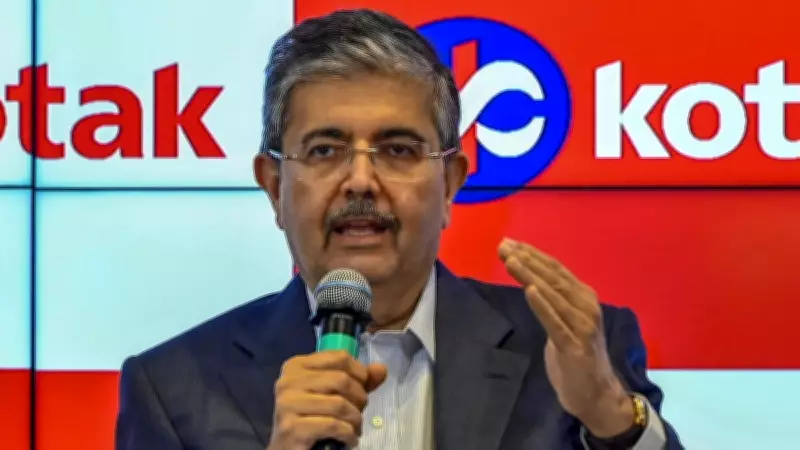
Finance industry veteran Uday Kotak has issued a stark warning to India, urging the nation to prepare for the worst amid rising risks of an oil shock stemming from the volatile situation in West Asia. In a statement that has captured the attention of policymakers and economists, Kotak emphasized the need for India to reduce its dependence on foreign capital and instead focus on building a robust domestic pool of long-term risk capital to achieve true economic self-reliance.
Call for Economic Self-Reliance
Kotak, a prominent figure in the Indian banking sector, highlighted that the current global uncertainties, particularly the escalating tensions in West Asia, pose significant threats to India's energy security and economic stability. He stressed that India, being a major importer of crude oil, is highly vulnerable to price fluctuations in the international oil market. A potential oil shock could lead to a surge in inflation, widen the current account deficit, and put pressure on the rupee.
Reducing Foreign Capital Dependence
The veteran banker argued that India must pivot towards self-reliance by strengthening its domestic financial ecosystem. This involves creating a deep and liquid market for long-term risk capital, which can support infrastructure projects, startups, and other critical sectors without heavy reliance on foreign investments. Kotak noted that while foreign capital has played a role in India's growth story, it also brings volatility and exposure to external shocks. By nurturing domestic capital, India can insulate its economy from global financial turbulence.

Implications for India's Economy
Kotak's remarks come at a time when the Indian economy is navigating multiple challenges, including slowing GDP growth, geopolitical risks, and inflationary pressures. The West Asia region, a key source of India's oil imports, has been witnessing heightened instability, which could disrupt supply chains and push oil prices higher. Analysts warn that a sustained increase in oil prices could derail India's fiscal consolidation efforts and impact corporate earnings.
To mitigate these risks, Kotak advocated for a multi-pronged strategy that includes diversifying energy sources, boosting strategic petroleum reserves, and accelerating the transition to renewable energy. However, he emphasized that the most critical step is to build a self-reliant financial system capable of weathering external shocks.
Industry Reactions
The financial community has responded to Kotak's warning with a mix of agreement and caution. Some experts believe that his call for reducing foreign capital dependence is timely, given the recent volatility in global markets. Others, however, point out that foreign capital remains essential for bridging India's investment gap and that a sudden shift could hamper growth. Nonetheless, there is consensus that India must strengthen its domestic capital markets and encourage long-term savings to enhance economic resilience.
As the situation in West Asia continues to evolve, Kotak's warning serves as a timely reminder for India to brace for potential economic headwinds. The government and financial institutions are expected to deliberate on measures to safeguard the economy, with a focus on achieving greater self-reliance in the face of global uncertainties.