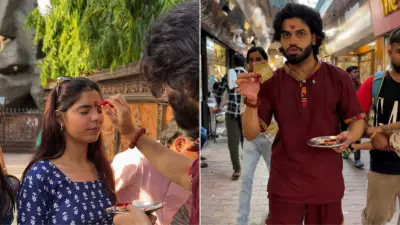
Asia's prestigious Bharat Kala Bhawan museum, situated within the historic campus of Banaras Hindu University (BHU) in Varanasi, marked a significant milestone this week. The institution celebrated its 106th foundation day on Thursday with a profound sense of dignity, cultural pride, and historical awareness.
A Living Legacy of Indian Heritage
Speaking at the event, Prof. Raychaudhuri emphasized that Bharat Kala Bhawan is far more than a static repository of objects. He described it as a living consciousness of Indian art, culture, and knowledge traditions. "This journey of 106 years inspires us to continuously move forward in the direction of innovation and research, alongside the vital work of preserving our heritage," he stated. The celebration honored not just the institution's age but its enduring role as a dynamic center of learning.
Collections as Civilizational Memory
Deputy Director Nishant, addressing the gathering, highlighted the deep scholarly value of the museum's holdings. He remarked that every collection within Bharat Kala Bhawan serves as a memory of Indian civilisation and forms the foundational bedrock for future research possibilities. He reinforced the museum's mission as a powerful center for creation and rigorous study, attracting students, researchers, and scholars from across the globe.

On this auspicious occasion, all officers and employees of the museum paid solemn tribute to its founder, Padma Vibhushan Rai Krishna Das, acknowledging his unparalleled contribution to establishing this cultural citadel.
A Global Center of Art and Archaeology
The stature of Bharat Kala Bhawan is built on an immense and rare collection. It houses more than 1 lakh rare artefacts and boasts a world-renowned collection of miniature paintings. Coupled with its strong academic tradition, this has cemented its position as a global center for Indian art, archaeology, research, and heritage studies.
Over its 106-year journey, the museum has successfully become a bridge connecting past memories with present endeavors and future research. It continues to play a crucial role in illuminating and preserving India's rich cultural identity for generations to come.