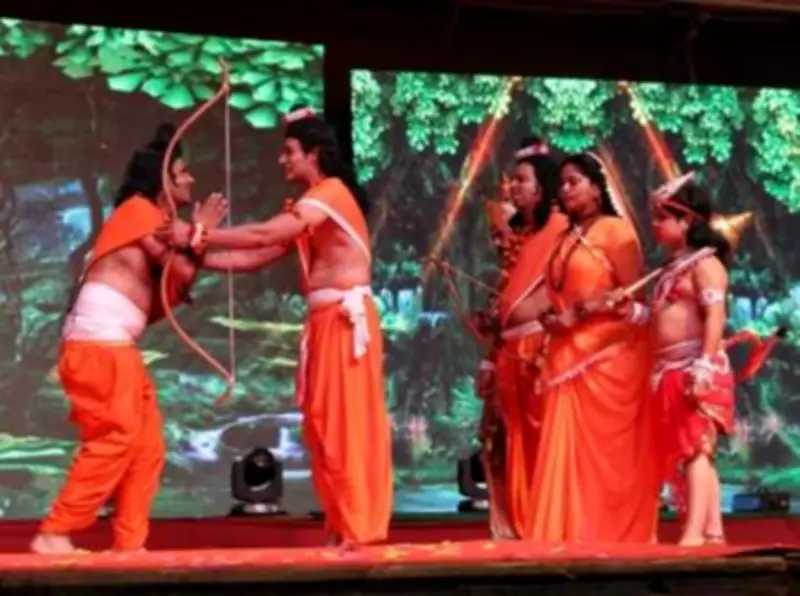
Bharat Milap stands as one of the most poignant and moving scenes in the epic Ramayana. It is far more than a mere reunion of two brothers; it is a profound meeting of duty and devotion, renunciation and royalty, human pain and divine grace. This sacred moment captures the essence of spirituality and the deeper play of consciousness that underlies all existence.
The Scene Unfolds
When Bharat arrived in the forest, Lakshmana was restless and vigilant. His unwavering love for Rama made him alert and angry. He harbored suspicion that Bharat might have come with a hidden purpose, perhaps to harm Rama or assert his claim to the throne. Rama tried to calm Lakshmana, but doubt still lingered in his heart.
Then Bharat appeared. He did not come adorned as a prince, but as a wounded devotee. His feet were bleeding from walking barefoot from Ayodhya, and his eyes were filled with tears of sorrow and longing. He carried no pride of the throne, only the pain of separation from his beloved brother. The moment he saw Rama, he fell at his lotus feet, utterly surrendered.

Rama, dressed as a forest-dwelling renunciate in bark-cloth, lifted Bharat and held him close. One brother was in royal attire, the other in the garb of exile. Yet in that embrace, all differences dissolved. No palace, no forest, no crown, no bark-cloth remained—only pure, unconditional love.
The Spiritual Heart of Bharat Milap
This scene reveals the heart of spirituality. The world is not merely what we perceive with our senses. Behind every event lies a deeper play of consciousness—a divine leela. Life creates, protects, dissolves, hides, and finally blesses. Creation gives us our field of action; preservation teaches duty; dissolution reminds us of impermanence; concealment breaks our ego; and grace brings us back to truth.
Rama lives this truth fully. He accepts exile without bitterness or resentment. Bharat lives this truth as well, rejecting power without hesitation or regret. Lakshmana too embodies this truth, as his initial anger melts into understanding and love.
The Wisdom of Shiva and Shakti
In this sacred meeting, we also glimpse the wisdom of Shiva and Shakti. Shiva represents silent, still consciousness; Shakti is its compassionate, dynamic expression. Without stillness, love becomes restless and chaotic. Without love, stillness remains distant and unapproachable. In Rama’s calm serenity and Bharat’s heartfelt surrender, we see Shiva and Shakti embracing through human hearts—a divine union of the eternal and the temporal.
Bharat Milap teaches us that suspicion can transform into trust, anger can dissolve into tears of devotion, and separation can become union when grace enters the heart. It is a powerful reminder that the highest throne is not in Ayodhya or any earthly kingdom. The true throne is the heart where ego bows, love rises, and the Divine is embraced.
Authors
Shambo Samrat Samajdar and Shashank Joshi