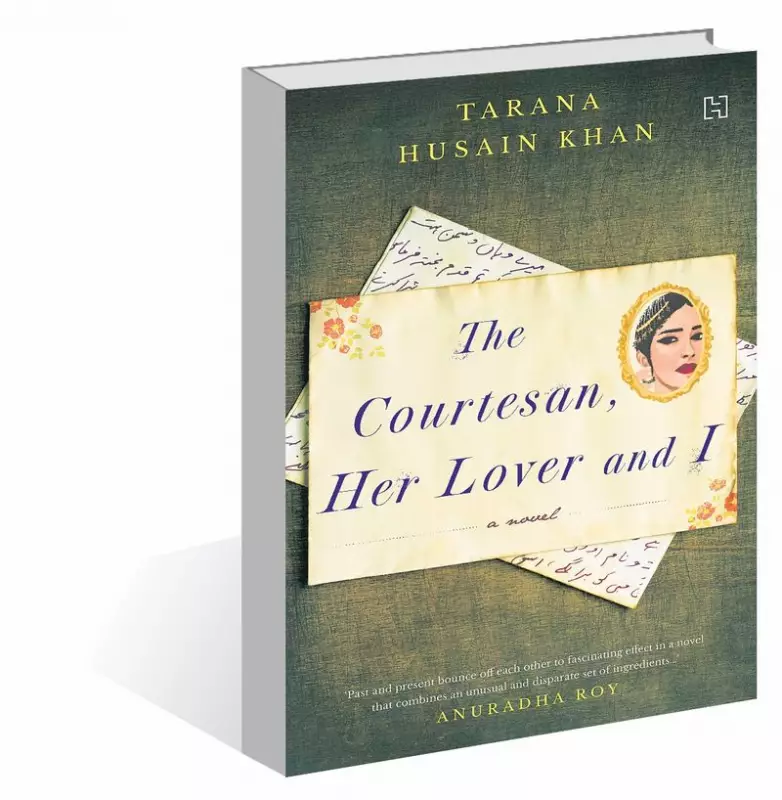
In a captivating blend of historical research and narrative flair, author Tarana Husain Khan unveils a long-forgotten chapter of Lucknow's rich cultural tapestry. Her latest book, 'The Courtesan, Her Lover and I', published by Routledge India, resurrects the poignant story of a courtesan who captured the heart and poetic imagination of the legendary Urdu poet, Dagh Dehlvi.
A Lost World of Poetry and Passion
The book delves deep into the late 19th century, a period marking the twilight of the Mughal era and the consolidation of British rule in India. It was against this backdrop of shifting power and fading grandeur that the lives of the poet and his muse unfolded. Khan's work is not a conventional biography but a creative non-fiction exploration, piecing together the courtesan's life from scattered references, poetic allusions, and historical context.
Dagh Dehlvi, born Nawab Mirza Khan in 1831, was a stalwart of the Delhi School of Urdu poetry. Following the upheaval of the 1857 rebellion, he eventually found patronage in the court of Rampur. Renowned for his ghazals brimming with romance and nuanced emotion, Dagh's work often hinted at a deep, personal love. Khan's book posits that the inspiration for much of this sentiment was a gifted courtesan from Lucknow, a figure history had nearly erased.

More Than a Muse: Reclaiming a Woman's Legacy
Tarana Husain Khan's narrative goes beyond simply naming a muse. It ambitiously attempts to reconstruct the courtesan's identity, her artistry, and her agency. In the sophisticated kotha culture of Lucknow, courtesans were not merely entertainers but custodians of music, dance, poetry, and refined conversation. Khan paints a vivid picture of this ecosystem, where the exchange between poet and performer could spark creative genius.
The book meticulously explores how this relationship influenced Dagh Dehlvi's poetry, tracing the echoes of their romance in his verses. However, its true triumph lies in shifting the focus to the woman herself. Khan asks critical questions: Who was she beyond the poet's beloved? What were her own dreams, struggles, and artistic contributions? In answering these, the author challenges the historical tendency to silence women's stories, offering a corrective to a male-dominated literary history.
A Personal and Historical Journey
The unique structure of the book, hinted at in its title 'The Courtesan, Her Lover and I', incorporates the author's own voice. Tarana Husain Khan connects her personal journey of discovery with the historical investigation, reflecting on the process of unearthing this story from the archives and the emotional landscape of old Lucknow. This layered approach makes the history feel immediate and relevant.
By resurrecting this tale, Khan does more than satisfy historical curiosity. She illuminates the complex socio-cultural fabric of pre-colonial and colonial India, where art, power, gender, and love intersected in fascinating ways. The book serves as a testament to the countless unnamed women who shaped cultural history from the shadows.
'The Courtesan, Her Lover and I' stands as a significant contribution to Indian literary history and gender studies. It is a compelling read for anyone interested in Urdu poetry, the history of Lucknow, or the untold stories of women in Indian art. Tarana Husain Khan has not just written a book; she has performed an act of historical recovery, giving voice to a silence that lasted over a century.