Booker Winner Banu Mustaq Champions Youth Engagement With Literature
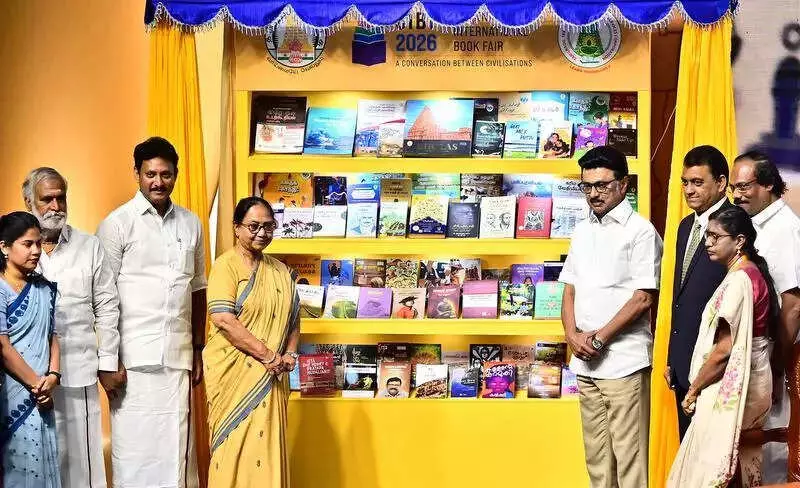
Kannada author and Booker Prize winner Banu Mustaq firmly rejected accusations that young people do not read. She made this statement on Sunday during the valedictory function of the fourth Chennai International Book Fair. Mustaq argued that today's youth actively search for literature. They want works that speak directly to their anxieties, their moral dilemmas, and their personal dreams.
The Writer's Responsibility to Offer Honest Work
"When we offer honest writing rooted in reality, there is more passion and seriousness," Mustaq declared. She emphasized that the responsibility to keep literature alive rests with multiple groups. Writers, publishers, educators, and policy makers must all work together. Their goal should be to ensure literature remains fearless, truthful, and accessible to all.
Banu Mustaq received the prestigious International Booker Prize in 2025. Her winning work was the collection of Kannada short stories titled "Heart Lamp."

Praise for Tamil Nadu's Literary Investments
During her address, Mustaq commended the Tamil Nadu government. She highlighted its continued investment in libraries, book fairs, and translation projects. The state also supports writers directly and works to improve access to books for everyone.
"This reflects a deep political understanding," she explained. "A society that reads is a society that questions. And a society that questions cannot be easily manipulated."
She noted that in this model, books do not stay confined to elite drawing rooms. Instead, they travel widely. They reach schools, villages, and working-class neighborhoods. Books find their way to women's collectives and first-generation learners, creating a more inclusive literary culture.
Global Recognition for Dravidian Literary Strength
Mustaq expressed pride in recent literary achievements from the region. She mentioned Tamil author Perumal Murugan, whose writing emerges from the soil and struggles of Tamil life. His Booker Prize shortlisting was a significant moment.
"Equally, it is not a coincidence that Kannada literature won the Booker Prize in 2025," she stated. Mustaq framed these honors as global recognitions of Dravidian literary strength. She pointed out that Dravidian languages carry centuries of tradition. This tradition involves questioning caste structures, patriarchy, power dynamics, and injustice.
The Core of the Dravidian Literary Mindset
"The Dravidian mindset understands key principles," Banu Mustaq elaborated. "Education forms the foundation of equality. Rationality is the basis of true freedom. Self-respect sits at the core of justice."
This specific mindset, she argued, has shaped a distinct body of literature. It is literature that consistently stands with the oppressed and the marginalized. "That is precisely why Dravidian literature has always been fundamentally people-centric," Mustaq concluded, underscoring its enduring social relevance.