

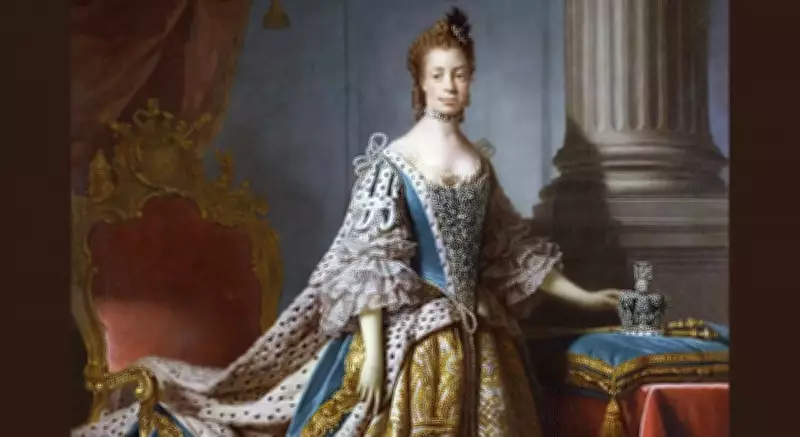
Bridgerton Sparks Renewed Interest in Queen Charlotte's Ancestry
A long-standing historical debate about Queen Charlotte's possible African ancestry has been reignited by Netflix's popular Regency drama Bridgerton. The series, which reimagines the royal court with Charlotte as a Black queen, has brought this academic discussion into mainstream consciousness, though the theory predates the show by decades.
Actresses Defend Historical Basis for Casting
During a recent panel at the SCAD TV Fest, Adjoa Andoh, who plays Lady Danbury, and Golda Rosheuvel, who portrays Queen Charlotte, addressed the historical foundation for their casting. Andoh insisted that Charlotte "was a woman of colour" and referenced historical accounts describing the queen's appearance upon her arrival at the English court.
"They complained about her ugly, thick lips and her ugly, wide nose and her mulatto skin," Andoh stated, adding that these descriptions support the idea that Charlotte's portrayal in Bridgerton represents "a more realistic version of history" that allows audiences to see themselves in historical drama differently.

The Historical Queen Charlotte
Born in 1744 in the German duchy of Mecklenburg-Strelitz, Charlotte married King George III in 1761 after being selected as a Protestant bride who wouldn't interfere in British politics. The marriage produced 15 children, but contemporary descriptions of Charlotte's appearance were often unflattering.
- Charles Dickens dismissed her as "a queen with a plain face"
- Historian John H. Plumb described her as "plain and undesirable"
- Baron Christian Friedrich Stockmar reportedly called the aging queen "small and crooked, with a true mulatto face"
Genealogical Theory of African Ancestry
The modern discussion largely stems from historian Mario de Valdes y Cocom's 1997 research, which traced Charlotte's lineage through Portuguese nobility back to Madragana, a 13th-century mistress of King Alfonso III described as a Moor. Valdes argued this connection gave Charlotte "African Islamic ancestry" through hundreds of lines of descent.
Supporters of the theory often point to portraits by Sir Allan Ramsay, the Scottish artist who painted many official royal portraits. Valdes claimed Ramsay's paintings emphasize "conspicuously African" features, possibly influenced by the artist's anti-slavery connections through his marriage to Lord Mansfield's family.
Historical Skepticism and Challenges
Despite the intriguing genealogy, most mainstream historians remain cautious for several reasons:
- The enormous generational distance—approximately 15 generations—between Charlotte and the supposed African ancestor would mean an extremely small genetic contribution
- The term "Moor" in medieval Europe referred broadly to Muslim populations from North Africa or Iberia, not necessarily sub-Saharan African ancestry
- Art historians like Desmond Shawe-Taylor of the Royal Collection have examined Charlotte's portraits without seeing African features
- Contemporary caricatures in the British Museum don't depict Charlotte as African
Unresolved Debate with Broader Implications
The question remains unresolved due to limited physical evidence and varying interpretations of portraits and genealogy. Historian Kate Williams has noted the remarkable implications if the theory were accepted: "If we class Charlotte as black, then ergo Queen Victoria and our entire royal family, [down] to Prince Harry, are also black."
Bridgerton creator Shonda Rhimes addressed the controversy in 2023, noting how strongly some people reject the possibility of Charlotte's African ancestry. "I found it very interesting how people are working so hard to ensure that she couldn't possibly be brown," Rhimes said, posing the broader question: "Why does it matter?"
The debate continues to fascinate historians and the public alike, sitting somewhere between genealogy, interpretation, and cultural discussion—a historical puzzle revived by television but rooted in questions scholars have explored for generations.






