The Enduring Power of Buddhist Relics: Spiritual Bridges Across Time
In a world increasingly focused on the tangible and material, there exists a quiet, profound magic in objects that whisper ancient stories of enlightenment and compassion. Among these are Buddhist relics, which stand as timeless bridges, connecting the faithful to spiritual figures who reimagined human existence over 2,500 years ago. Far from being mere artifacts, these relics are often described as pulsing emblems of spiritual energy, drawing millions of pilgrims to temples and stupas worldwide in search of solace, miracles, and deep connection.
What Exactly Are Buddhist Relics?
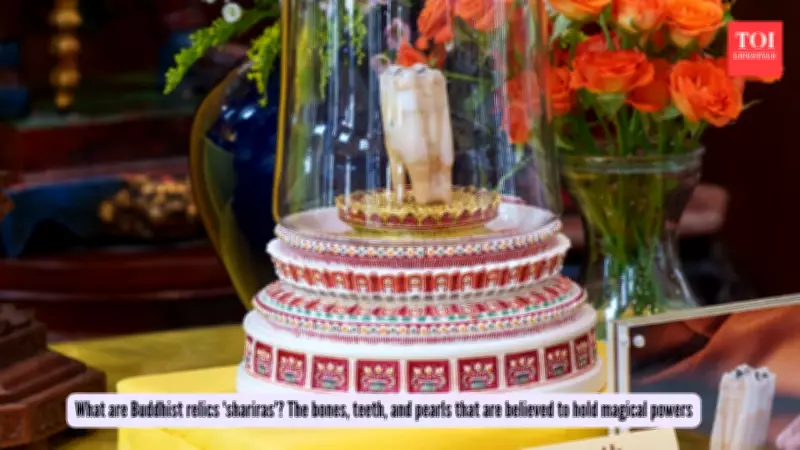
Buddhist relics, commonly referred to as shariras, are physical remains such as bones, teeth, or pearl-like beads believed to originate from the Buddha or other enlightened monks. They are revered not as passive historical items but as living sources of blessings, attributed with supernatural powers. Unlike Catholic relics, which primarily honor saints, Buddhist relics are viewed as active spiritual forces. Many believers assert that these relics can self-manifest, grow, or even multiply, often housed in dome-shaped stupas designed for pilgrimage and meditation.
Global Devotion and Personal Experiences
The impact of these relics is felt globally, from India and Thailand to Japan and Sri Lanka, where authenticity is often trusted over scientific verification to preserve their mystical allure. A notable example is the Wei Mountain Temple in Rosemead, California. According to a report from Wisdomlib, visitor Katherine Nguyen shared her experience with Shakyamuni Buddha's tooth and finger-bone relics, stating, "To be able to see the Buddha, to get close to him and feel the energy – it’s very special for a Buddhist." The temple, founded by Master YongHua, displays its "10,000 Buddha Relics" each spring, with the actual number far exceeding that in glass cases and mini-stupas, fostering a sense of unity among devotees across continents.

The Spiritual Significance and Manifestation
Buddhists hold that relics embody the very essence of enlightened beings, capable of warding off evil or granting blessings merely through sight or thought. After cremation, colorful shariras may appear, as seen with the remains of Venerable Master Hsing Yun, who passed away in 2023. His relics have been distributed across Fo Guang Shan centers on five continents, symbolizing the spread of spiritual energy and compassion.
Controversies and Authenticity Debates
Despite their revered status, Buddhist relics have faced scrutiny over authenticity. Reports have surfaced about fake teeth and bone relics, as well as man-made acrylic shariras. These imitation items, often tiny pearl or bead-like objects marketed as remnants from cremated monks, flood Asian markets and online platforms, frequently accompanied by bogus certificates claiming legitimacy.
One prominent case involves Singapore’s Buddha Tooth Relic Temple and Museum, which houses a tooth said to come from Buddha’s funeral pyre, encased in a massive gold stupa weighing 320 kilograms. In 2007, dental experts raised doubts, noting that the 7.5-centimeter (three-inch) tooth did not match human dimensions and was likely from a cow or buffalo. At the time, the temple’s abbot, Venerable Shi Fa Zhao, defended its authenticity, as reported by SCMP, asserting, "if you believe it’s real, it’s real," highlighting the deep faith that often overrides empirical evidence.
Ultimately, Buddhist relics continue to serve as powerful symbols of spiritual heritage, bridging ancient wisdom with modern devotion, even as debates over their origins persist. They remind us that in the pursuit of enlightenment, belief itself can be a transformative force, transcending the boundaries of time and science.