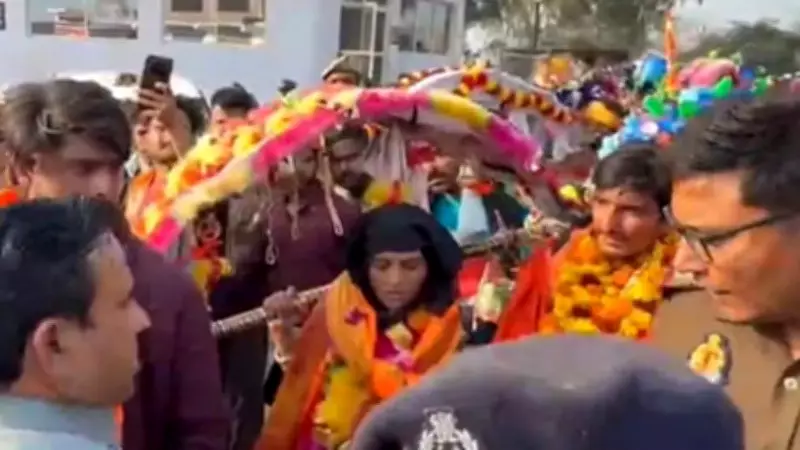
Burqa-clad Woman Participates in Kanwar Yatra on Mahashivratri in Sambhal
In a remarkable display of interfaith devotion, a Muslim woman wearing a burqa recently took part in the Kanwar Yatra in Sambhal, Uttar Pradesh. The event occurred on Sunday, coinciding with the auspicious festival of Mahashivratri, which is dedicated to Lord Shiva.
Fulfilling a Sacred Vow at Kshem Nath Temple
The woman, identified as Malik, undertook this spiritual journey to fulfill a personal vow. She carried holy water from the Ganga River and offered it at the revered Kshem Nath Temple in Sambhal. This act of devotion highlights the blending of religious traditions in India, where individuals often transcend communal boundaries to express their faith.
The Kanwar Yatra is an annual pilgrimage where devotees, known as Kanwariyas, collect water from the Ganga and offer it to Shiva temples. Typically associated with Hindu worshippers, this year's event saw a unique participant in Malik, who donned her burqa throughout the ritual. Her participation underscores the inclusive nature of many Indian religious practices, where personal vows and spiritual commitments can bridge diverse cultural backgrounds.

Significance of the Event in Uttar Pradesh
Sambhal, a city in Uttar Pradesh, is known for its religious diversity and historical temples. The Kshem Nath Temple, where Malik made her offering, is a significant site for Shiva devotees. This incident has drawn attention locally and nationally, as it exemplifies how faith can unite people beyond traditional religious labels.
Such instances are not uncommon in India, where interfaith interactions often occur during major festivals. However, Malik's visible participation in a burqa adds a poignant layer to the narrative, emphasizing respect for individual religious attire while engaging in shared spiritual activities. It serves as a reminder of the country's rich tapestry of beliefs and the personal journeys that define them.
As reported, this event took place on February 15, 2026, and has been widely shared as a symbol of harmony. It reflects broader trends in Indian society where acts of devotion can foster mutual understanding and respect among different communities.