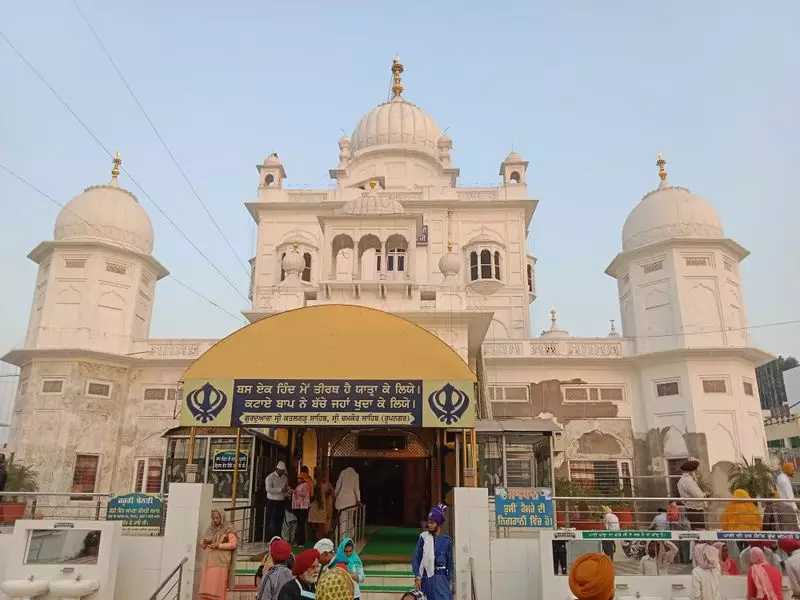
The historic town of Chamkaur Sahib in Punjab's Rupnagar district witnessed a profound display of devotion and remembrance as it paid homage to two of Sikhism's most revered martyrs, Sahibzada Ajit Singh and Sahibzada Jujhar Singh. The commemorative events, held on December 21 and 22, centered around a grand religious procession, or 'Nagar Kirtan,' and solemn prayers, drawing thousands of devotees to honor the supreme sacrifice of the elder sons of the tenth Sikh Guru, Guru Gobind Singh Ji.
A Solemn Tribute Through Nagar Kirtan
The two-day observance began with the traditional 'Prakash' of the Sikh scripture, Sri Guru Granth Sahib, at Gurdwara Sri Katalgarh Sahib. Following the morning prayers, a majestic and spiritually charged Nagar Kirtan procession wound its way through the main streets of Chamkaur Sahib. The procession was a vibrant tapestry of faith, featuring the 'Palki Sahib' (palanquin) carrying the Guru Granth Sahib, followed by groups of devout Sikhs singing hymns ('Shabad Kirtan') and narrating religious history ('Dhadi Vaaran').
The procession route was meticulously planned, starting from Gurdwara Sri Katalgarh Sahib and passing through significant landmarks like the local bus stand and the old city area before concluding at Gurdwara Sri Garhi Sahib. Local authorities, including the police and municipal council, played a crucial role in managing the large gatherings and ensuring the smooth passage of the Nagar Kirtan, reflecting the event's deep community significance.
Remembering the Supreme Sacrifice at Chamkaur Garhi
The heart of the commemoration lies in the historic event it remembers. In December 1704, during the Battle of Chamkaur, the two elder Sahibzadas of Guru Gobind Singh Ji displayed unparalleled bravery. Sahibzada Ajit Singh, then aged 18, and Sahibzada Jujhar Singh, aged 14, valiantly fought against overwhelming Mughal forces besieging the Chamkaur Garhi (fort). One after the other, they sought their father's permission to enter the battlefield, embracing martyrdom while defending their faith and principles. Their sacrifice, along with that of the 'Chali Mukte' (Forty Liberated Ones), is a cornerstone of Sikh history and identity.
The concluding ceremonies at Gurdwara Sri Garhi Sahib, the site intimately connected to the 1704 battle, were marked by Ardas (prayers) and religious discourses. These prayers solemnly remembered the courage of the young warriors and reinforced the eternal values of faith, sacrifice, and righteousness they embodied.
Community Participation and Spiritual Significance
The event transcended a mere historical remembrance, transforming into a powerful community gathering. Volunteers served free langar (community kitchen meals) to all attendees, embodying the Sikh principle of selfless service. The air resonated with the sound of 'Jaikaras' (victory chants) in praise of the Guru and the martyrs. For the devotees, participation in the Nagar Kirtan was an act of piety and a way to connect with the legacy of the Sahibzadas.
This annual observance, often timed around the Shaheedi Jor Mela (martyrdom fair), serves as a vital cultural and religious touchstone for Sikhs worldwide. It is not just a look back at history but a living tradition that educates younger generations about the profound sacrifices made for religious freedom and dignity. The peaceful and orderly conduct of the large-scale event also highlighted the strong organizational capabilities of the gurdwara management committees and the cooperation of local residents.
In essence, the commemoration in Chamkaur Sahib stands as a timeless tribute. It bridges centuries, reminding the faithful of the ultimate price paid by Sahibzada Ajit Singh and Sahibzada Jujhar Singh. Their story, retold through processions and prayers, continues to inspire courage, faith, and resilience, keeping their memory alive in the collective consciousness of Punjab and the global Sikh community.